

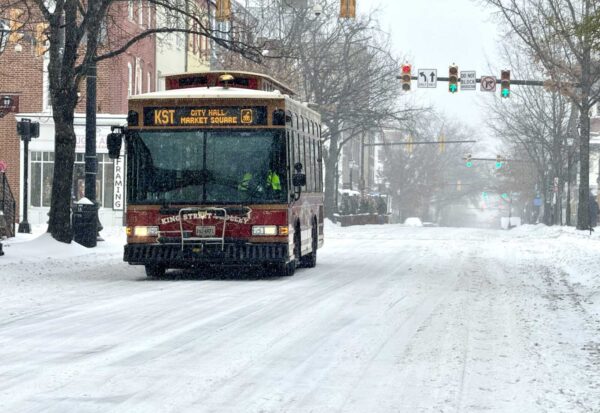
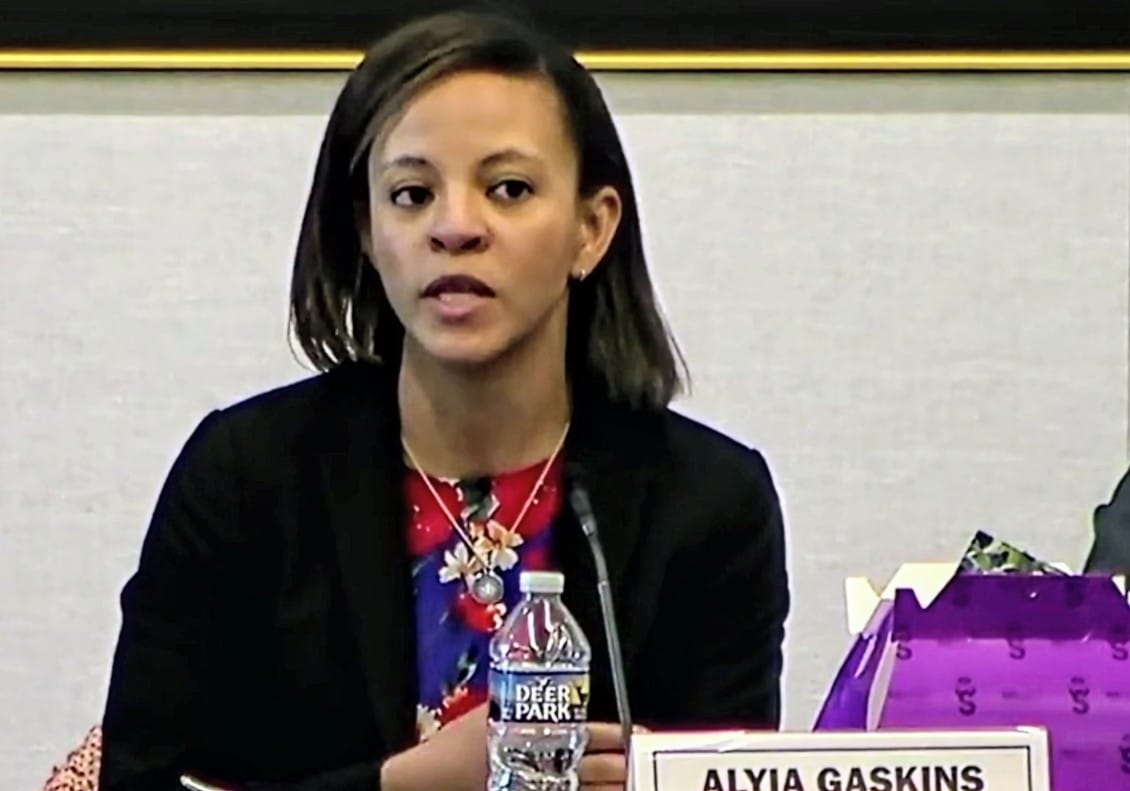
Mayor Alyia Gaskins says one lesson to be learned from January’s snow and ice storm is the importance of timely messaging that reaches a large audience.
“It’s given us a lot of lessons learned,” Gaskins said at a roundtable yesterday (Wednesday) hosted by the Metropolitan Washington Council of Governments (COG).
The 90-minute discussion focused on what the region did right — and could improve upon — while addressing the impacts of the Jan. 24-25 storm that brought snow, then sleet and freezing rain, followed by a prolonged period of cold, with severe conditions Alexandria officials said the region hasn’t experienced since the 1990s.
Unlike some other post-mortems following winter weather events, the emphasis at the Feb. 11 meeting was on improvement, not finger-pointing.
Gaskins, who serves as one of two COG vice chairs, said regional leaders need to get up-to-speed on modern messaging strategies to share information.
“Video and short messages are where people get [information] now — a minute or less,” Gaskins, who has continued to post daily social media updates on Alexandria’s storm response, said.
The mayor said roughly 5,000 new social media followers had tuned into her own accounts over the past week, as people were eager to get quick takes on how the city was responding.
Many participants during the Feb. 11 discussion said the unusual weather conditions made a typical response impossible.
“This was a storm that was unfamiliar to us all. If it had been a normal storm, I’m sure we would have been able to do our normal good job,” said Richard Madaleno, chief administrative officer of the Montgomery County, Md., government.
In the storm’s aftermath, many D.C.-area school systems, including Alexandria City Public Schools, had canceled in-person learning for a week or longer, which meant “people were sitting at home with their kids, getting more tired and frustrated,” Madaleno said.
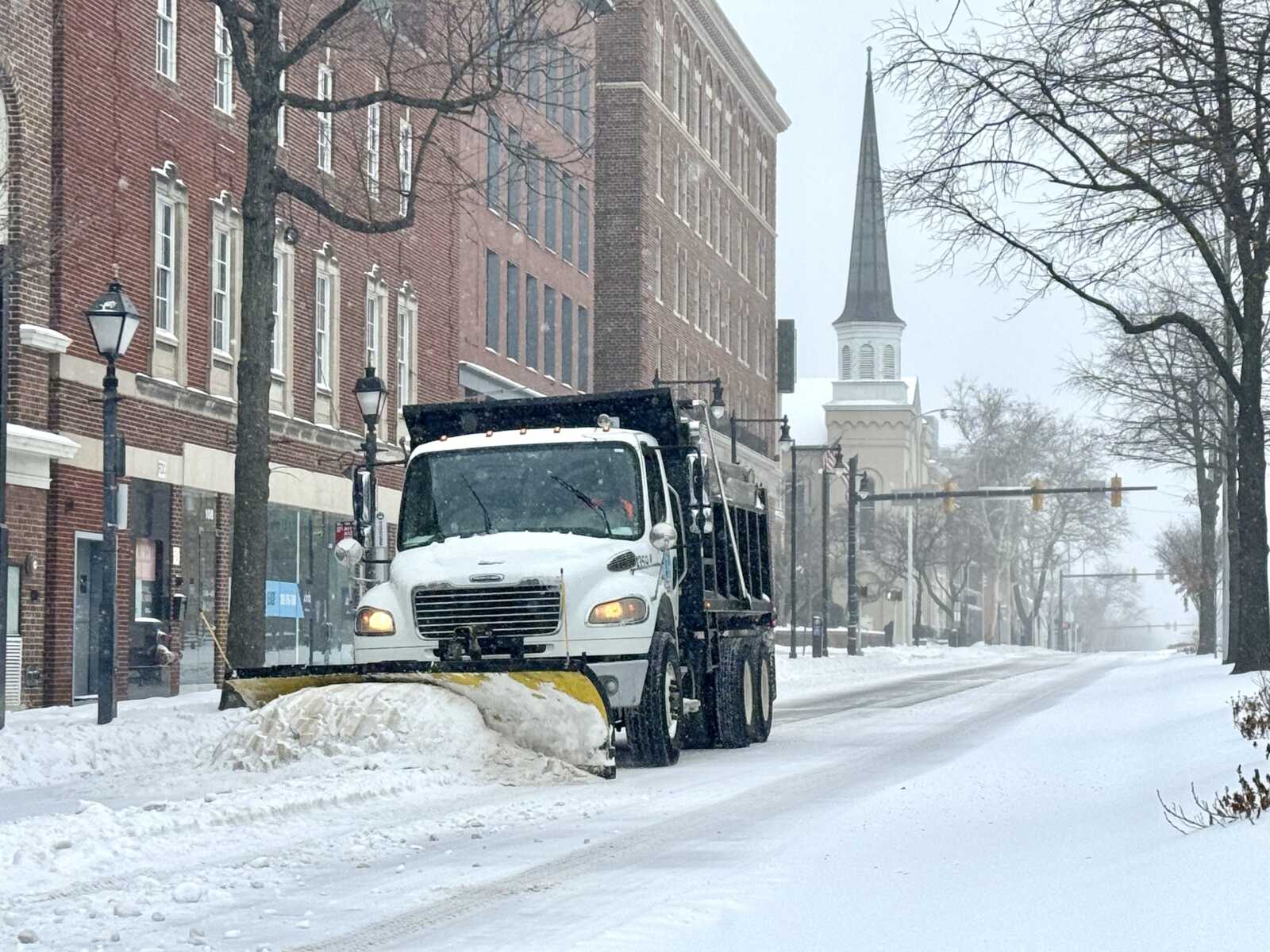
What could have been done better under the circumstances? D.C. City Administrator Kevin Donahue said for storms of this magnitude, localities and the region as a whole needed a snow-removal plan to augment snow-plowing responses. After being criticized for a lack of responsiveness to D.C. neighborhoods, District officials began trucking snow and ice to the grounds of Robert F. Kennedy Memorial Stadium, awaiting warmer temperatures.
Leroy Jones, executive vice president of the Washington Metropolitan Area Transit Authority (WMATA), said his agency would like to see a regional look at strategies to clear bus stops of snow and ice for traveler safety.
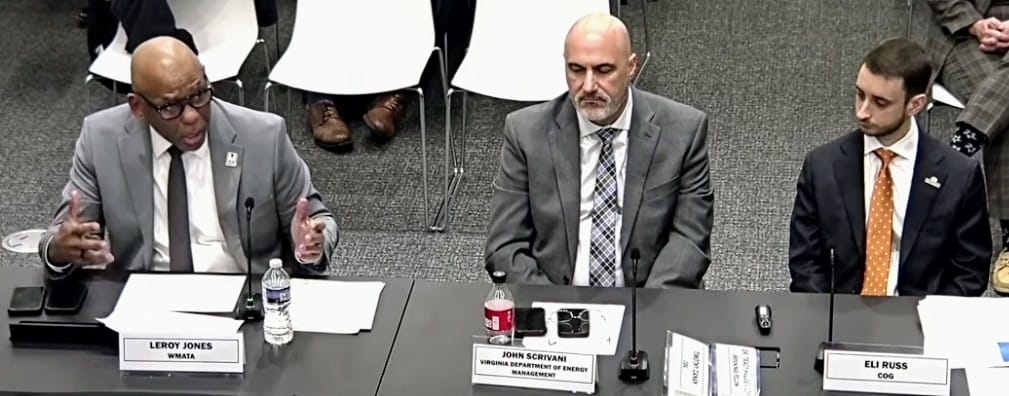
Jones also pressed for better clearing of intersections. Mounds of snow pushed to the side made it difficult for Metrobuses to make turns, causing the system to continue detours for more than a week.
Jones said WMATA moved 1.5 million passengers from Sunday, Jan. 25 to Thursday, Jan. 29 — a time when much of the region remained shut down.
Not everything ran according to plan, Jones acknowledged. “Even with the best plans, we have to be nimble enough to pivot,” he said.
In Alexandria, a lack of plowed bus stops and snow piled up near intersections caused challenges for Metrobus, DASH and school bus drivers, Gaskins said.
Sometimes, even when the streets and stops were clear, “nobody cleared the sidewalks,” she said.
Planning for the storm was challenging due to its size and an ever-changing forecast, said John Scrivani, the recently appointed state coordinator of the Virginia Department of Emergency Management.
At first, the National Weather Service “was telling us we were facing a catastrophic storm,” he said. “They kept changing the forecast on us, kept moving that snow/ice line further north, further north. So, we kept adjusting our response plan accordingly.”
“I know a lot of people are still upset,” Scrivani said, but “we can’t prevent an ice storm.”
“This was Texas to Boston,” he added. “It was a massive event.”
Scrivani praised the public across the commonwealth for heeding warnings and giving state crews and contractors the chance to address the situation.
“We asked the folks to stay off the roads, and they did,” he said. “We were able to get those main roadways cleared.”
State officials would use the experience to have “plans and procedures in place to try and recover quicker” in the future, Scrivani said.
Regional leaders plan to circle back on the issue for more discussion, said Reuben B. Collins II, a member of the Charles County, Md., Board of County Commissioners.
“We’ll definitely make this a follow-up,” the COG chair said.
