


Alexandria’s DASH bus system will break ground later this month on its expansion project to build a new electric bus charging station at a city impound lot next to the transit company’s headquarters at 3000 Business Center Drive. The groundbreaking will be held on Thursday, October 30, from 1:00 to 2:00 p.m. With a completion goal of early 2027, the project will “support our growing fleet and the City of Alexandria’s transition to 100% zero-emission buses,” DASH said in an email.
“This expansion project is about looking ahead, and as we see more people choose transit, this will help ensure DASH is ready to support cleaner, more efficient service,” said DASH General Manager & CEO Josh Baker. “The new facility will give us the space to grow, the infrastructure to charge electric buses, and the flexibility to improve how we operate.”
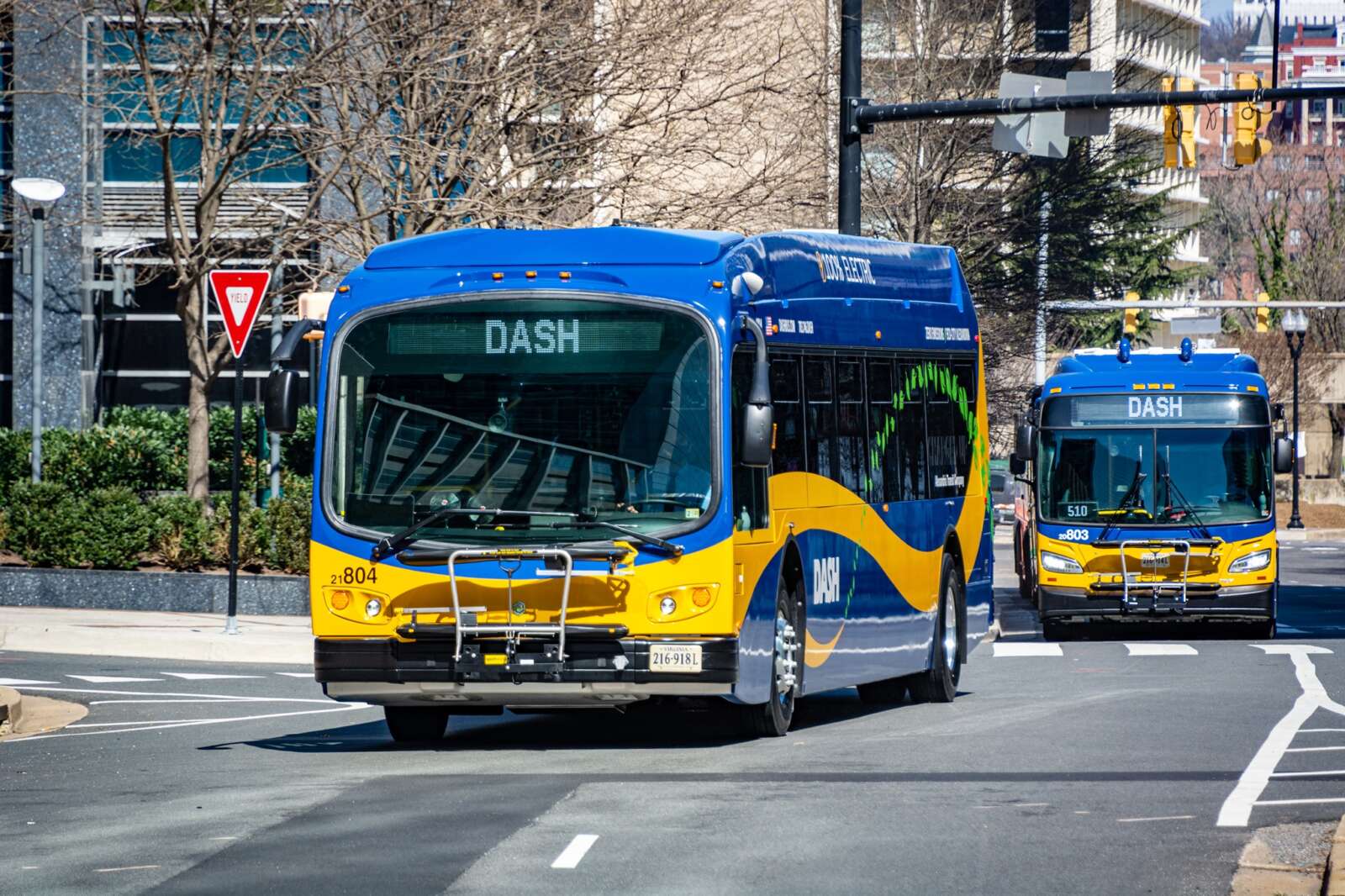
The transit agency wants a fully electric bus fleet by 2035, and the new garage will allow for parking, maintenance, and storage for 32 electric buses, according to plans approved by City Council last month.
The plans from Arlington-based RRMM Architects show a 15,510-square-foot open-air steel canopy structure.
The improvements include:
- Increased Capacity: The expansion will accommodate up to 32 additional buses, including covered storage for 24 vehicles. DASH’s current facility, built to hold 96 buses, reached its capacity in the late 2010s.
- Electrification Infrastructure: The new site will serve as the framework for DASH’s first dedicated battery electric bus charging yard, which will eventually be equipped with overhead pantograph chargers for 24 electric buses. This advanced charging method is faster and more flexible than DASH’s current plug-in systems.
- Support for Citywide Transit Improvements: The expanded facility enables DASH to grow its fleet and improve transit service across Alexandria, while providing the infrastructure needed for a sustainable, zero-emission future.

The structure will be 35 feet tall, and the total site area is one-and-a-half acres, according to site plans. The general contractor for the project is Maryland-based Keller Brothers.
