

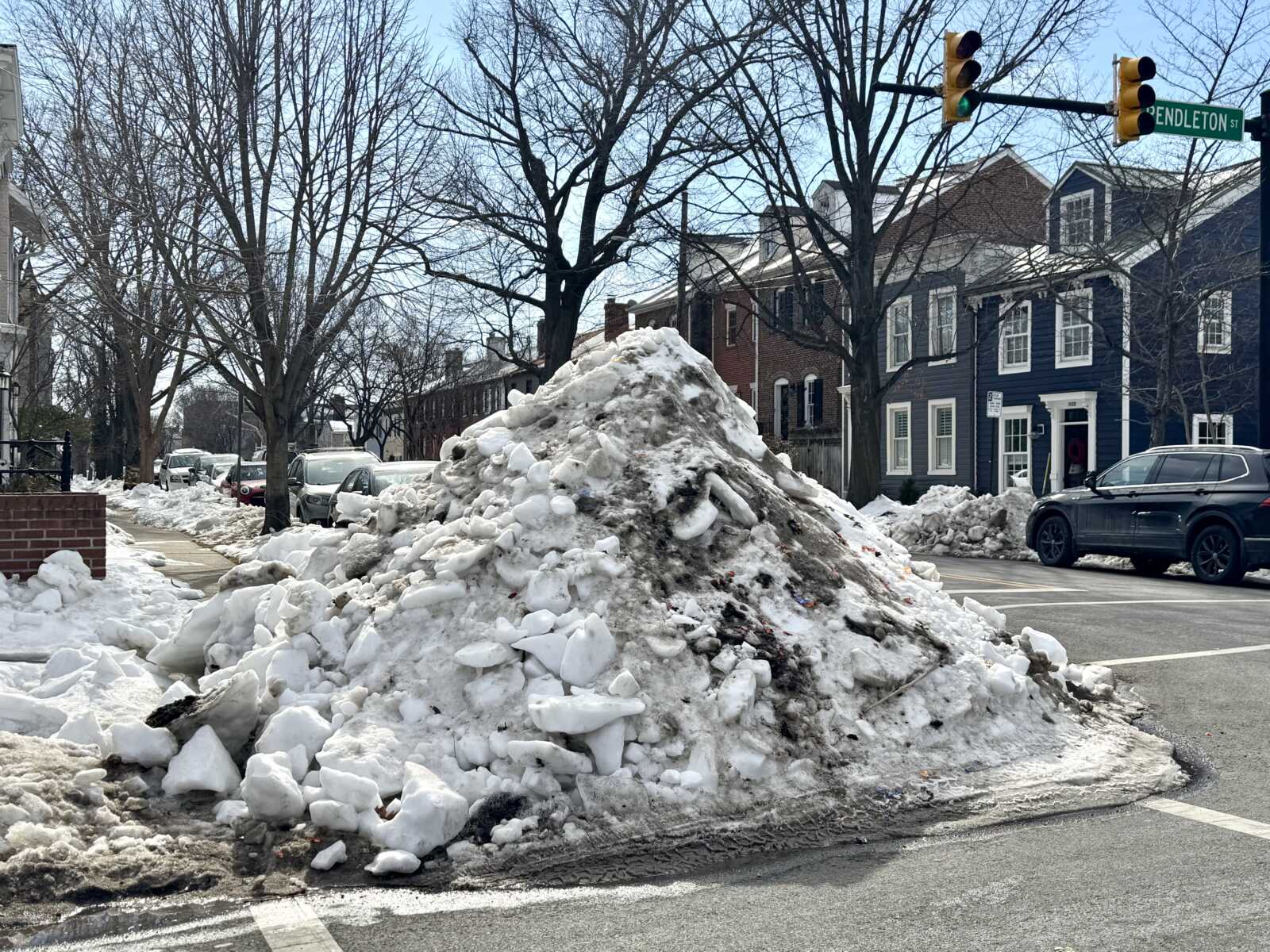
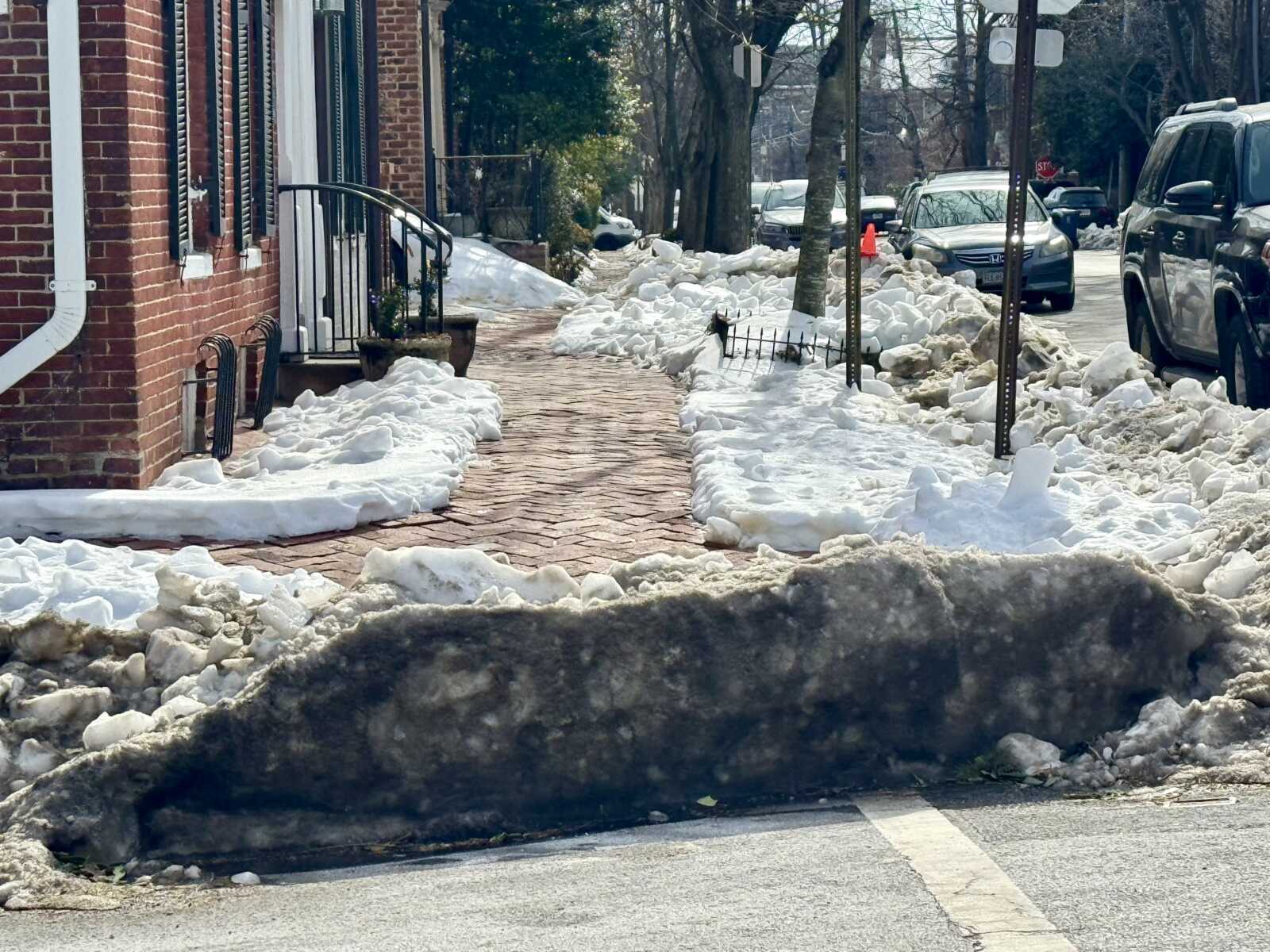

Alexandria spent $9.7 million on the Jan. 25 snow storm response, the bulk of which was attributed to outside contractors brought in due to the challenges of clearing “snowcrete.”
The winter storm brought about 8 inches of snow followed by hours of sleet and freezing rain that created a solid layer of ice on top. According to an after-action report presented to City Council Tuesday, contract services cost the city $8.4 million. City labor cost about $600,000, while materials, supplies, food and lodging for employees cost $700,000.
“This was a costly response, and primarily the largest cost by far were contractors that we needed to use, that heavy construction equipment that we needed,” Deputy City Manager Emily Baker told City Council. “But at the same time, we had our staff working overtime. We housed and fed them to make sure that they were here and available when we needed them when the storm was over.”
City Manager James Parajon said the contractor costs were covered by the city’s cash balance. He said it’s unlikely the city would see reimbursement from the federal government, but it is working to seek reimbursement from the state.
Several City Council members stressed the importance of keeping cash reserves on hand for one-time uses.
“Even if storms, in their own way recurring storms of this scale, which are a challenge and would be faulty to budget for, are why we have the cash capital reserves that we have,” Vice Mayor Sarah Bagley said.
Councilmember John Taylor Chapman said the winter storm puts into context City Council’s hesitation to use the fund balance for Alexandria City Public Schools’ budget gap.
“This particular incident and others that folks can think of are part of those reasons, and so I certainly appreciate the opportunity and the direction that the manager is going in terms of how we fund an incident like this,” Chapman said, referencing the modest increase to the snow budget in the city manager’s budget proposal.
Baker said city crews provided 24-hour response to the storm between Jan. 24 and Feb. 13. Even when roads were clear, crews continued to chip away at ice and snow-filled intersections, sidewalks, school sites, paths and parks, filling 8,500 dump truck loads across six snow dumping sites.
“This was not our heaviest snowfall, but the conditions of the snow, plus the sleet, plus the freezing rain and then sustained temperatures below freezing created a very complicated situation and a very complicated response,” Baker said.
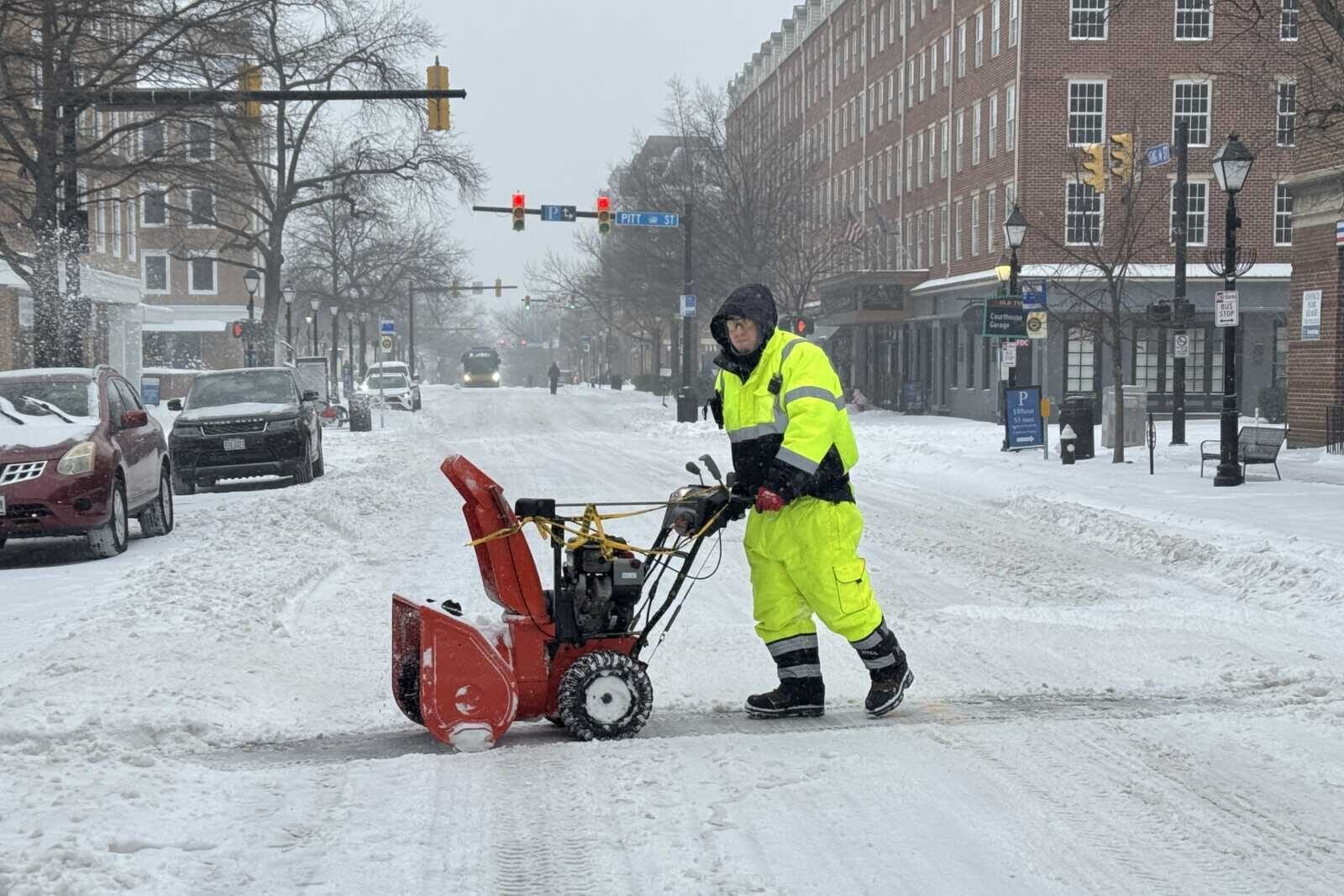
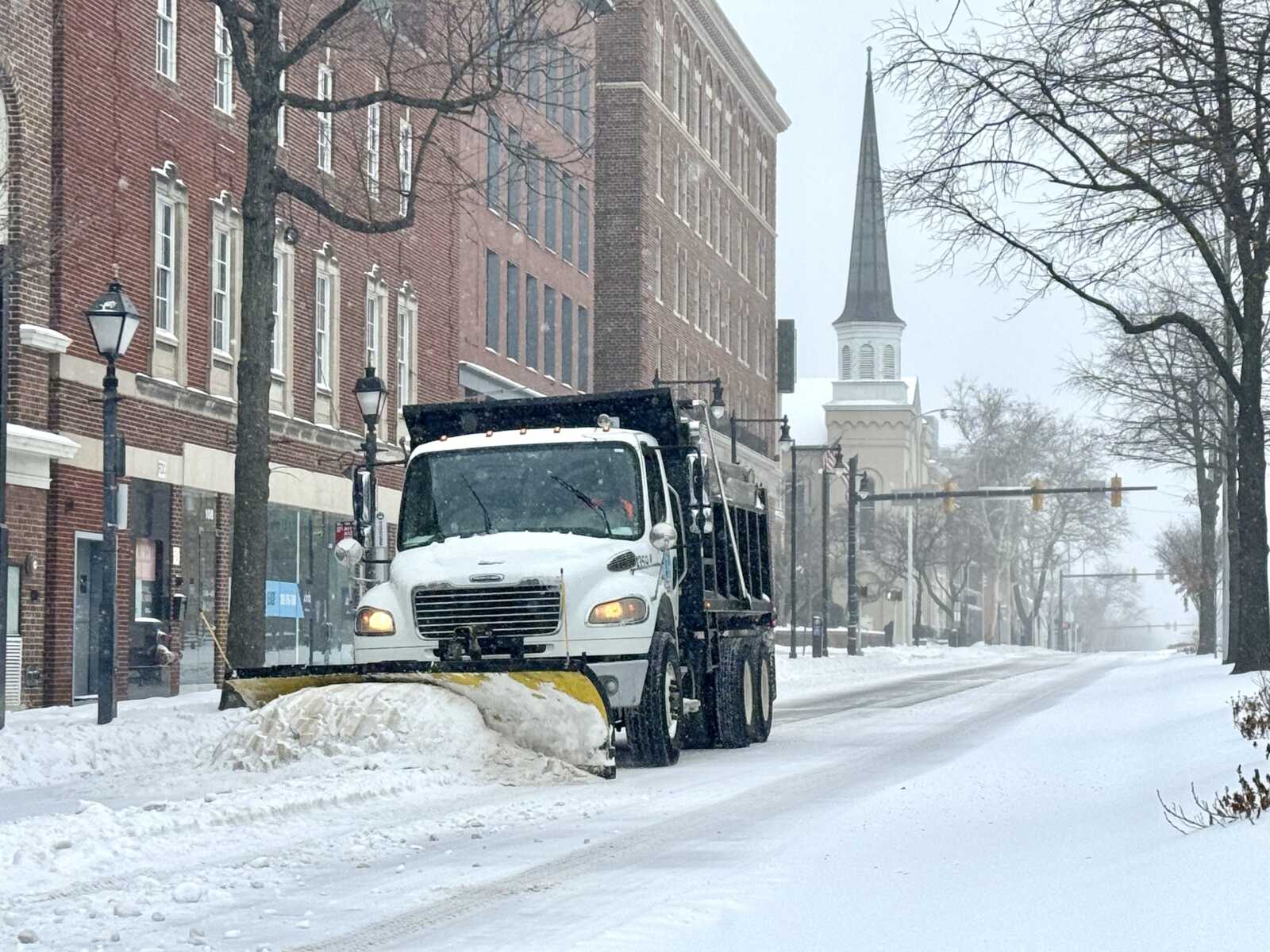
Snow combined with sleet, freezing rain and below-freezing temperatures complicated the city’s snow removal response. City staff realized that their traditional plows wouldn’t cut it.
“We brought in contractors from throughout the region and some as far away as Minnesota,” Baker said. “At the same time, all of our neighbors in the region were also bringing in contractors. So if you had a dump truck, a skid steer, a bobcat, you were working somewhere in the region during that event.”
When asked by Mayor Alyia Gaskins whether the city should seek additional equipment, Baker noted costly equipment may not make sense with the infrequency of major storms and that contract updates the city is working on could provide more flexibility in securing different types of equipment.
Parajon said the city will evaluate how much pothole damage the equipment, cold temperatures and ice inflicted on the roads and whether it will require end-of-year budget adjustments. The city’s pothole patrols begin on Monday, March 30.
“The infrastructure repair, whenever we get a better number on that, I’d be super curious to know what that’s looking like, because that’s just adding on to what we’re going to be paying out of our rainy day fund,” Councilmember Canek Aguirre said.
Planning, public communications, use of technology, and policy considerations are areas of improvement city staff are evaluating for future winter responses.
On the personnel side, Baker said the city needs to train more workers for winter storm responses and make adjustments to contracts.
On communications to residents, Baker said the city could improve sending day-to-day updates on what its winter storm response priorities were and what setbacks it faced. She said the city should engage the community more deeply to help with snow clearing, as groups like Volunteer Alexandria’s Snow Buddies and PTAs have done to clear sidewalks and school bus stops.
On the technology side, Baker said the city is working on ways to better track city snowplow vehicles and allow residents to make more specific snow requests on the 311 system. The city wasn’t able to track contractor vehicles on its snow map during the winter storm response.
“We lost control of the snow map during this event, because we had so many contractors out there who were not familiar with the city and weren’t able to report back accurately of where they were and what roads were cleared,” Baker said. “But we can do better there, and the technology exists, and we’re working on acquiring that where we can track every vehicle that’s out there. We can show that on the map — the number of passes — and people can see in real time or close to real time.”
Gaskins expressed support for improving the snow tracker to better notify residents of when trucks cleared a street.
“There were a lot of people who would write back and say, ‘the website says passable. My Street is not passable,'” Gaskins said. “I think on the one hand, that was because of some communication with contractors. On the other hand, I think each of us has maybe a different idea of what we think passable is like.”
On the policy side, City Council could consider when flexibility is granted for the city’s snow clearing ordinance. During the Jan. 25 winter storm, enforcement of snow clearing from sidewalks was delayed due to the challenges of removing the “snowcrete.”
According to Baker, enforcement of the snow removal ordinance is often focused on 311 complaints and high-traffic areas. The city may also issue tickets to commercial and multifamily residential owners who fail to clear their properties.
Chapman said the city needs to be clear in the differences between snow clearing expectations for snow removal crews and residents at their own properties.
“I would love for us to have a policy, stick to that policy and help community understand the difference between me, the individual homeowner, clearing my area, and particularly my sidewalk, versus a staff member that is first probably clearing streets at that time, or staff members having to get up from the hotel that they’re staying in and make their way, if they can, to a public or city-owned sidewalk,” Chapman said.
Gaskins said she received numerous complaints about apartment building owners not clearing their properties during the storms. The mayor called for city staff to explore what enforcement tools the city could have to address the issue.
Bagley suggested adding proof of a snow removal contract in the special use permit process for apartment buildings.
“I think the problem in some of these communities is likely just that they literally don’t have a contractor on retainer … so then they’re making the call after the snow has fallen and all those contractors are spoken for,” Bagley said. “If they say we don’t have one, maybe we help them with a list of preferred vendors.”
Changes to parking rules during winter storms are another potential policy consideration.
“It’s much easier for us to clear the street if there aren’t cars parked there, and we have restrictions on our emergency snow routes,” Baker said. “Do we need requirements that tell people they can only park on one side of the street in advance of an event like this? How do we maximize and leverage garages in neighborhoods to get cars off the street before the event occurs, so it’s easier for us to come out and clear and then people can get their cars out and we’re not plowing them in?”
City staff will return to City Council in the fall with policy recommendations for future winter storm responses.
