

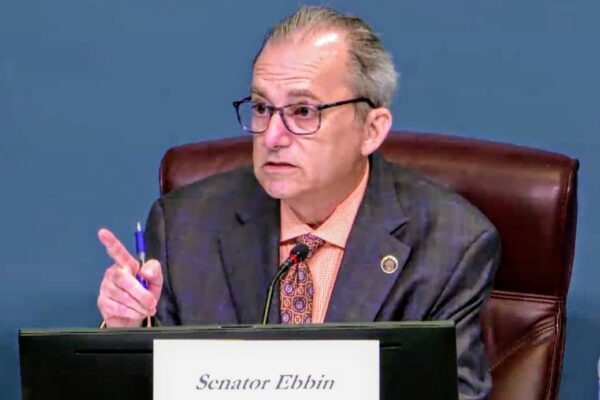
For Sen. Adam Ebbin, the task of securing dedicated revenue streams for Northern Virginia transit is now 50% complete, as the region’s transit subcommittee approved a new spending package proposal this week.
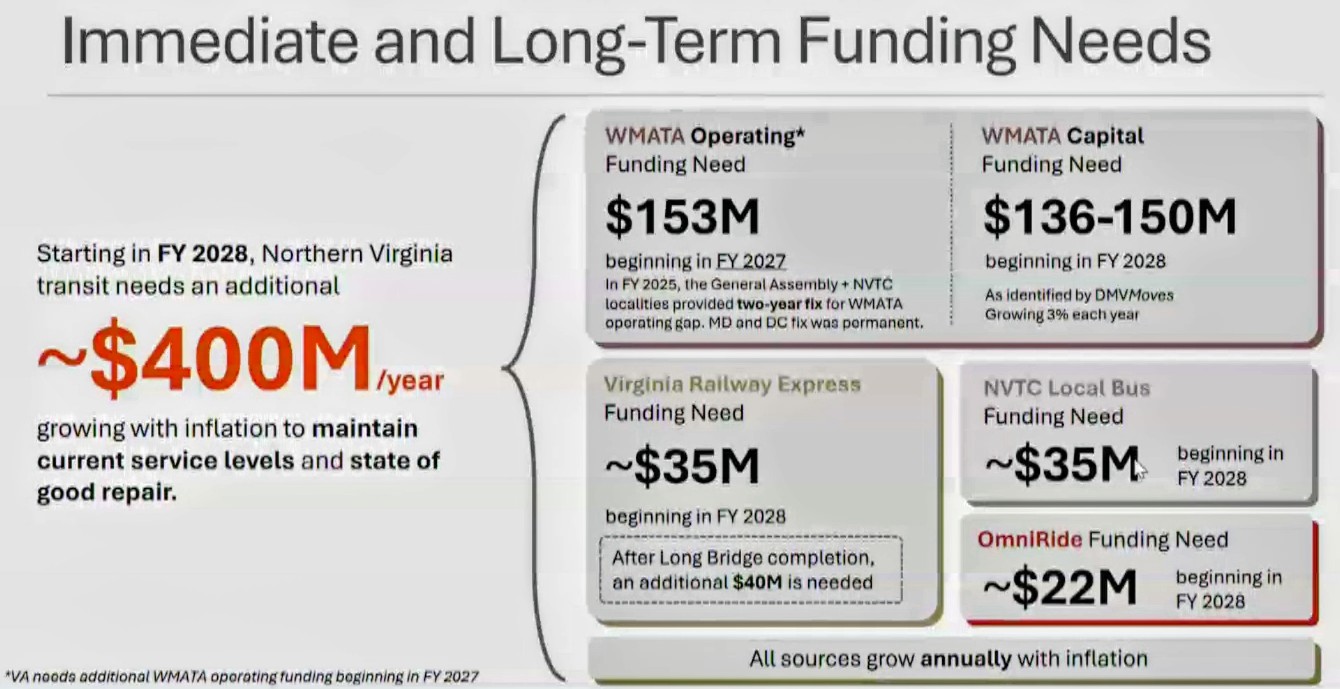
In conversations with the Northern Virginia Growing Needs of Public Transit Joint Subcommittee, Ebbin (D-39) successfully shepherded near-unanimous support for the package, which calls for $400 million annually in new spending.
If approved, the package would shore up funding for the Metro system, Virginia Railway Express and local transit agencies in a swath running from the inner Northern Virginia suburbs west to Loudoun County and south to Spotsylvania County.
Next stop for the proposal will be the 2026 legislative session, which opens in mid-January and is slated to run for 60 days.
“We are committed to getting something passed,” Ebbin said at the Nov. 6 meeting of the Northern Virginia Transportation Commission (NVTC) board of directors.
His comments came a day after the panel, better known as the SJ28 Subcommittee, adopted its final recommendations after eight meetings spanning over 18 months.
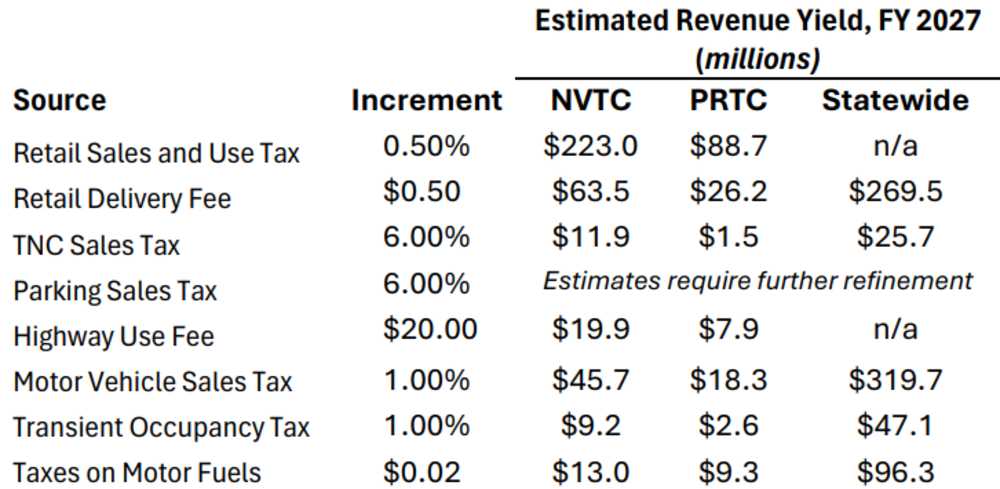
Potential funding streams include increases to the sales tax, motor vehicle sales tax, motor fuels tax, highway-use fee and transient-occupancy tax, and new taxes and fees on retail deliveries, paid parking and rideshare services.
At the request of Sen. Scott Surovell (D-34), the list of revenue options was left open to other possibilities. These include a tax on every off-street parking space in the region to discourage vehicles and encourage transit.
There also could be consideration of expanded tolling on Interstate 66 inside the Beltway.
Among the various options, the subcommittee did not list its preferences in any order.
“This is written in a broad way,” Ebbin said of the final report. “We do need some flexibility so we can come up with a workable solution that will make it through the legislative process. We’ve established a good set of principles.”
Where the proposal goes from here, Ebbin said, remains an open question. The new year will bring the arrival of Abigail Spanberger as governor, a significantly expanded Democratic majority in the House of Delegates and ongoing concerns about the economic impact of federal-government cutbacks.
“It’s hard to predict how the General Assembly session will go,” he said.
The subcommittee’s options and their revenue estimates provide “a menu for policymakers to choose from,” said Andrew D’huyvetter, NVTC’s director of programs and policy.
All state legislators on Ebbin’s panel voted in support of the SJ28 plan. The only no vote came from Tiffany Robinson, director of the Virginia Department of Rail and Public Transportation and Gov. Glenn Youngkin’s former deputy chief of staff.
While Ebbin shepherded the subcommittee’s work, Del. Mark Sickles (D-17) appears to be taking the lead in getting proposed legislation prepared for submission.
Legislators would have until early January to have a proposal ready for General Assembly consideration. But some local leaders hope a measure could be crafted before then.
“Sooner rather than later is better,” said Fairfax County Supervisor Walter Alcorn (D-Hunter Mill), a member of the boards of both NVTC and the Washington Metropolitan Area Transit Authority.
Also at the Nov. 6 NVTC meeting, members unanimously supported a package adopted in late October by the DMV Moves Task Force, a joint effort of the Metropolitan Washington Council of Governments and the Washington Metropolitan Area Transit Authority.
The package seeks dedicated revenue streams to support future capital costs for the Metro system, but leaves it up to Virginia, Maryland and D.C. officials to determine how their shares would be paid.
The full $400 million in additional annual revenue sought by Ebbin’s subcommittee wouldn’t be needed until mid-2027. But about $153 million to support the Metro’s operating fund would be required a year earlier, as a revenue stream from the state government that has helped the transit agency the past two years is being eliminated.

Some of the same local-government officials on the NVTC panel seemed relieved that the responsibility for determining what kinds of tax and fee increases would be required to fund the additional spending in future years would be in the hands of state lawmakers rather than themselves.
“You guys will figure it out,” Arlington County Board member Matt de Ferranti said to his counterparts in the legislature, with something of a chuckle.
At the NVTC meeting, members reported increases in transit ridership across the region, but also held concerns about the impacts of the ongoing government shutdown.
The shutdown “has impacted ridership” but it’s too early to tell how much, said Sophie Spiliotopoulos, a data-visualization manager for NVTC.
Getting dedicated funding streams as envisioned in the subcommittee and DMV Moves plans would provide stability to a regional transit network that in many cases has surpassed pre-COVID ridership levels, she said.
“We’re not talking recovery any more; we’re talking growth,” Spiliotopoulos said. “The funding uncertainty that we’re facing right now does put all this hard work and all this progress at risk.”
