

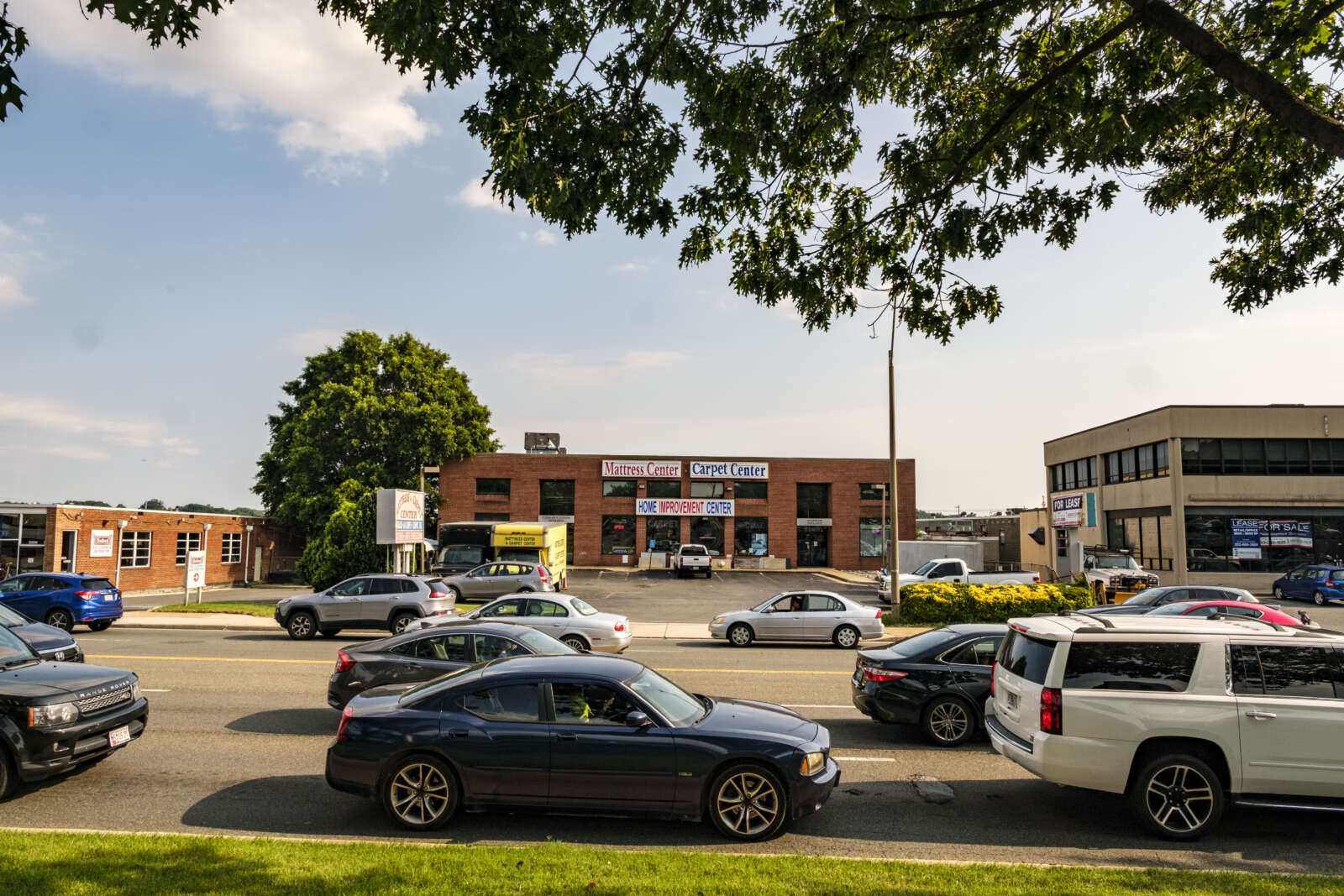
Back-and-forth arguments over the Duke Street Transitway had shades of Seminary Road at discussions during a Transportation Commission meeting last week.
The proposed transitway is part of the Duke Street In Motion project which aims to revamp Duke Street to prioritize public transit and walkability alongside car traffic. The transitway will potentially mix dedicated bus lanes and mixed-traffic lanes for a new system that should make transit more efficient along Duke Street.
At the meeting, criticism came from voices ranging from civic association leadership to a former DASH general manager.
“I love DASH, anything the city can do to encourage ridership… can serve to make the city a better place to live,” said Sandy Modell, an Alexandria Living Legend and former DASH General Manager. “[But] we’re not studying what’s happened since covid and before covid when Metrorail, DASH and Metro bus were all experiencing ridership loss.”
Modell said the city is dedicating a lot of money to a project without a full understanding of how transit ridership will evolve.
Although the city received an $87 million grant from the Northern Virginia Transportation Authority for planning, design, and construction of a transitway along the Duke Street Corridor from Landmark Mall to King Street Metro Station, some in the audience raised concerns this may not accurately represent the full cost of the project.
“We have an upwards of $100 million project if not more being considered tonight that will significantly impact travel on the corridor both during and after construction, but what we don’t have is a full evaluation and study of the changes that have taken place on that system since we’ve gone fare-free and since we put in a new DASH network,” Modell said.
Carter Flemming, Chair of the Alexandria Federation of Civic Associations, likewise said the project seems rooted in outdated assumptions about work and travel patterns.
Bill Rossello, President of the Seminary Hill Association, said there are unanswered questions about the cost of the project and the design.
“So it seems that the city is preparing to commit a huge amount of grant money and inevitably a lot of direct city taxpayer money to a confusing project that most residents don’t want, didn’t ask for, and don’t understand, and one that doesn’t promise to relieve traffic congestion and may not improve travel times for anyone,” Rossello said.
The project also had some support. Ken Notis, Chair of the Alexandria Bicycle and Pedestrian Advisory Committee, said there is more cost to further study than gain.
“There have been calls for delay and delay and study and more study,” Notis said. “I have done benefit-cost analysis professionally, I have done transportation analysis professionally: that further analysis isn’t free, it costs money, there will always be something else that someone wants studied. You can’t delay doing something forever because things change. The need for more transit has only grown.”
The mood on the Transportation Commission seemed closer to Notis than critics of the project.
Transportation Commission member Melissa McMahon said the Duke Street corridor population is growing and with that could come more traffic.
“The only way this corridor can handle that demand is transit,” said McMahon. “We’re not going to be able to handle that by cars. If we don’t provide really good transit, you’re just going to have gridlock because people are going to be in cars thinking that’s how they’re going to get there.”
Others said the transitway is a once-in-a-lifetime opportunity, likening opposition based on cost and impact to the opposition Metro faced.
McMahon said the project is a long-term one that will have a lot of time to address funding concerns.
“What I fear and what I don’t want to happen is the value engineering weird stuff that started to happen with the Potomac Yard Metro where we got to a point in the process where they started taking away entrances and things. That freaked out the community and it changed what we had level set as expectations,” he said. “I feel like we need to be very clear about what this corridor should do.”
