

A bill that would make it easier for churches to pursue affordable housing development on their properties is on its way to Gov. Abigail Spanberger (D). An Alexandria church leader whose church brought affordable housing to its property says the bill would help churches that have faced greater challenges with getting local approval.
The “Faith in Housing” bill would remove the rezoning step for faith-based organizations and other tax-exempt organizations seeking to develop housing on their land. Under the bill, the developments must be at least 60 percent affordable units for a minimum of 30 years. Church-based developments would be subject to property tax unless the locality chooses to exempt them.
The final bill incorporates environmental review, historical preservation and archaeological considerations following feedback from localities and other stakeholders. If signed by Spanberger, the bill would take effect Jan. 1, 2027 and have a sunset date of Jan. 1, 2031, unless the General Assembly extends it.
Annika Schunn, a policy advocate at Housing Opportunities Made Equal of Virginia, told ALXnow the “Faith in Housing” bill is one of a few bills addressing the housing shortage that survived the General Assembly session. Schunn said more than 150,000 rental units affordable to low-income renters are needed. That includes congregation members who are struggling to afford housing near their churches.
According to the pro-housing coalition HousingForward Virginia, faith-based organizations own more than 74,000 acres in the state, ranging from smaller urban properties to larger rural campuses. About 63 percent of the properties are one acre or more, which could have development potential.
“There are already projects underway right now that could have benefited from that legislation, but certainly there are many more folks who we expect are going to begin projects once it takes effect,” Schunn said.
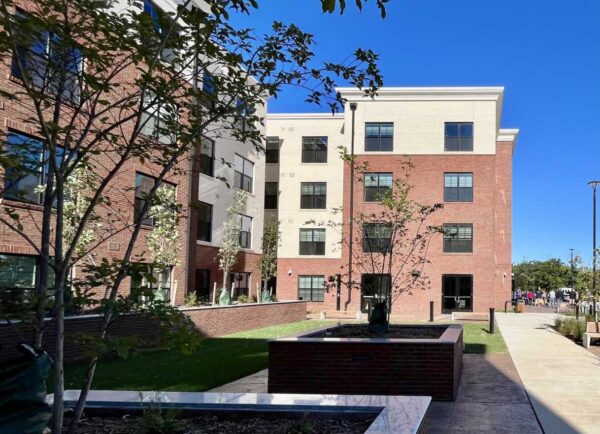
In Alexandria, one recent example of church-based affordable housing development is the Waypoint at Fairlington. The 81-unit development, led by affordable housing developer Wesley Housing, was built on part of the church’s parking lot and opened in 2022.
Rev. Juli Wilson-Black, the pastor at Fairlington Presbyterian Church, told ALXnow that developing affordable housing on a church property “is a big lift.” It helps when the church has favorable zoning laws and support from the locality.
“We’re fortunate that the City of Alexandria was very motivated to build affordable housing, and the staff from the city worked with us to get over the roadblocks to make our project possible,” Wilson-Black said. “But a lot of churches don’t have that kind of support, and when neighbors come out opposed to development, as they always do, a lot of times localities will listen to those voices because they’re the loudest voices in the room, instead of really listening to the voices of the people who need the housing.”
The pastor has heard from colleagues that rising operating costs have left some churches struggling, and selling part of their land for affordable housing helps keep the doors open.
“When that isn’t possible, churches close, and then they just get sold to the highest bidder,” Wilson-Black said. “And [in] a lot of cases, what happens is the churches get torn down, and luxury housing gets built, which does not serve the community.”
Wilson-Black says churches already provide numerous services to the community, such as low-cost meeting space for community groups, food pantries and more. Fairlington Presbyterian Church has built connections with Waypoint residents by coordinating activities, as well as hosting cookouts, back-to-school events, rummage sales and other gatherings. The church even hosted a funeral service for one of the residents who died unexpectedly.
The pastor said the Waypoint had been met with resistance from some anti-development residents despite being “very consistent with the other types of housing in our neighborhood.” If the bill becomes law, churches seeking to develop affordable housing would still need to obtain a special use permit reviewed by city staff. Wilson-Black said developments would still need to meet environmental impact, infrastructure and other requirements.
“It’s an uphill battle to start with, and this legislation gives congregations the ability to streamline the process so that they just have to go through the regular permitting process instead of a public hearing and rezoning process,” Wilson-Black said.
Photo via Wesley Housing/Facebook
