

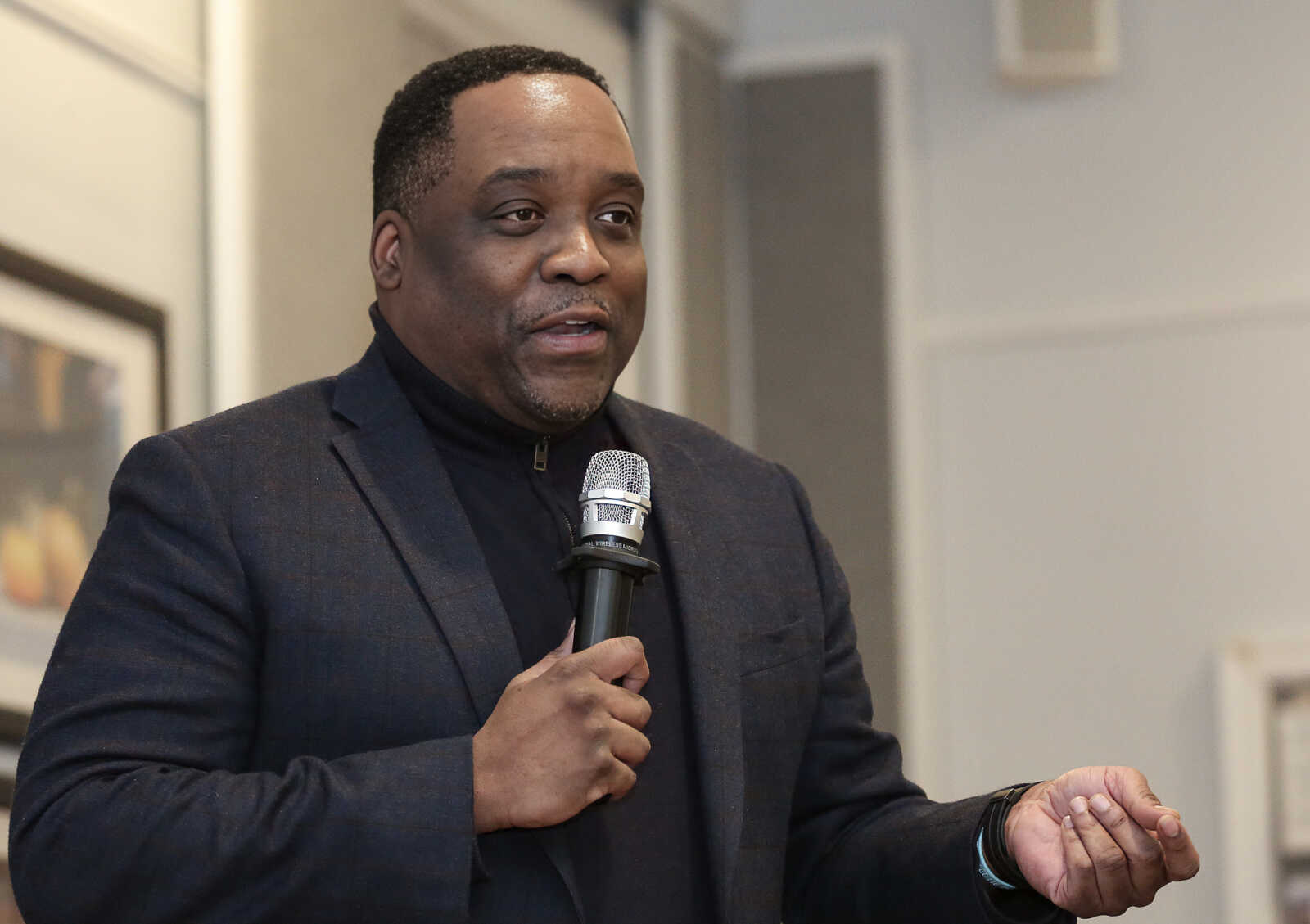
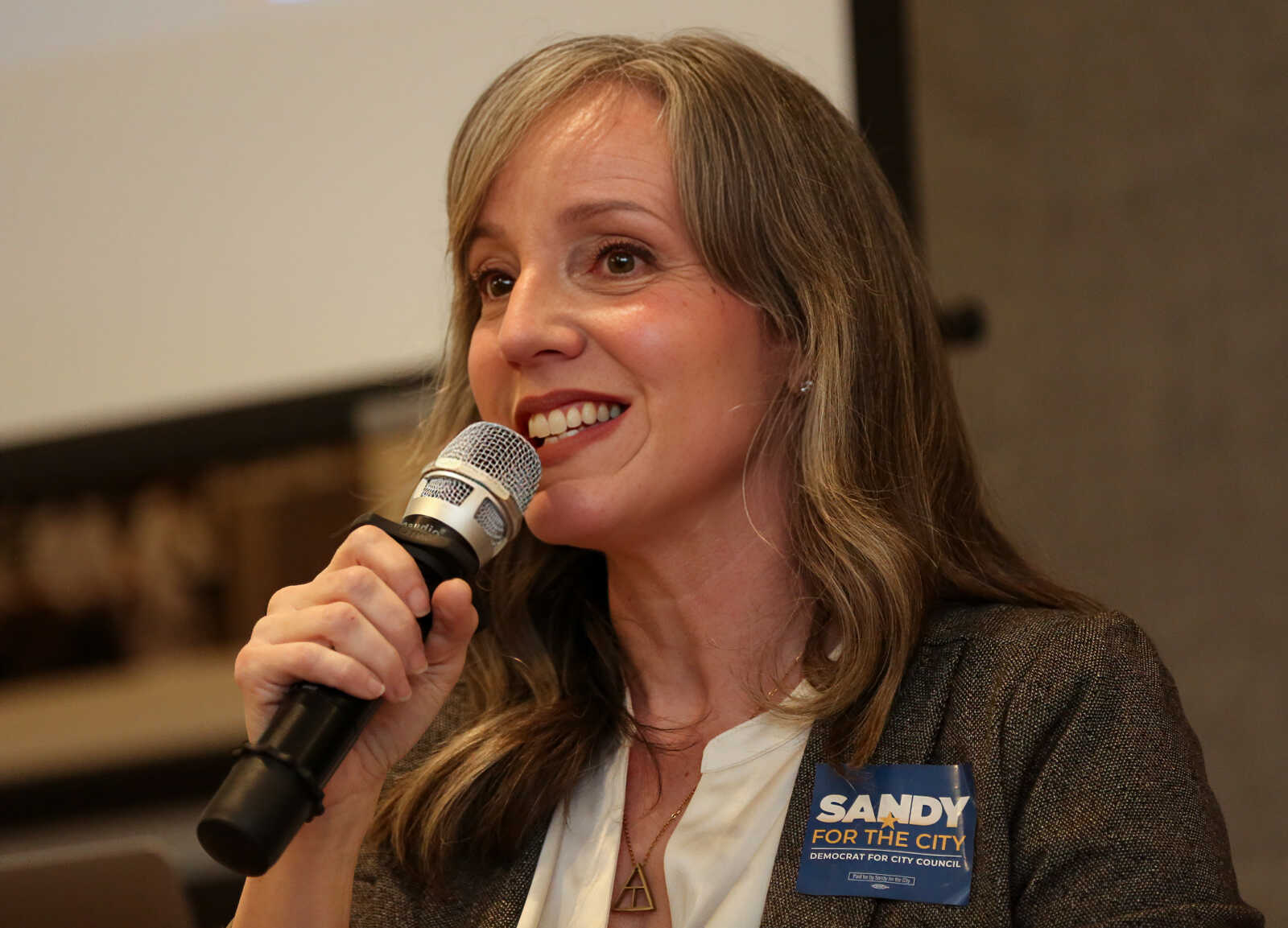
Democratic candidates for Alexandria City Council shared their views on economic development, traffic and parking, housing growth and more during a forum last night (Wednesday).
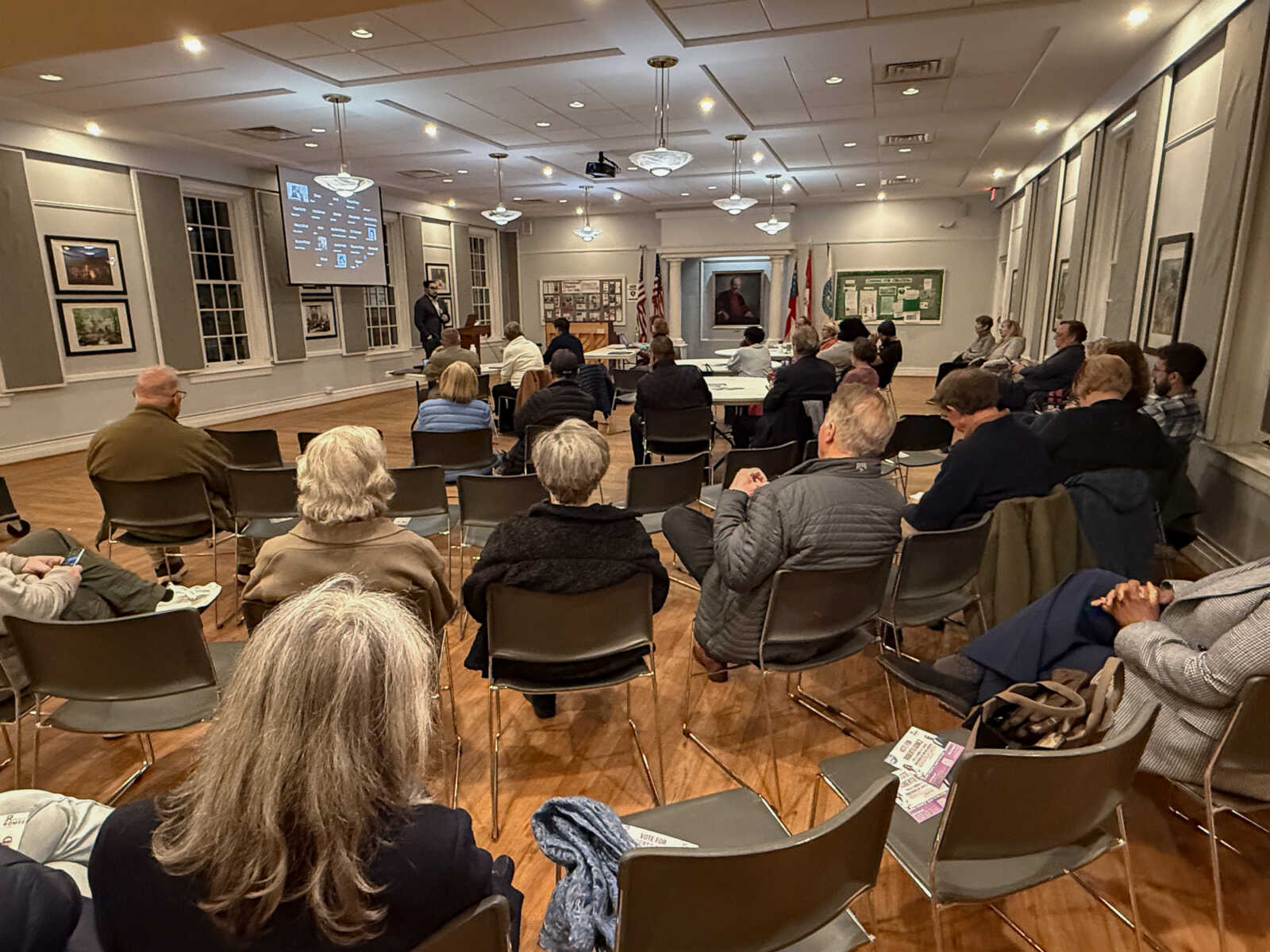
The event was hosted by Alexandria Federation of Civic Associations at Immanuel Church on the Hill ahead of Saturday’s Democratic firehouse primary. About two dozen people turned out and several more attended via Zoom to the event, which was moderated by Bill Rossello, president of the Seminary Hill Association.
Giving solo presentations, each candidate answered five general questions and one personalized question, in addition to participating in a “lightning round” of policy opinions. The lightning round notably included a proposed redesign plan on Braddock Road, in which three candidates retracted previous support they had expressed to the Alexandria Bicycle & Pedestrian Advisory Committee.
Independent candidate Frank Fannon, a former Republican member of City Council, was not able to attend but is expected to appear at the federation’s next candidate forum on April 1.
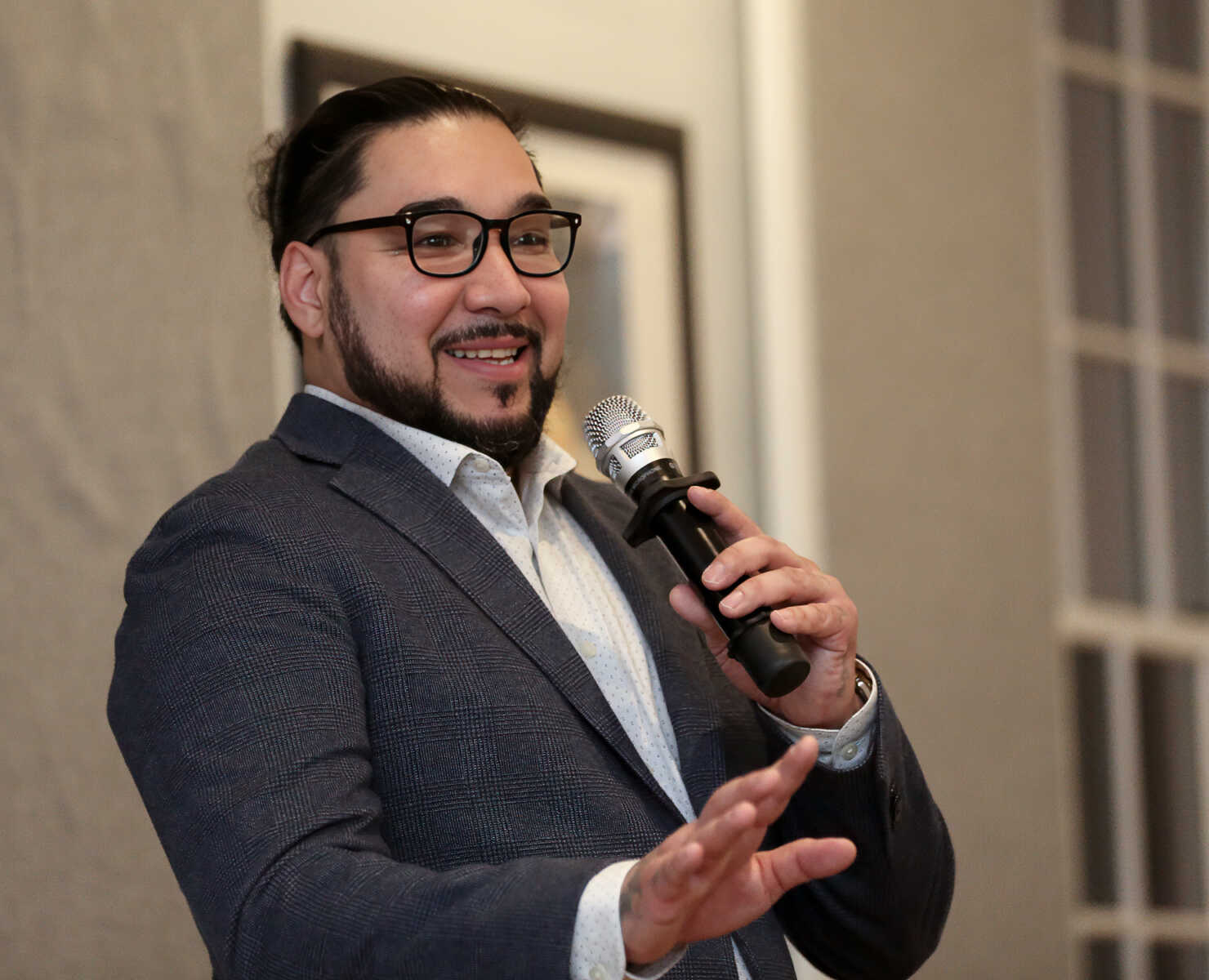
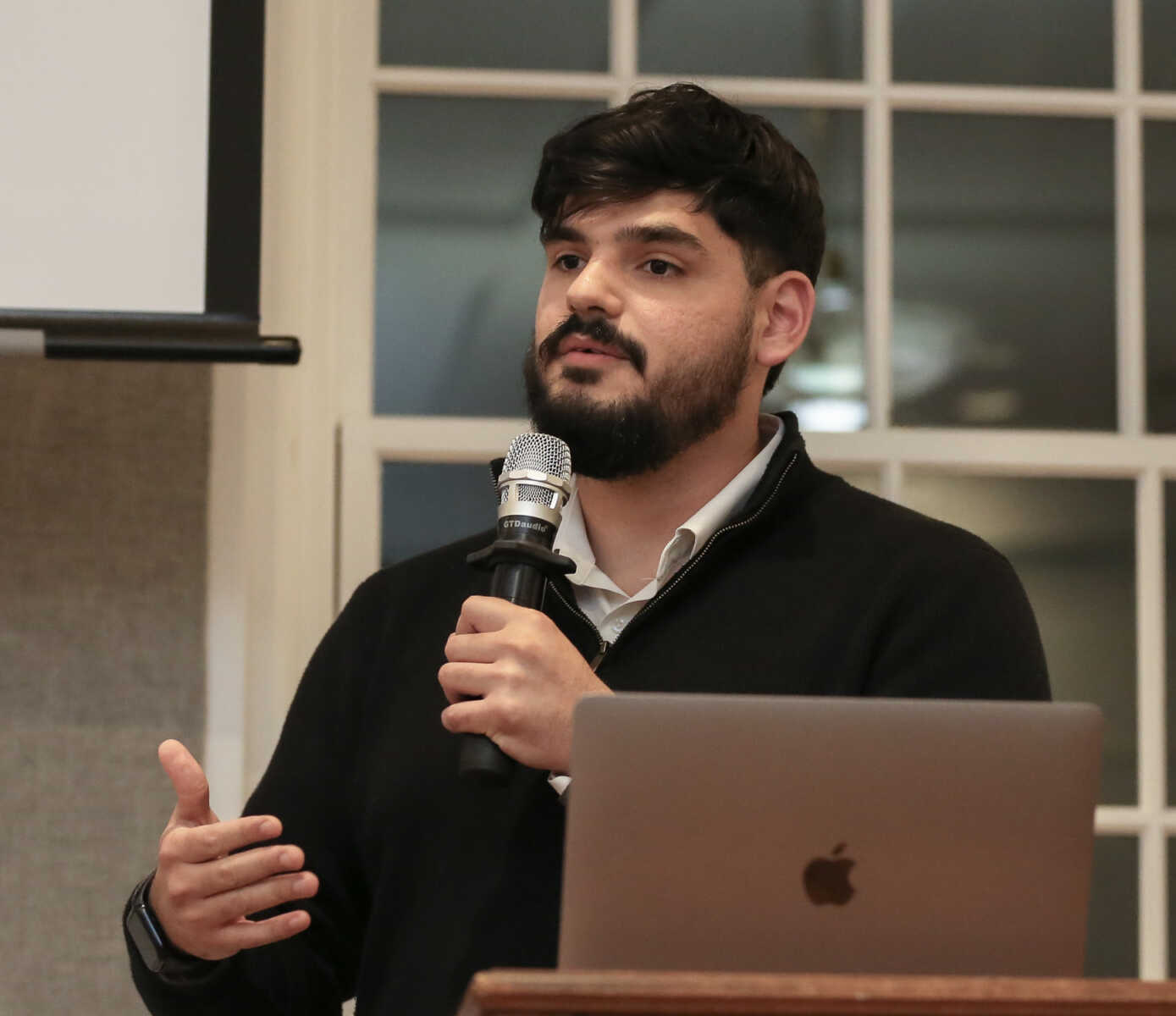
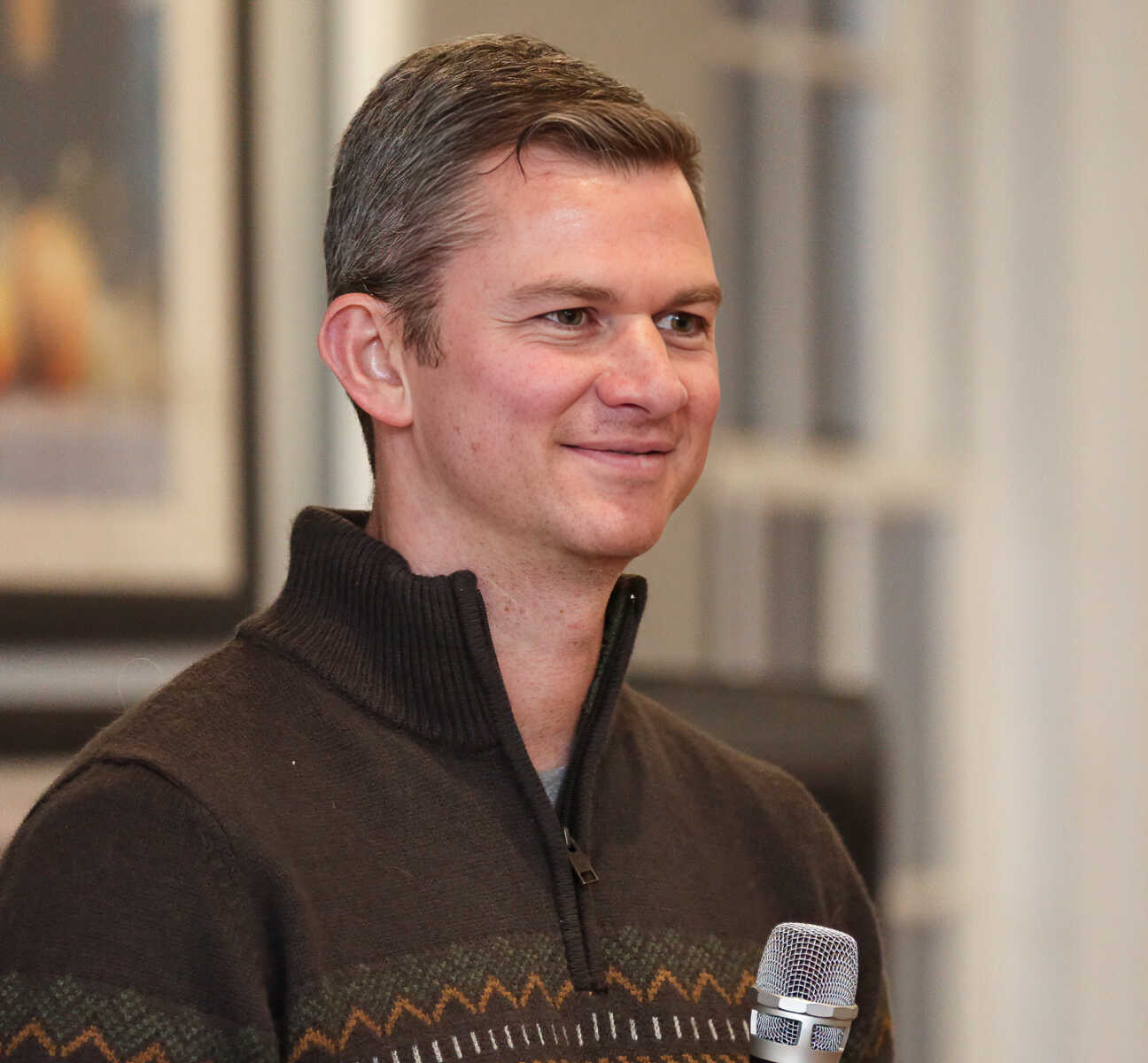
The five Democrats running for former councilman R. Kirk McPike’s seat are:
- Sandy Marks, former Alexandria Democratic Committee chair
- Tim Laderach, president of the Del Ray Citizens Association
- Roberto Gomez, leader of nonprofit Cornerstone Craftsman
- Cesar Madison Tapia, D.C. Public Schools teacher
- Charles Sumpter, executive at World Wildlife Fund
Civic association influence
Candidates were asked, “To what extent should neighbors and civic associations have a meaningful say in what happens in their neighborhoods, especially in terms of development, roadway design and elimination of parking?”
Gomez said “we should have very intentional conversations and ensure that voices feel like they’re being heard.”
“We can’t just assume that the needs of one are the needs of all,” Gomez said. “I’m a firm believer of developing champions in every neighborhood, not just civic associations. Perhaps there’s associations or coalitions that we can build in other neighborhoods that traditionally don’t find themselves at the voice of the table.”
Madison Tapia said civic associations “should be at the front line.”
“But I also think that people who are just everyday folks, just like myself, didn’t even know you guys existed until about, like, two weeks ago … we also have to communicate with them that you guys exist, and that there’s actually civic associations that work for them as well.”
Laderach said the city “needs to be shaped by the residents that live here,” which includes civic associations.
“However, through this experience of being a [DRCA] president, I’ve also understood that the people who do come to our meetings, who are able to have a voice at those meetings, doesn’t necessarily represent all of Alexandria, and I’m running to be a voice for all of Alexandria,” he said.
Sumpter said civic associations should have “a huge role in that consideration” and said “I know what that’s like, to be ignored when things are going on in your community,” referencing his upbringing in New York City public housing.
“I think we need more conversation, and that’s OK. I think you should. That’s what makes democracy healthy,” he said. “Now, residents also have to understand, just because you’re upset doesn’t mean you’re always going to get your way, because there’s a balance.”
Marks said she loves place-based communication and that she thinks the role of government “is to meet the needs of the people.” She also said “it’s really important that we consider who attends our civic association meetings and who is able to come speak before Council.”
“I grew up in an apartment with my mom, my single mother … [she] never could have participated and be civically engaged the way that we are all able,” Marks said, adding that “we need to do a really good job listening, and then we also need to look to experts in data and work together to find the most equitable and accommodating solutions we can to complex problems.”

Housing growth
Referencing the city’s density and ongoing financial headwinds, candidates were asked, “How much more housing growth do you think the city can afford in terms of city services, transit and infrastructure — things like roads, schools, fire stations, sewers and storm water?”
Gomez said it’s “no secret” the city is operating at a deficit and that he agrees with many parts of the developing Housing 2040 Master Plan — specifically, protections for tenants’ rights and resources for seniors and people with disabilities.
“I live on the West End. Density comes with challenges,” Gomez said. “However, I think that there are ways to consider growth. But at the same time … the preservation of quality of life for longtime Alexandrians, lifelong Alexandrians, and ensuring, to the best of our ability, we don’t disrupt that.”
Madison Tapia said he wants to stay in the city and grow it, but said “let’s not build so much to the point where we lose our identity as a city.”
“I want to own a house that has a backyard,” he said. “When we talk about affordability in a house, I don’t just mean a box with a toilet in it.”
Laderach said “we have to ensure that we have the good, strong commercial growth to rebalance our tax base, so that the burden doesn’t fall on homeowners” and talked about growing revenue to sustain infrastructure.
“There are obvious places to put commercial growth,” Laderach said. “We have our Potomac Yard corridor, we have the Eisenhower corridor, and we have our West End development with Inova health campus.”
Sumpter said “I think we have to strike the right balance between density and infrastructure, and that density should pay for that infrastructure.”
“In terms of building newer, the ‘Missing Middle,’ right, we have single-family homes and we have big apartment buildings. I don’t think we need to do that, but I think there’s a place in the middle that we can find housing that supports a little bit more families. But again, the infrastructure has to be able to support that.”
Marks said “I think that there is certainly room and space for people to coexist in Alexandria, and I think there are plenty of people who are willing to welcome and make room.”
Referencing “heat maps” she has seen showcasing racial and climate inequities in the city, she said “plenty of the places that heat up on that map have incurred a lot of the new housing and of the development in our area.”
“I think what we have to do is we have to think about, how can neighborhoods that haven’t been touched for decades help contribute to lowering the scarcity pricing of housing in our city by taking on some of the [development] load appropriately, and with community input?”
She also advocated for more transit-connected housing.

Traffic
Candidates were asked, “What would City Hall do with you on Council to ease traffic congestion around the city for neighbors who depend on their motor vehicles for their mobility, including families with children, those for whom their vehicle is their most sensible commuting choice, people who cannot safely ride a bike or a scooter, and older neighbors who have no other choice?”
Gomez joked that “with me on Council, all those problems would go away in the first day.” He expressed frustration with traffic and praised DASH.
“I think that mapping, focusing in on mapping traffic patterns to coexist with efficient bus routes, is something that we should, you know, take a further look at … There’s absolutely no way everybody in the city is going to be walking to where they go,” Gomez said. He also mentioned using artificial intelligence to map traffic patterns.
Madison Tapia referenced the city’s density and spoke about improving access for senior travelers and families with students.
“Let’s have safer intersections where both bikers and people who drive can actually have accessibility to it, than just saying, ‘hey, you know, let’s just focus on people who are young like myself,'” he added.
Laderach said “a smart investment in transit and helping that to be an option for more individuals” could help residents get around the city and said the Duke Street Land Use Plan is a “great opportunity to increase our development.”
“We have opportunities to make places along Duke Street so that people don’t have to travel as far within the city to get to where they need to go,” Laderach said, “so they can still access essential services that are closer to home, so we’re not having to travel, you know, from the west to the east for everything that we need.”
Sumpter said it’s important to listen to people who rely on cars for mobility and independence.
“I think we have to just kind of think about those perspectives and those people and try to make accommodations for those where biking is not going to be an option — but it doesn’t mean we shouldn’t have bike lanes in the city,” he said, adding, “How are we getting our data? What is the crash data? Does it support removing parking? Me personally, I’m not sure it does.”
He also said if elected that he would support DASH and looking into “public transit options that are that are accessible to all people.”
Marks said she could “read between the lines and understand what you’re getting at with that question,” adding, “I am a proponent and believer in bicycle and pedestrian safety, and also, many times, we have to use our cars.”
“We have to do some traffic calming. We have to make some adjustments to our traffic calming plans,” she said. “But what I would really like to do is give neighborhoods on these heat maps I’m talking about, the opportunity to find the things that they need without having to travel so far.”
Improvements to city departments
Candidates were asked, “What city departments or operations do you believe need improvements? What do you think they need to do to achieve those improvements?”
Gomez said the city has “a lot of great services” and praised a program that distributes condoms and drug testing strips to youth.
“I think we could strengthen how we sift through money that we’re spending and the data, in regards to the impact that it’s making in different areas of the community,” Gomez said.
He added, “I think that we can provide better services to our seniors to combat isolation and mental health issues and also deal with the challenge of putting on a fixed income or even maintaining their home.”
Madison Tapia said “I don’t think bashing departments is going to work here, because everybody’s a hard worker in this city,” but suggested working with the Office of Housing to “get more folks involved.”
“Modernize it a little bit more to where there’s outreach where people can know about this stuff,” he said. “Same with zoning, same with all these commissions … There’s a lot that we can do to improve, and I think one of those starts with outreach and modernization of our city.”
Laderach said he sees “silos” throughout the city government and community that could use improved communication.
“We can help the city identify where those potential silos are and exist, and where we can do better to help communications amongst those departments,” he said. “I don’t want to just completely drag the city down — I think we are doing some good efforts to identify those now and find opportunities for synergy.”
Sumpter referenced his experiences at Safe Space NOVA, where he said he came across kids without mental health care providers. He said the Department of Community & Human Services could use more support providing access to mental health resources, including to families with transitioning youth.
“This is the work I’ve been doing for years behind the scenes that doesn’t get talked about,” he said. “When I was leading our HIV/AIDS work, so many of those people lacked housing support, lacked mental health support … that is important work.”
Marks said communications could be improved, and that she wants to see more people “opt-in” to receive city information.
“As we’ve seen just about this election and everything else, you know, we can’t only build programs and release information, and expect that people will just come find it,” she said.

Economic development
Referencing regional job losses over the past two decades, candidates were asked, “What specific solutions would you propose to attract commercial businesses that would bring significant amounts of jobs and tax revenue to the city?”
Gomez said “there’s a lot of new potential jobs with the development of AI tools and how to use that. Whether you like it or hate it, it’s here.”
He also said the city could “focus on developing skilled career pipelines” and advocated for workforce training, referencing his nonprofit Cornerstone Craftsman.
Madison Tapia said the city should focus on strengthening small businesses.
“How do we compete with Arlington and Fairfax and say, ‘Hey, this town right here has better stuff for you to come build,’ and also build a better workforce initiative, whether it be in after school programs or even internships,” Madison Tapia said.
Laderach recommended listeners to his Substack and referenced a recent conversation he had with Clark Mercer, who chairs the Metropolitan Washington Council of Governments.
“What struck me from him was just talking about how our area, we really don’t have a regional development plan,” Laderach said.
He added, “I think that there’s opportunity there, from an Alexandria standpoint, to stop seeing development as a winner-takes-all, zero-sum game, and to try to look at regional development as a potential solution.”
Sumpter said there is a lack of housing stock as well as a lack of skilled labor to build and maintain homes. He also talked about “growing our workforce so that they are prepared for the AI age.”
“We need to get ahead of that,” he said. “We’re too close to the nation’s capital to not be thinking about how to tap into that. Can we be the new high-tech valley? Is there places along Eisenhower? … Are there tax incentives, particularly around the green economy, that we can be thinking about taking advantage of?”
Marks said the city is performing well at “priming our citizenry for work,” but could do more to grow these training programs.
“Our children are are just needing a lot of after school enrichment and activity, and we can be teaching them really valuable skills,” she said. “I’m tired of driving my kids to Fairfax County to do enrichment activities. I want to do them here. And I think if we can grow our citizenry, our kids, our neighbors, into a really valuable workforce — which we are — we can attract businesses who will come to Alexandria.”
Bonus questions
Candidates were asked one additional question specifically pertaining to their campaign.
Gomez was asked what issues he thinks need to be addressed for middle class and longtime residents.
Gomez said “their voices need to be heard.”
“We’re clearly here because the people in this room maybe feel different about some of the decisions that are being made, and I know what it’s like to not have my voice heard,” he said.
Madison Tapia was asked about improving affordability for middle class and longtime residents. He said his campaign is focused on young voices who are concerned about the same issue.
“What I would bring to the people is the new perspective of somebody who lives here paycheck to paycheck, who has worn the uniform of the United States Army, who has also been a worker at retail stores, a delivery driver … I’m not going to sit here and blatantly lie to y’all that I have all the solutions.”
Laderach was asked about how he would define the West End and characterize the interests of its residents. Laderach talked about fostering identity and place-based development.
Referencing development, he said, “It’s just kind of become a large swath of everything west of Quaker [Lane]. So, what do I see as West End? I see a lot of potential to help neighbors in the West End help develop that sense of place, and we can do that with things like the Duke Street Use Plan.”
Sumpter was asked if “the whole series of events leading up to this City Council firehouse primary has been a ‘travesty of democracy.'” The question referenced Sumpter’s words to describe last month’s State Senate firehouse primary.
He said yes, and that he advocated to change the state’s election law. He added the current election process has “barely” given voters a chance to hear from candidates and make decisions.
“That’s not how it should be in our country,” he said. “We should have the opportunity to hear ideas, to debate them, and for people to make an informed decision.”
Marks was asked if she believed that City Council “should compel ACPS” to cut down on new positions that have been established in the Central Office since 2018. The question referenced her support of the city to lobby the General Assembly for more education funding.
Marks pushed back on the question.
“The School Board makes decisions about Central Office. I mean, how would you like me to compel them?” she said. “I think that education is a critical and important community value. I obviously have thoughts on how our school system is run and how Central Office is run, and that is because I am a parent and I am on Facebook.”
She added, “I am very interested in working together with colleagues on the School Board, many of whom have endorsed me from districts A, B and C, because I am incredibly interested in working together to solve problems, that includes budgetary problems.”
Regarding the state legislature, she said, “What I’m saying is that we now have a governor who is open and receptive and actually supports public schools as a concept, which is not something we’ve had for the past three years.”

‘Lightning round’ questions
Candidates were asked to say “yea” or “nay” to the following policies.
Zoning for Housing/Housing for All
Gomez: Yea, but with caveat; he disapproved of “packaging everything together for one large vote.”
Madison Tapia: Declined to say yea or nay. He said he has talked to homeowners who “don’t want to see a big skyscraper next to my house,” but that “we also have to put into perspective people who want to live here and also want to have a future here.”
Laderach: Yea
Sumpter: “Not blanketly, no.”
Marks: Yea
Parking reductions for future developments
Gomez: “People living here should have an opportunity to have close proximity to their homes. I think that a blanket solution is never the answer, and I think there’s room to compromise in many ways.”
Madison Tapia: Asked for explanation; said, “I think everybody deserves a parking spot.” Mentioned living in Foxchase and having to park “four blocks away” if he isn’t home by 7 p.m.
Laderach: Yea
Sumpter: Yea
Marks: Yea
Gomez: “I can’t answer just yea or nay in this kind of way. I believe that we need to give these things a lot of consideration.”
Madison Tapia: Asked for explanation; said he is a nay “for now” until he has more information
Laderach: Yea
Sumpter: Nay
Marks: Yea
Waterfront Pump Station project
Gomez: “I need to consider things fully. I can’t give knee jerk responses. As much as some people may want to hear that, I think these kind of decisions require a lot of full consideration.”
Madison Tapia: “It should be the decision of the folks that live around there, and they’re going to feel the impact of that.”
Laderach: Yea
Sumpter: Nay
Marks: Yea
Gomez: “I think that when we make these decisions, we need to have residents’ voices at the table and fully consider them in a timely manner.” This is a retraction from previous support expressed to the Alexandria Bicycle & Pedestrian Advisory Committee.
Madison Tapia: Said he is a “no,” but then retracted the statement until he can receive “the full details.” This is a retraction from previous support expressed to the Alexandria Bicycle & Pedestrian Advisory Committee.
Laderach: Yea
Sumpter: Nay. This is a retraction from previous support expressed to the Alexandria Bicycle & Pedestrian Advisory Committee.
Marks: Yea
Modifying City Council elections to include voting districts
Gomez: Nay
Madison Tapia: “I think that one should go to the people. I think we should bring an amendment out, or whatever we call it over here, and have folks vote on it.”
Laderach: Nay, but said he wants to learn more about it.
Sumpter: Yea
Marks: Nay
