

Battalion chiefs at the Alexandria Fire Department do not qualify for overtime wages, the U.S. Court of Appeals for the Fourth Circuit ruled on Wednesday, siding with the city and affirming a lower district court’s 2023 judgment.
The plaintiffs, 10 current and former AFD battalion chiefs, had sued the department for unpaid overtime wages. Chief Judge Albert Diaz issued the deciding opinion in the case, stating that the chiefs were exempt from overtime pay under the Fair Labor Standards Act due to being “highly compensated employees,” a distinction that separates them from rank-and-file first responders under the city’s collective bargaining agreement.
While nonexempt employees get paid time-and-a-half for overtime under the Fair Labor Standards Act, the Department of Labor excludes “highly compensated employees” who are salaried, like the battalion chiefs, Diaz wrote.
The appeals court contended that the lower court applied the incorrect salary-basis test, but affirmed its judgment that battalion chiefs are not entitled to overtime wages.
“Although the issue is clear as mud, we think the district court applied the wrong salary-basis test,” Diaz wrote. “Even so, the chiefs are still paid on a salary basis. So we affirm.”
The appeal was argued May 9, and the decision took more than seven months to render. Unless the decision is successfully appealed to the U.S. Supreme Court, the judgment is final.
Diaz quoted William Shakespeare’s “Macbeth” in his judgment, and said that as far as the chiefs’ pay matrix is concerned, “Confusion now hath made his masterpiece.”
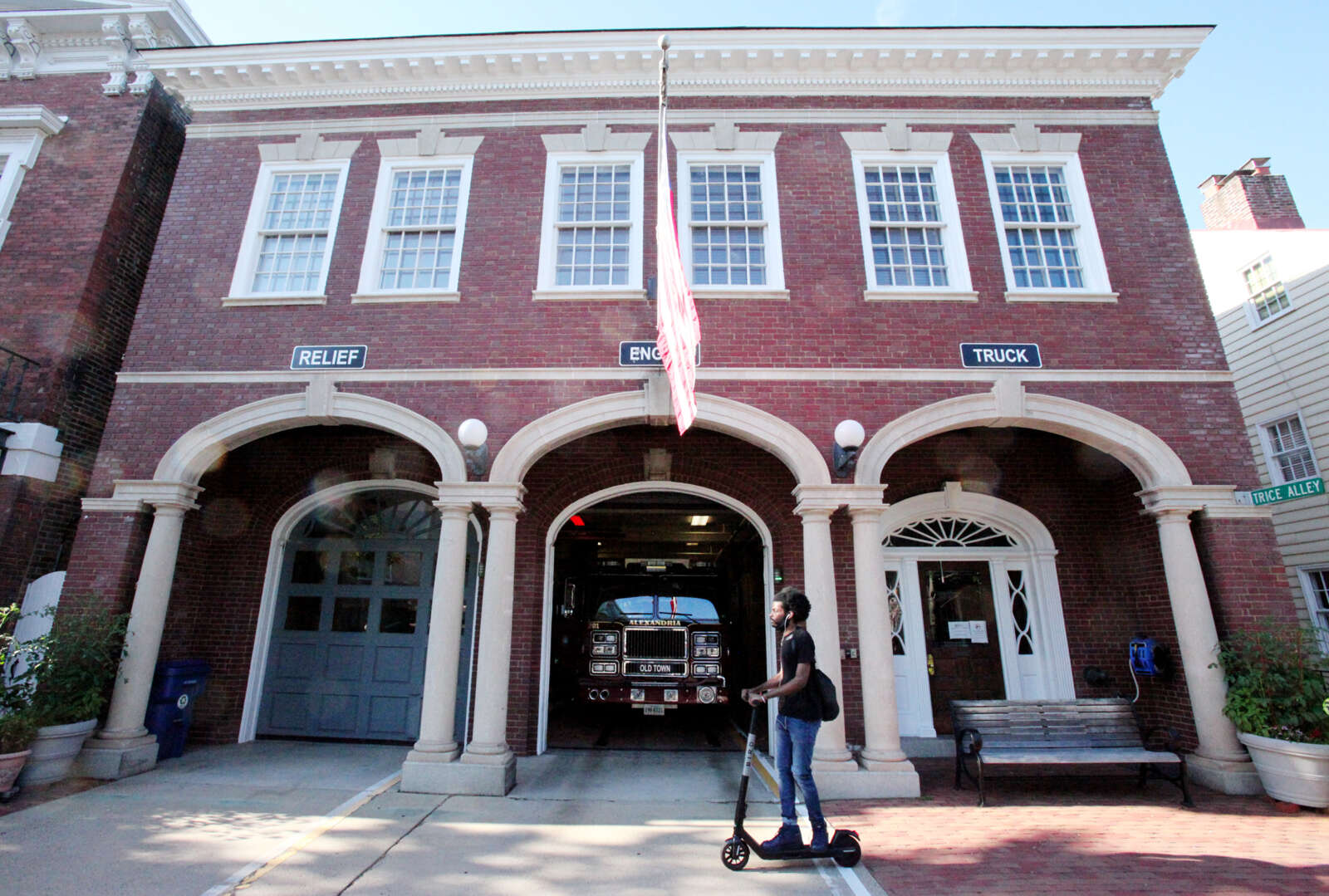
Organization of the Alexandria Fire Department
The department has 10 fire stations across the city managed by two battalions, and there are 10 overall battalion chiefs who rotate on day-to-day operational and administrative schedules.
“These chiefs are scheduled to work three 24-hour shifts according to a nine-day scheduling cycle,” Diaz wrote. “The nine-day cycles are staggered such that two operational chiefs are on duty each day (one for each battalion). During each nine-day cycle, the chiefs are on duty the first, third, and fifth days, and off duty the remaining six days. Their ‘work period’ is 28 days. The remaining four chiefs work an administrative schedule and handle special assignments. They typically work 40 hours per week and their ‘work period’ is 14 days.”
Each battalion chief gets a base annual salary, which the city uses to calculate hourly rates for operational and administrative shifts. In 2025, the salary pay scale ranged from $94,975 to $168,250, according to city documents.
Chiefs’ hourly rates, which are paid every two weeks, are determined by dividing the annual base salary by the average annual scheduled hours for each shift.
“For administrative shifts, the City calculates the hourly rate by dividing the base annual salary by 2080 hours,” Diaz wrote. “For operational shifts, however, the City divides the annual salary by 2912 hours.”
The nine-day scheduling can result in inconsistent pay periods. Consequently, the chiefs are paid for at least 106 hours each pay period, and are paid an hourly rate for off-schedule hours, or overtime, instead of the time-and-a-half that lower rank staff receive.
The city was represented by attorneys David F. Dabbs and Brian D. Schmalzbach, both of Richmond-based McGuireWoods. Plaintiffs were represented by attorneys Robert Wesley Thayer Tucci and Gregg C. Greenberg, both of Silver Spring-based employment firm Zipin, Amster and Greenberg.
ALXnow has reached out to the attorneys for comment.
