

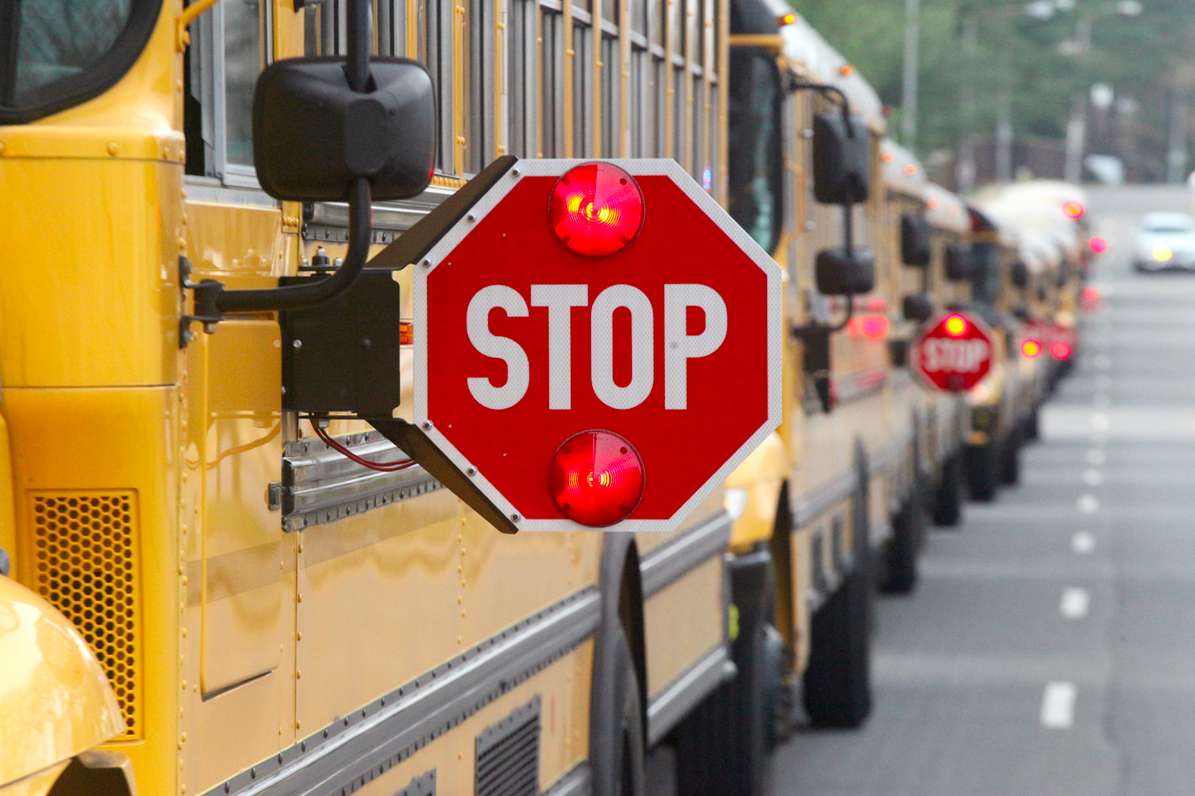
City staff are recommending a phased transition to replace school buses for Alexandria City High School students with DASH buses.
The City Council asked staff in January to consider the transition for ACHS, Virginia’s largest high school with multiple campuses and over 4,500 students. Staff have returned with the recommendation for a three-phase approach that would kick off in the fall of the 2026-2027 school year.
City Council will review the proposal on Tuesday, June 24.
What’s the rationale behind the decision? The school system’s operational efficiency.
According to the city:
First, the 2025 ACPS Transportation Study conducted by TransPar Group (attachment #2) noted the persistent shortage of school bus drivers, which continues to hinder ACPS’s ability to provide timely and reliable transportation for all eligible students. This study also revealed that less than 60% of the system’s overall bus capacity is utilized, leaving many routes underused. Additionally, Alexandria’s current fiscal environment, while strong, has prompted a continued effort to explore efficiencies through shared public services. Currently, the City is paying for transportation services through ACPS and DASH that can be provided by DASH, saving taxpayer funds.
According to the city:
- Phase 1 would transition a portion (30%) of Alexandria City High School bus riders to DASH service, capitalizing on and utilizing existing, higher frequency Lines 31 and 36A/B.
- Phase 2 would provide additional resources to add more trips to DASH Line 35 to improve frequency and improve choice for ACHS students in the West End, serving the highest density of current school bus riders.
- Phase 3 envisions broader route changes so that any student within a 1⁄4-mile of a DASH stop could use DASH instead of school buses, potentially covering most current riders. It would require service expansions, new bus purchases, and increased operating subsidies.
“Timelines for implementation of Phase 2 would be anticipated for the 2027-2028 school year, and Phase 3 will be further evaluated after the implementation of Phases 1 and 2,” city staff said in their report. “For all three phases, ACPS would continue providing yellow bus service for students requiring accommodation or specialized transportation services and for elementary and middle school students.”
Last fall, a controversy erupted over students bypassing buses by walking along busy roadways between ACHS campuses to get to class.
Vice Mayor Sarah Bagley and City Council Member Abdel Elnoubi introduced the memo in January, asking city staff to explore the feasibility of the transition. Two months later, ACPS said that it was still too early to tell whether it would work for the school system.

DASH went fare-free in 2020, three years after launching a free student ride program. The 40-year-old transit agency runs 12 bus routes and the King Street Trolley, averaging 17,000 free weekday boardings and 5.3 million passengers in fiscal year 2024, according to a presentation made to City Council. The fleet includes 101 active buses, with an annual operating subsidy of nearly $35 million. DASH employs more than 230 people, including about 200 bus drivers.
DASH CEO Josh Baker previously told ALXnow that the transition is an opportunity.
“If DASH can be a solution for more transportation needs, and if schools is one of those, I want to make sure we’re positioned to do it,” Baker told ALXnow. “I see it as an opportunity to collaborate even more beyond what we’ve already done.”
Washington, D.C. is the nearest jurisdiction that transports high school students on public Metro buses and trains.
A more specific proposed timeline from the city on the project is below.
Summer 2025:
- Complete Route and Capacity Analysis: Finalize studies to determine which students can be reliably served by DASH.
- Refine Cost and Funding: Conduct a detailed financial analysis to quantify both the additional costs and potential savings of the proposed changes, and to identify opportunities for reallocating funds during the budget process. This analysis will account for the up-front investment needed to expand DASH bus capacity, recognizing it as a long-term investment in the City’s transportation system that aims to reduce redundancy between bus services resulting in long term cost savings and avoidance of cost increases to serve our community. The analysis will also be aligned with the City’s broader strategic goals and evaluated within the context of the long-term Capital Improvement Program (CIP).
Fall 2025:
- Continue Stakeholder Engagement: Conduct comprehensive community engagement, focusing on student and parent perspectives around safety, familiarity, and barriers. Using proven tools such as integrated surveys, listening sessions, ride-alongs, and interactive outreach, the effort will prioritize inclusive, youth-friendly formats and transparent communication of findings.
- Monthly meetings and pop ups where students are throughout the community (recreation centers, libraries, clubs, ACPS events, etc.,).
- Discussions with youth at city events and programs including with organizations focused on our youth (these could be forums, roundtable discussions, youth led conversations, etc.)
- Discussions with PTAs and other areas where we can have meaningful discussions with parents and students.
- Schedule a joint work session between ACPS and City Council.
Winter 2025/26:
- Enhance Communication Systems: Explore the integration of DASH updates with ACPS communication platforms and establish clear procedures for communicating delays and incidents.
- Set Implementation Timeline: Use findings to inform a phased plan, with any changes anticipated for the 2026–2027 school year.
- The City Manager submits the proposed budget reflecting Phase 1 implementation.
