

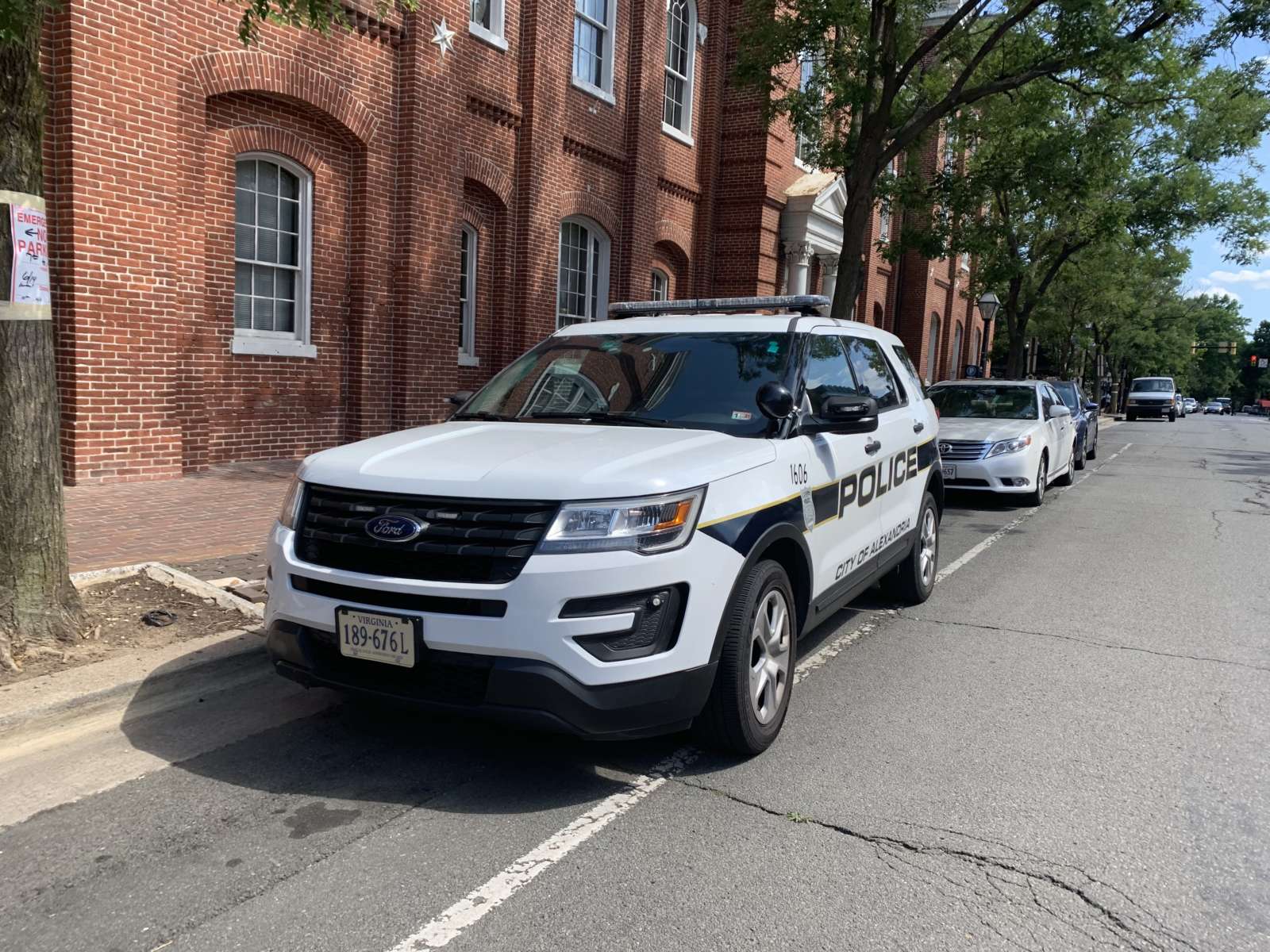
The Alexandria Sheriff’s Office and Police Department released a statement yesterday supporting a new state law requiring law enforcement officials to ask drivers racial information during all traffic stops.
The Virginia Community Policing Act went into effect on July 1 and requires all state and local law enforcement officials to ask drivers their race, ethnicity, age and gender — in addition to tracking why the individual was stopped and if they were searched, arrested or given a warning.
“The law also explicitly prohibits law enforcement officers from engaging in bias-based profiling, defined as actions based solely on the real or perceived race, ethnicity, age, gender, or other noncriminal characteristics of an individual,” according to the city, which says that the police already collect this information. “Statewide data will be analyzed to determine the prevalence of bias-based profiling and complaints alleging the use of excessive force.”
The city has compiled annual traffic citation data for 2018 and 2019, and information on police use of force is available for 2019, according to a city release.
The city is currently developing a plan for a community police review board, and the process has been criticized by groups as being too insular. Activists in the city are also calling on greater data transparency over arrests and other confrontations, as 54% of all arrests last year in the city were of Black men.
Staff photo by Vernon Miles
