

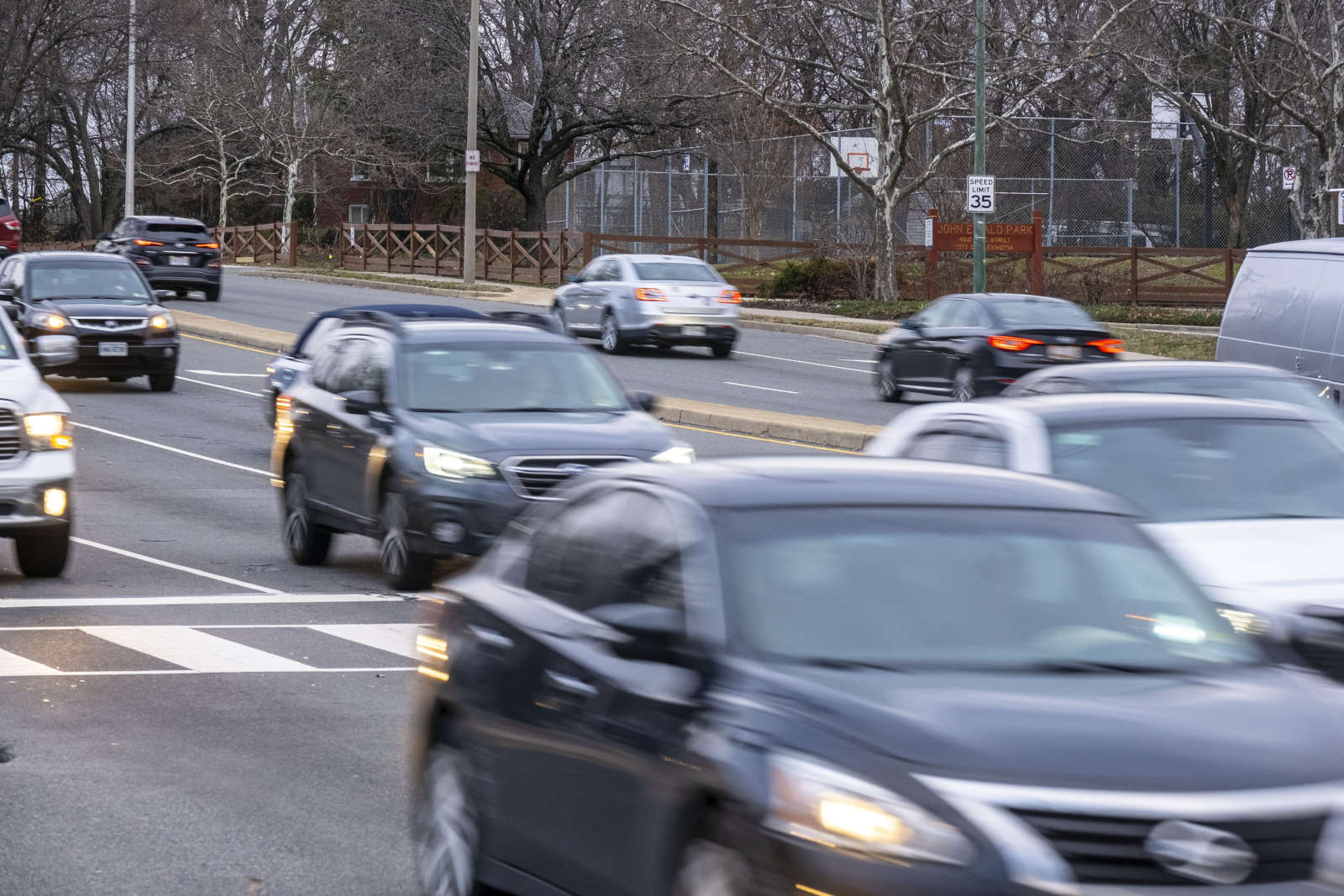
Members of the Alexandria City Council are looking to curb cut-through traffic through city neighborhoods.
Last week, Mayor Justin Wilson, Vice Mayor Elizabeth Bennett-Parker and Councilman John T. Chapman sent the city manager’s office a memo, requesting staff look into implementing a residential permit program restricting cars from driving through streets during peak periods, and imposing higher fines for drivers speeding through residential areas, as Arlington recently did.
“Given the risk of death or serious injury from speeding in our neighborhoods we believe these higher fines may act as an appropriate deterrent to this dangerous activity,” notes the memo, which does not outline specific neighborhoods.
Congestion is likely to get worse. The city’s population (at 151,300 residents in 2018) is increasing an average of 1% every year, and is expected to grow by 13,600 people between 2020 and 2030, according to a 2019 report. Additionally, employment in the city is expected to rise 20 percent by 2030, from 102,000 to nearly 120,000 jobs, which will mean more cars on city roadways.
The memo comes as the city is updating its Transportation Master Plan, which was last approved in 2008, and has been renamed the Alexandria Mobility Plan. According to the memo, a community survey for the plan found that:
- 71% of the survey respondents cited congestion as one of the biggest challenges to mobility
- 35% of the survey respondents, a plurality, cited “reducing impacts of regional traffic on City streets” as a desired focus
- 53% cited reducing congestion as an area to invest resources
