

Alexandria City Council approved a zoning text amendment to implement the “Faith in Housing” legislation that passed the Virginia General Assembly earlier this year.
The legislation, nicknamed “Yes in God’s Backyard” law, requires localities to give administrative approval and by-right construction of housing on land owned by faith-based organizations or other real estate tax-exempt nonprofits. The housing would have to meet conditions and limitations under the law and be at least 60% affordable housing for at least 30 years. The threshold for affordability is for households making up to 80% of the area median income for rentals and up to 120% of area median income for homeownership units.
City Council’s endorsement comes before the law takes effect on Jan. 1, 2027. Qualifying organizations must have owned the property for at least five years. Under the legislation, the housing would be subject to real estate taxes after completion.
“I think it’s just an important point for the community to understand as well that this is creating housing, but it’s also taking land that is currently off our tax rolls and putting it back on,” Vice Mayor Sarah Bagley said. “So it will contribute as well to our ability to serve the people living in those units.”
Phoebe Coy of YIMBYs of Northern Virginia said building housing on the property can help places of worship struggling with rising costs of maintaining their aging buildings.
“In Alexandria, we’re fortunate to have a couple of great examples of pioneering churches that have built much-needed homes on their property, and we’re very glad that the city helped make these homes happen,” Coy said. “If other places of worship in Alexandria want to explore building homes on their property, which I certainly hope they will, this streamlined approval path will allow them to focus on putting their faith into action rather than on learning the nooks and crannies of our zoning code.”
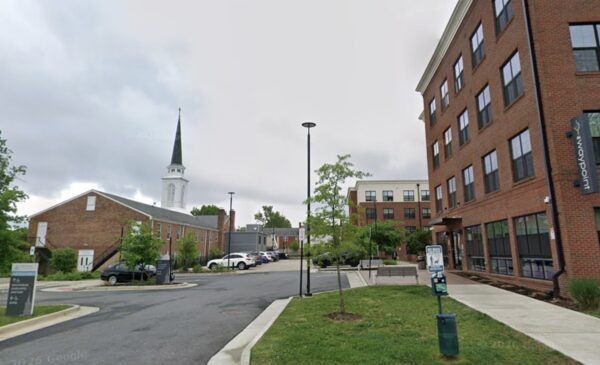
One existing example is Fairlington Presbyterian Church, which partnered with Wesley Housing to bring The Waypoint at Fairlington affordable housing development to the church property.
“We sought this change because extensive and expensive rezoning processes are a significant deterrent to faith institutions,” said Juli Wilson-Black, pastor of Fairlington Presbyterian Church and member of Virginians Organized for Interfaith Community Engagement. “Creating more affordable housing in our city and elsewhere will require multiple strategies, and this is just one, but this will enable faith institutions to play a large role in addressing this public need.”
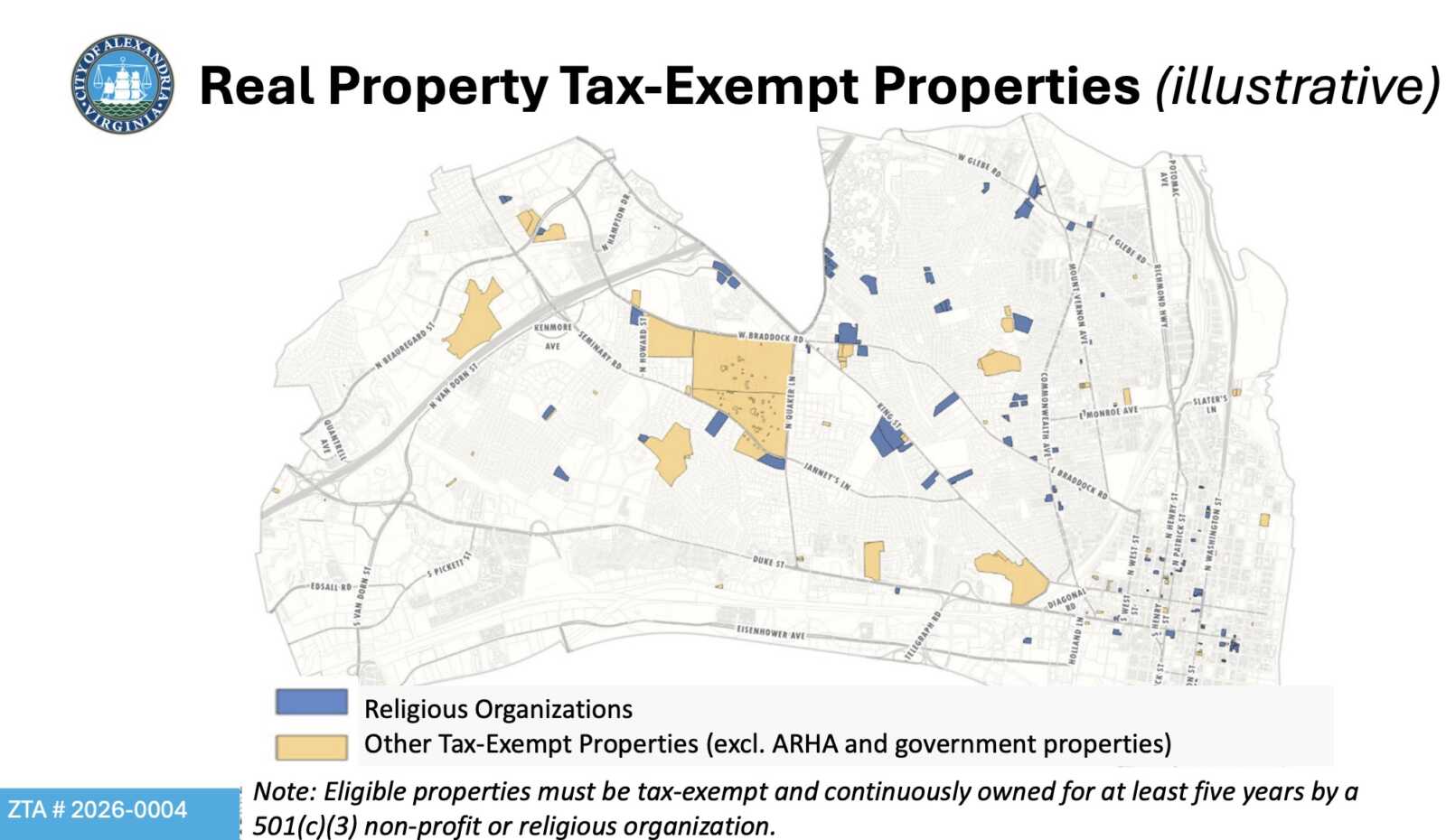
In a presentation to City Council, city staff provided a map of real estate tax-exempt properties that could qualify if the organization has owned them for at least five years.
“I think what you can also see here is that while there are a few larger sites, there are many scattered sites across the city where we could potentially see YIGBY projects develop,” Catherine Miliaras with the city’s Department of Planning and Zoning told City Council.
The legislation sets standards for the housing under the by-right allowance, including a maximum height of 45 feet or the height of the tallest building within 500 feet. The maximum density would be 20 units per acre or the most intensive residential density within 500 feet.
“For context, the 20 units per acre for density is comparable to a townhouse scale development in the city,” Miliaras said.
Housing projects can also provide up to 30% of space for public uses like religious worship space, childcare centers, healthcare clinics or retail. Residential parking requirements are up to one space per unit or the fewest required under the zoning ordinance. City staff also recommended 25% open space and canopy coverage, which were not specified under the legislation. Local regulations in archeological, historic, siting and environmental areas would apply but not voluntary affordable housing contributions and the Green Building Plan.
Despite no community outreach requirement in the state legislation, city staff added a city noticing requirement similar to those done with administrative special use permits.
“Eligible projects would be reviewed and approved by staff without public hearings according to specific timeframes that are spelled out in the state legislation,” Nathan Randall with the city’s Department of Planning and Zoning told City Council.
Aside from projects covered under the “Faith in Housing” legislation, city staff recommended not requiring a site plan process for developments with four or less units, down from the current two-unit requirement. A new administrative site plan process was recommended for projects up to 10 units that meet zoning requirements.
Paul Stoddard, director of Planning and Zoning, said the department has worked over the last year and a half to track application approval times to the next milestones and opening.
“We continue to track that and we’re seeing steady improvement as we track it from quarter to quarter,” Stoddard said. “We’re going to add specific tracking for this process as well.”
The “Faith in Housing” bill expires on Jan. 1, 2031 unless extended by future General Assembly legislation.
Legislative Agenda Set for Next General Assembly Session
Alexandria City Council also approved its legislative agenda for the next General Assembly session in 2027.
Virginia is a Dillon Rule state, which means localities must get authority from General Assembly legislation for anything not previously authorized.
According to a city staff presentation, the package of state legislation goals was shaped by policy submissions by City Council and city boards, commissions and departments. The most common policy topics focus on older adults and long-term care, housing production and financing, health coverage and public health, disability and civil rights, and tenant protections and rent stability.
Over 1,000 residents participated in a city survey on what the top legislative priorities should be. According to the survey results, 57% named housing affordability and economic opportunity as their top priority and had infrastructure, resilience and clean energy transition in their top three. Public health, safety, and well-being were also top priorities for 51% of respondents.
The legislative agenda includes the following areas.
Housing Affordability and Economic Opportunity
- Expanding local tools and state resources to produce and preserve affordable housing
- Promoting neighborhood stability through a broader range of housing types
- Making quality childcare and early education affordable and accessible
- Growing local businesses and good jobs to strengthen commercial corridors
- Providing modern, flexible revenue tools
Infrastructure, Resilience, and Clean Energy Transition
- Investing in safe, accessible streets for all users
- Establishing predictable, sustainable funding for WMATA, DASH, VRE, and other regional and local transit
- Investing in flood and extreme heat resilience and stormwater infrastructure
- Advancing clean energy and efficiency
- Protecting ratepayers and neighbors from the impacts of data centers
- Protecting tree canopy, open space, clean air, and clean water
Mental Health, Public Health and Safety, and Community Well-Being
- Investing in parks and recreation and protecting historic and cultural sites
- Fully funding state-local offices, including competitive pay for local social services staff
- Strengthening public and behavioral health, including local health departments, disease testing and prevention, permanent membership in the Governors’ Public Health Alliance
- Standing with our immigrant neighbors by limiting local involvement in federal civil immigration enforcement
- Strengthening public safety and community trust
- Strengthening data protection, cybersecurity, AI-enabled fraud protection, and responsible use of AI
- Establishing clear safety, permitting, and accountability standards for autonomous vehicle operations
Critical School Infrastructure
- Advancing K–12 funding and school construction reform
Federal Workforce Impacts and Funding Reductions
- Helping workers, contractors, and businesses recover from federal reductions
- Backfilling federal reductions to Medicaid, SNAP, CHIP, school meals, and other critical benefits
- Funding state disaster response with emergency plans that include residents with disabilities
- Restoring federal cuts to the regional Urban Area Security Initiative
Civic Engagement and Election Integrity
- Modernizing election administration to make voting more convenient, secure, and efficient
- Protecting civil rights, equal opportunity, and voting access for all residents
Opportunity for All Alexandrians
- Building and retaining a quality care workforce
- Ensuring people with disabilities can live, work, and participate fully in community life
- Caring for older adults through quality, well-staffed, and accountable long-term care, affordable assisted living and memory care
The Waypoint at Fairlington image via Google Maps
