

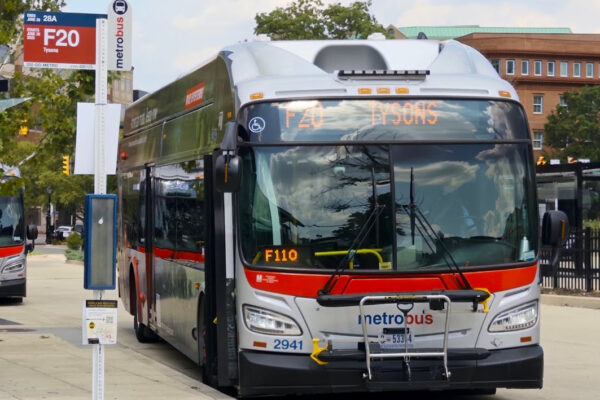
A key Alexandria leader wants the planned Route 7 bus rapid transit (BRT) network to serve as a statewide transportation blueprint.
Vice Mayor Sarah Bagley said the Tysons to Alexandria BRT initiative represents a “landmark project” others will be able to learn from.
“It can be replicated in Hampton Roads, in Richmond, in the western portion of the state — we all have bus service,” said Bagley, who chairs the Northern Virginia Transportation Commission (NVTC) board and spoke on the topic at its Oct. 1 meeting.
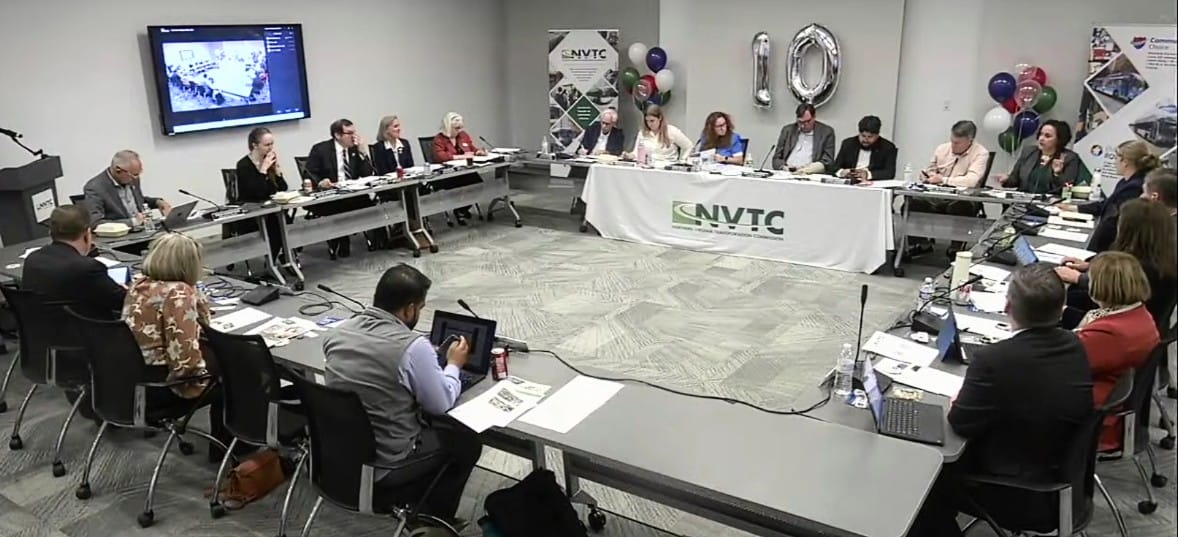
At the meeting, board members received another update on planned bus improvements in the Route 7 corridor, running through the cities of Alexandria and Falls Church and the counties of Arlington and Fairfax.
“This is a big deal,” said Walter Alcorn, who represents Hunter Mill District on the Fairfax County Board of Supervisors and serves on the NVTC board.
The planned route of the upgraded corridor is home to nearly 60,000 residents and is served by more than 40 bus lines spread across Metrobus and local systems. NVTC staff has spent years evaluating possibilities in the corridor, a process that is nearly complete.
“The efficiency of the roadway is a key way to help traffic move more efficiently through the region,” said Vikram Sinha, an NVTC project manager and top staff member associated with the initiative.
With studies mostly complete, attention will soon turn to coordinating development of the BRT lines — and determining how to pay for them.
Those could be complicated discussions, Sinha acknowledged.
“What works in Falls Church may not work in Fairfax County or in Arlington County or in the city of Alexandria, and vice versa,” he said. “We want to work with all the jurisdictions and all the bus operators on realizing these improvements.”
Bagley’s call for the transit project could be a way to encourage state officials to participate in what might be a complex financing arrangement to take the initiative from the drawing board to completion.
However the plan ultimately takes shape, elected officials on the NVTC board are clearly champing at the bit to move forward.
“If there’s only one thing I hope to see in my lifetime, it’s this project,” said a half-serious, half-joking Dalia Palchik, who represents the Providence District — including portions of Tysons — on the Fairfax Board of Supervisors.
Another NVTC board member, Justine Underhill of Falls Church City Council, said that the project needs to move forward quickly, but not at the expense of shortchanging funding opportunities.
Underhill said the final goal needs to be “making sure we are keeping high goals for ourselves,” as had been the case in the 1960s when the Metro system was planned.
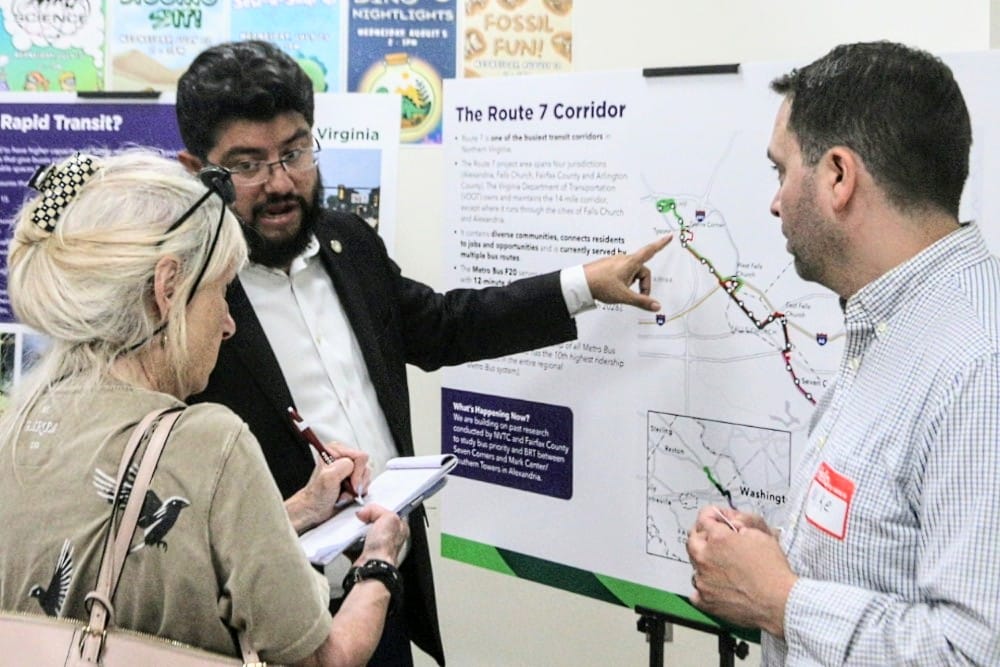
Elected leaders from across the region have been invited to take part in a bus tour of the eastern half of the BRT project corridor, running from Seven Corners to Alexandria. The tour will give those leaders the opportunity to see both the opportunities and challenges currently existing, Sinha said.
In Alexandria, the BRT network is expected to run in the West End to Southern Towers, with an expected extension to Mark Center.
