

Alexandria may not be ground zero in the growing contentious public debate over the impact of data centers. But the city is gearing up to address an increasing number of indirect consequences.
Even if not located in the city, data centers “still have regional impacts — they don’t stop at a city line or county line,” Mayor Alyia Gaskins said at the Aug. 26 Northern Virginia Regional Elected Leaders Summit.
Growing controversies over data centers led journalist Drew Wilder of NBC4, who moderated the forum, to move the topic ahead of perennial Northern Virginia challenges like housing and transportation in his questioning.
The choice seemed an appropriate one, as politicians are scrambling nationally to address growing public concern over data centers. And in Northern Virginia, where many local elected leaders will be on the ballot in 2027, the issue is proving a delicate balancing act.
Local residents expect “fair rules of engagement” when it comes to addressing impacts of data centers, Fairfax County Board of Supervisors Chair Jeff McKay said at the summit, which drew several hundred business leaders to George Mason University’s Arlington campus.
“We need to make sure our regulations have adapted,” said McKay, who leads the most populous jurisdiction in Virginia.
At the same time, he noted the irony that most of those who arrive to testify against data centers locally usually have cellphones in their hands.
Cellphones, like most modern technology, only work with data centers providing the infrastructure to power them, McKay said.
“We have to acknowledge they are needed,” McKay said.
To date, plans for data centers have had only modest impacts on Northern Virginia’s inner suburbs. But with more proposals comes more controversy.
A recent battle has emerged over plans by Starwood Capital Group to redevelop the 34-acre Plaza 500 site at 6299 Edsall Road in Lincolnia for data center usage.
City of Alexandria leaders have asked Fairfax officials to do what they can to make it more difficult for the substation tied to the data center project on the Plaza 500 site to move forward.
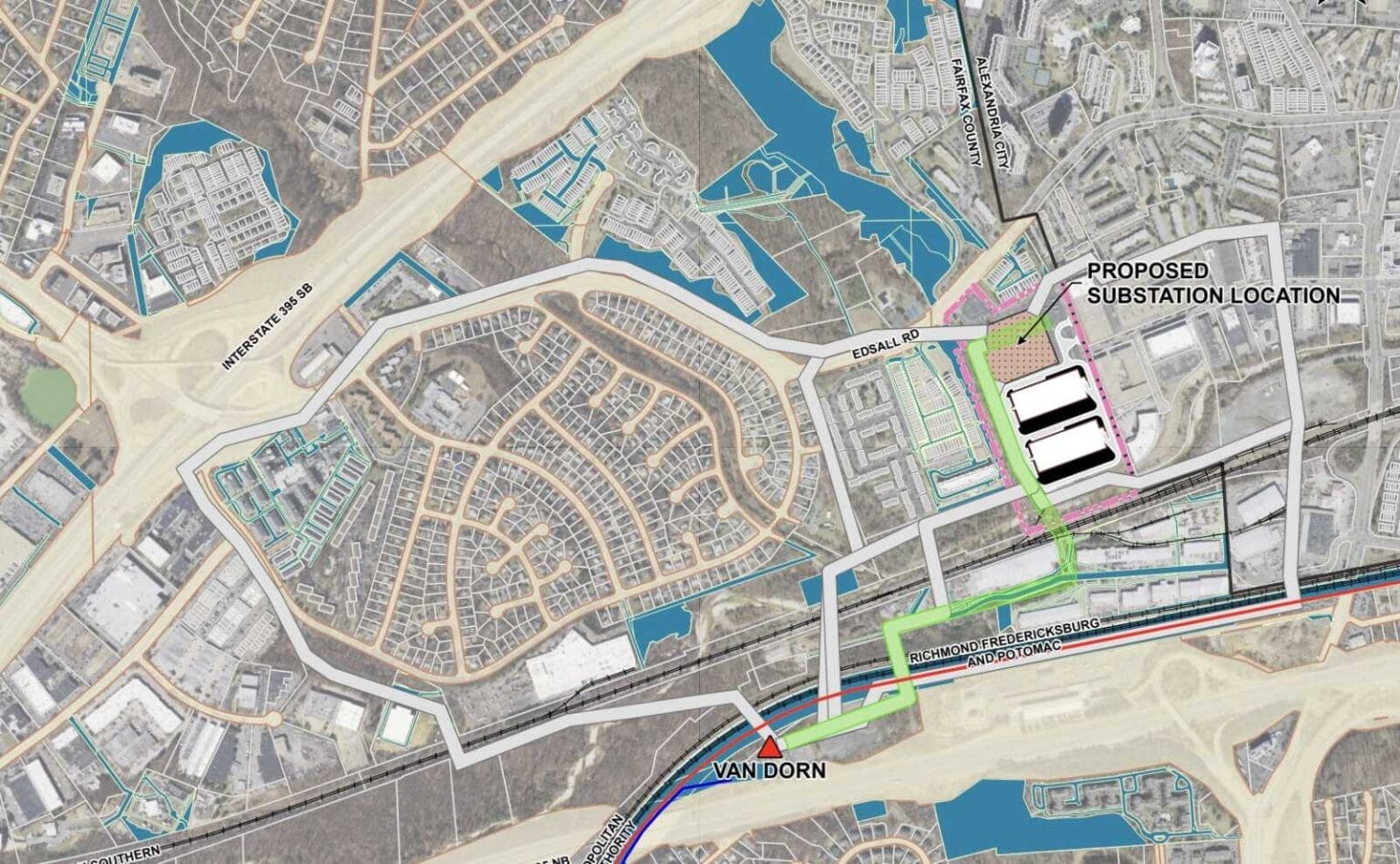
“We felt it was critical to weigh in,” Gaskins said, noting the proximity of housing and schools on the city’s side of the Alexandria-Fairfax border there.
“We’re going to feel the impacts” of the Edsall Road proposal, she said, explaining why the city’s leadership has voiced its opposition to the proposal.
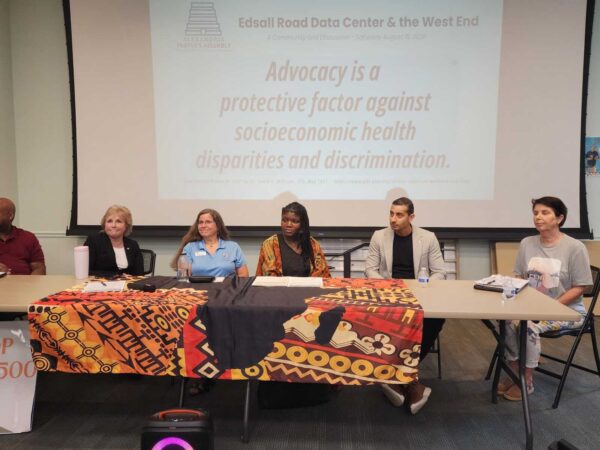
City residents earlier this month packed Charles E. Beatley, Jr., Central Library to discuss and in many cases raise concerns about the Plaza 500 plan.
Fairfax officials, too, are questioning the value of the plan.
Earlier this month, Mason District Supervisor Andres Jimenez joined others in asking the Fairfax County Planning Commission to reject Dominion Energy’s proposal for a substation that would be needed to support planned data center facilities on the Edsall Road parcel.
Also on the dais at the forum was Loudoun County Board of Supervisors Chairman Phyllis Randall. Her jurisdiction contains the greatest conglomeration of data centers anywhere in the world.
The Loudoun government has benefited financially from massive influxes of data center revenue, allowing the county to maintain the lowest tax rate across the region. But it has come at a quality-of-life cost that county leaders are increasingly working to address.
“If we could rewind the clock, we would do a lot of things differently,” Randall said. But “once the horse is out of the barn, it’s hard to get the horse back,” she acknowledged.
Next-generation data centers may require a significantly smaller physical footprint, making them increasingly viable for areas like Arlington and Alexandria and a bigger portion of Fairfax County.
Randall urged localities across Virginia, urban and rural, to “look at Loudoun County as a cautionary tale,” and be prepared from a planning and zoning standpoint.

Done right, “you can get the revenue and not have all the negative consequences,” she said.
Data centers could emerge as a key issue in 2027 local elections across Northern Virginia. Local officials in Fairfax, Loudoun and Prince William counties as well as Alexandria will be on the ballot.
In Loudoun, Randall already has picked up a challenger from within the Democratic ranks, with Loudoun Supervisor Juli Briskman pledging to run on a platform to stop the proliferation of data centers in the county.
At the Aug. 26 forum, Randall attempted to blunt Briskman’s line of attack, saying she had been focused on putting guardrails on the industry before it became politically fashionable to do so.
Randall said Virginia’s localities do not have the statutory authority to enact a moratorium or outright ban of future data centers. But local governments can use their land use powers to get the best deal possible, she said.
In Arlington, where at least one County Board seat is on the ballot each November, data centers have not emerged as a political flashpoint. But even urbanized communities like Arlington will feel increased, if indirect, impacts.
“We are all connected,” Arlington County Board Chair Matt de Ferranti said of regional data center impacts. “The next 10 years look very different for Northern Virginia [in terms of impacts] than the last 20 years.”
The annual Elected Leaders Summit is cosponsored each year by the Arlington and Northern Virginia chambers of commerce. Cosponsors included the Alexandria and Loudoun chambers of commerce, Northern Virginia Regional Commission and Regional Elected Leaders Initiative.
