

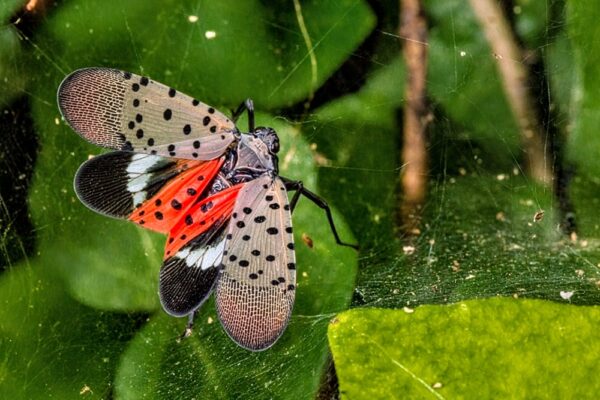
Alexandria officials are working to get to the root of the problem — literally — as they battle the ongoing influx of spotted lanternflies.
The city is among those across Northern Virginia working to cull tree-of-heaven, a tree species that serves as a host to the spotted lanternfly, an invasive pest that arrived in the U.S. from China in 2014 and has been wreaking havoc since.
Trees can either be removed entirely or treated to make them less conducive to the lanternfly propagation, naturalists said during an Aug. 21 forum sponsored by Virginia Cooperative Extension of Alexandria-Arlington.
At the forum, Katrina Napora, Alexandria’s natural resource manager, said control of tree-of-heaven was one priority among many for the city’s natural resources staff.
“We do have a limited amount of resources and a lot of tree-of-heaven,” she said.
Tree-of-heaven (Ailanthus altissima) was imported to the U.S. beginning in the 1780s from China by way of Europe. Initially prized for their ornamental value, the trees fell out of favor by the late 1800s because of their negative impacts on the overall ecosystem.
Tree-of-heaven grows quickly and when mature can spread up to 300,000 seeds per year. The species has no natural predators to slow its growth, and roots will start sprouting new trees even if the existing tree is cut down.
The trees release toxins that can inhibit the growth of neighboring plants, according to Virginia Cooperative Extension.
Alexandria is not alone in tackling the issue. Arlington officials currently are culling tree-of-heaven on county owned property, and residents can report those they find on public property.
About 100 trees currently are awaiting action in Arlington, said Jennifer Soles, a natural resources specialist for the county government.
“Don’t expect an immediate turnaround — we will get to them as we can,” Soles said at the forum.
Neither locality has the power to compel the removal of tree-of-heaven from private property, although Soles suggested those who see them on private lots could bring the situation to the property owner’s attention.
There are ways to treat tree-of-heaven rather than removing them, although that option likely also would require professional intervention, Soles said.
Speakers at the forum said local residents should brace for three or four more seasons of a spotted lanternfly infestation before the numbers of invasive insects begin to decline.
Birds, bats and perhaps even a specialized type of wasp will help to cull the ranks of the lanternfly, which arrived in the U.S. from China in 2014 and damages native trees and plants.
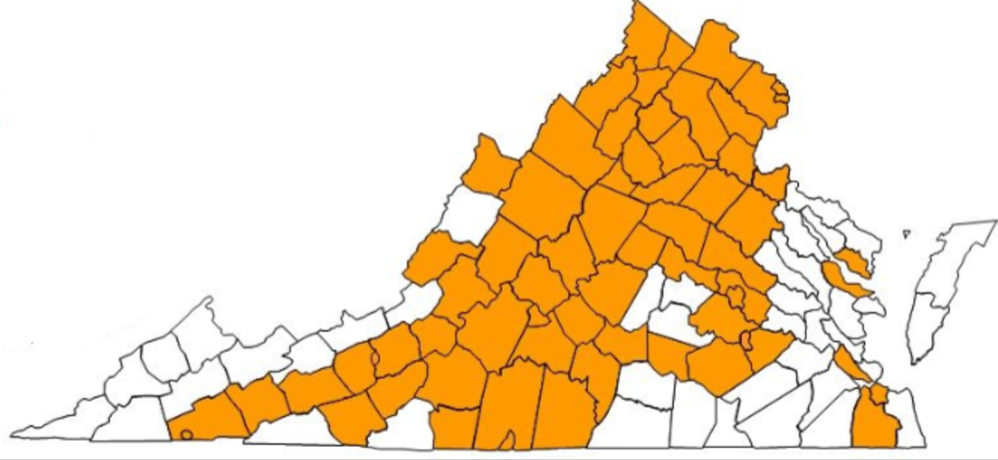
Northern Virginia began to see signs of their arrival beginning in 2022.
“Slowly, the animals will learn to manage them,” said Alonso Abugattas, natural-resources manager for the Arlington County government, during the panel discussion.
That turning point is expected to be reached in 2028 or 2029, based on experiences in Pennsylvania, the first state to see a major lanternfly influx.
While the numbers of the insect will be reduced, they are here to stay, Abugattas said.
“They’ll become just another pest — they won’t cause the great harm they did in the past, [but] they’re never going to go away,” Abugattas said. “You can’t put the genie back in the bottle.”
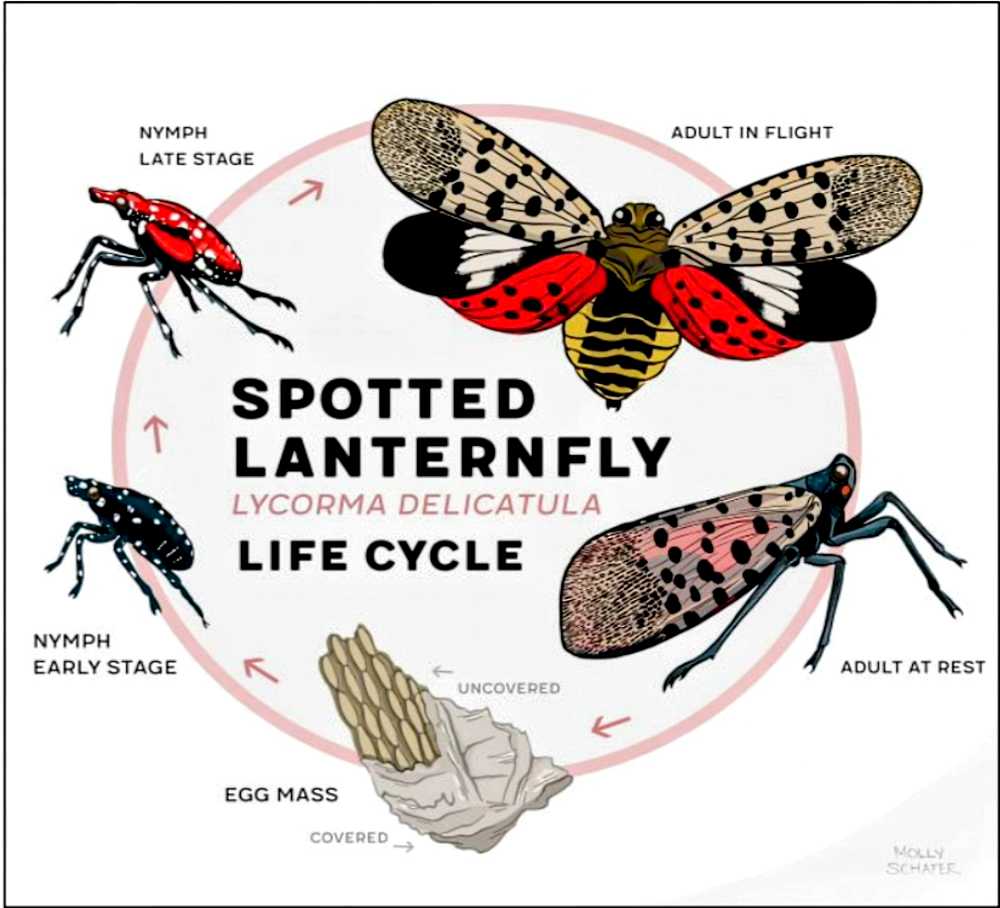
His advice to the public remains the same — work to kill lanternflies (Lycorma delicatula) when you encounter them.
“Do the best you can for the next couple of years,” Abugattas said. “One less lanternfly is one less likely to breed.”
The 2026 impact of spotted lanternflies across the local area appears broad based but can significantly vary by location.
“It’s happening all over our neighborhoods,” said Leslie Fillmore, the agriculture and natural resources agent for Virginia Cooperative Extension’s Arlington office. “Some people have seen a whole lot, while others are seeing only a few here and there.”
That assessment appeared to be confirmed by anecdotal evidence from participants in the hourlong forum.
Alexandria resident Eileen Powell said the infestations appear to be very site specific this year.
“I live in Del Ray and haven’t seen any locally, but I have seen them in friends’ gardens in North Arlington and Northwest D.C.,” she said.
Betty Belanus of North Arlington is among those witnessing significant impacts.
“We had a lot of nymphs in our grapevines, and now they are becoming adults,” she said in an online chat during the forum. “They pretty much devastated our grapes, so we will not get many to eat, if at all.”
Brian Costello, another forum participant, said trying to contain the spread of lanternflies takes an emotional toll on those who value the natural surroundings.
“This battle can seem somewhat futile,” he said.
The good news, Abugattas said, is that at least in residential areas, the impacts to date have been relatively minimal.
“For us, it’s mostly a nuisance,” he said. “If it’s a healthy plant, [lanternflies are] likely not to kill them.”
Also good news: Lanternflies are not dangerous to people or pets. They do not bite or sting.
Much of the forum was spent on ways to eliminate the insects, which are most attracted to fruit trees, walnut and maple. Homemade sprays based on everything from dish soap and white vinegar to rubbing alcohol and soybean oil are effective, while scraping eggs off trees and disposing of them also will help slow the spread.
One possible containment strategy includes the use of parasitic wasps, also native to China, whose females feed on spotted lanternfly nymphs.
Studies are occurring to weigh the pros and cons of introducing the wasps as a tool for control.
“We’ll see,” Abugattas said.
The forum was one of a series of educational programs sponsored by the local office of Cooperative Extension, a joint program of Virginia Tech and Virginia State University supported by the Arlington and Alexandria governments.
It coordinates efforts of Master Gardeners of Northern Virginia, including an education series with programs open to the public.
A video recording of the event will be posted in coming weeks as part of the Master Gardeners’ “virtual classroom.”
The local Virginia Cooperative Extension office offers a “help desk” for those with questions, including those related to spotted lanternfly and tree-of-heaven. Available weekdays from 9 a.m. to noon, experts can be reached by phone or online.
