

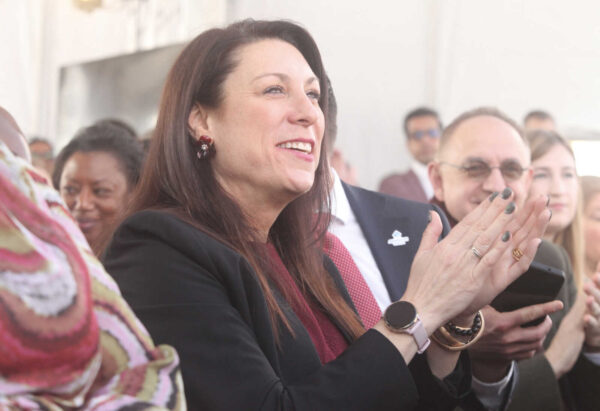
Alexandria City Council unanimously approved a roadmap for Alexandria’s economic future last night (Tuesday) as the city tries to strengthen its economic competitiveness.
The ALX Forward framework will shape how the city pursues economic growth, from development to business recruitment and retention. It details strategies like leveraging economic opportunities in Old Town North, Eisenhower East, the West End, and Potomac Yard; retaining local businesses; attracting industries like artificial intelligence and strengthening support for entrepreneurs.
The 63-page plan “reflects the changes in the economy, the changes in the world, the changes in the way that people do business,” said Alexandria Economic Development Partnership President and CEO Stephanie Landrum at Tuesday’s meeting, which took place in the Council’s new swing space at the Del Pepper Community Resource Center.
“The hope and the goal of implementation of this plan, which will be immediate but also will be lasting five-plus years, is that we will attract more business investment, that we will grow and diversify our tax base, all of that, while preserving what makes Alexandria so special and great,” Landrum said.
The city has been grappling with challenges like declining job growth, a struggling commercial real estate market, federal government employment uncertainties and over-reliance on residential real estate tax revenue.
“We need to make more money as a city, and the easiest way for us to do that is to grow the economy,” Landrum said. “There are many, many ways that we can do that, and this framework endeavors to outline all of those ways and help prioritize the types of tasks and work that we can do as a city to accomplish that growth.”
Planning for the framework began in November 2024. Texas-based economic development planning firm TIP Strategies was recruited to research Alexandria’s economic competitiveness and development potential. The community provided input at Alexandria’s Economic Summit in May and through community surveys before and after the summit.
The final draft plan was released for community feedback in November, and Landrum said only minor tweaks were made thereafter.
Landrum told City Council it has been more than 15 years since the city has developed this type of plan. In the city’s first economic roadmap in 2007, city planners recommended enhancing the city’s Metro stations, transforming the former Landmark Mall property and developing the waterfront.
However, the goal of finding a balance between the commercial and residential tax bases hasn’t come to fruition.
Mayor Alyia Gaskins expressed excitement to carry out the plan, with hopes to improve the city’s economic position.
“Given our economic uncertainty and the challenges we face, we have to find ways to generate new revenue,” Gaskins said. “So I think this is really important, to be able to not just to deliver the services that we already deliver, but hopefully to improve, to continue to invest in our staff and our workforce and continue to just do more great things as a city. I’d also say, just making sure that our businesses that are also facing a lot of pressure right now are able to stay open and stay in this community.”
Over the next six months, implementation groups involving partners identified in the plan are slated to meet, and City Council could receive quarterly updates on the progress.
Landrum said the plan will come with “some asks in the budget, not just this year, but in future years.”
