

As debates surrounding language and education continue, both nationally and here in Northern Virginia, one local voice is passionately advocating for the power of bilingualism from an early age.
Lauren Sutherland, an Alexandria resident currently pursuing an Elementary Education degree at William & Mary and an alumna of Mount Vernon Community School’s dual-language program, argues that the advantages extend far beyond simply speaking a second language.
Disclaimer: The views or opinions expressed within this letter to the editor are those of the author and are not necessarily the views of ALXnow or its advertisers. Have an opinion that you’d like to share? Read more about speaking your mind through ALXnow Letter to the Editor here.
Letter to the Editor
Want to set your child up for a future with up to 20% higher earnings? Bilingual education isn’t just about speaking two languages. It’s about setting your child up for success. Studies have shown that bilingual employees can earn a bilingual salary differential between 5% and 20% more than their monolingual peers. The U.S. Department of Labor has estimated a 42 percent increase in the need for interpreters. Even if you’re pursuing a career separate from linguistics, according to Forbes, a recent study indicates that speaking and understanding a second language increases job prospects by as much as 35 %. These benefits are attributed to bilingual employees’ ability to expand their services to larger audiences and handle foreign interactions. Many companies are looking for employees who can connect with international clients or handle cross-cultural teams. These skills make bilingual employees better suited for managerial or executive positions since they can handle cross-cultural relations. This is significant because a study on U.S. economic development suggests that American businesses lose more than $2 billion annually due to language and cultural misunderstandings. Furthermore, businesses and companies are only becoming more globalized, so it’s important to make meaningful connections and reach clients across the globe. From a social-emotional perspective, being bilingual helps students maintain connections with their family and culture, which shapes their identity. In our diverse society, bilingual students can make new friends using their second language. From a learning standpoint, bilingual students develop more flexible approaches to thinking through problems and achieve more abstract thinking. Research shows that people who use multiple languages are better able to block out irrelevant information. From a cognitive perspective, bilingual students have an easier time using logic, understanding math concepts and word problems, and developing strong thinking skills. The benefits of bilingual education are endless. If you want your children to be ahead of the game, on track to succeed, and form connections with others, they need bilingual education!
For many years, there has been a push for English to be the national language of the U.S. Some are in favor of this decision since its purpose is to ensure that people only speak English in the United States, however they fail to consider the benefits of bilingual education for not only non-native speakers, but also their children. It’s no secret that bilingual education is highly important for immigrant students. For one, bilingual education helps immigrant students develop confidence in their abilities and have a higher chance of succeeding in the workplace. However, some critics argue that immigrants aren’t even important to the success of the U.S. On a larger scale, many high-profile immigrants have greatly contributed to the United States. To name one that everyone knows, Albert Einstein, who immigrated from Germany, or perhaps, Sundar Pichai from India, the CEO of Alphabet, which owns Google and YouTube. Additionally, bilingual education could help the U.S. build bridges with the immigrants’ countries of origin. Establishing working relationships with others has been a long-time goal of many countries. With bilingual education programs, these treaties are more possible as countries can have educated immigrants become social ambassadors. One of the best parts of bilingual education is that it does not just benefit immigrants, but it positively affects native English speakers. What if I told you we could enhance career prospects, cultural awareness, communication skills, and more for future generations? The solution lies in dual-language elementary education.
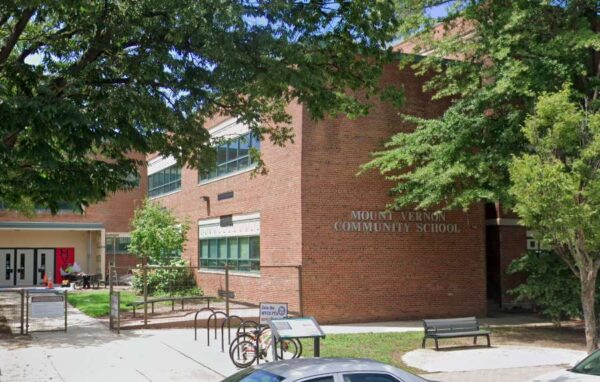
I encourage you to research your local dual-language schools and dive deeper into how they may be a good fit for your child. Talk to your family and friends about bilingual education and reach out to families with kids who are currently enrolled in bilingual schools. You may just find someone you can relate to! In northern Virginia, there are some great bilingual schools. I may be a little biased since I attended Mount Vernon Community School, however, I want to highlight their program anyway. MVCS is a dual-language elementary school that is a part of Alexandria City Public Schools. Students in the program do half of their school subjects through Spanish and half through English. This school prepares learners for enhanced career opportunities, great communication skills, and cultural awareness. I urge you to consider bilingual education for your children. Reach out to members of the MVCS PTA to talk to real parents about their experiences. It may just change the course of your child’s life.
Lauren Sutherland
William & Mary, Class of 2025
Elementary Education Major, Spanish Minor
Alexandria, VA
