

With spring underway, wildlife help lines are receiving increasing calls about baby animals that residents believe need help. But wildlife experts say intervention is often unnecessary.
Tony Rankin, chief of Animal Services at the Animal Welfare League of Alexandria, told ALXnow wildlife calls begin to increase in mid-March and steadily rise through early October. Last year, the city’s animal services responded to nearly 1,000 wildlife calls during that period, and most were resolved by educating residents about wildlife.
Spring is newborn season for wildlife, which can lead to resident calls about baby animals that appear to be left alone. According to Rankin, many calls in the spring involve baby birds.
“Quite a few of those calls end up being a bird in its fledgling stage and do not need intervention,” Rankin said. “The general rule of thumb would be if the bird has feathers and is hopping around, it doesn’t need help and should be left alone unless it’s in a dangerous area. If the bird has fine downy feathers or is pink it very much may need assistance and we are happy to provide that.”
The Wildlife Rescue League, which provides a wildlife assistance help line in Northern Virginia, notices the same trend during baby season in the spring. Linda Fiedler, the help line coordinator at Wildlife Rescue League, told ALXnow the need for intervention depends on the species and age of the animal. Some animals, such as young raptors or orphaned opossums, could need assistance.
Feeding a baby animal incorrectly or with the wrong food could sicken or kill it, and Fiedler recommends leaving the care of all wildlife to trained rehabilitators and veterinarians. Fiedler encourages residents to observe the situation, take a picture and call the help line at 703-440-0800.
“In general, any wildlife that appears or acts abnormally may indicate it needs help,” Fiedler said. “For instance, an adult bird that can’t fly or appears injured, a mammal that does not run away when approached from a distance, a turtle with a cracked shell or swollen eyes. Seeing blood on an animal is an easy-to-spot indicator of injury, which may or may not need care.”
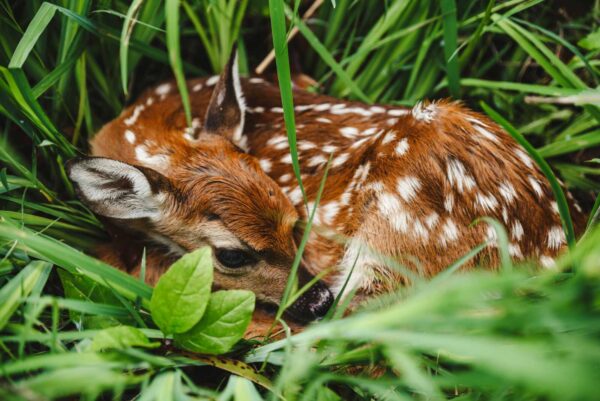
According to the organization, common situations Alexandria residents may observe are fledging birds that are on the ground as they learn to fly and fawns left alone for hours as the mothers forage, and fox kits left alone for hours as parents hunt. Turtles crossing roads should be moved only in the direction they are already traveling.
Rankin says AWLA also starts to see more calls about wildlife in attics and crawl spaces. Residents typically have to get a contract with a private wildlife removal service in those cases, but the AWLA can provide tips on getting the animals out.
“Ultimately, we are here to respond to any wildlife concern that an Alexandria resident or visitor to the City may have and we would never want to discourage anyone from reaching out if they feel an animal may need help,” Rankin said.
The Wildlife Rescue League encourages residents to use the Wildlife Helpline from 9 a.m. to 7 p.m. seven days a week for advice. The AWLA can respond to wildlife calls around the clock on the animal control help line at 703-746-4444.
Image via Erika Fletcher/Unsplash
