


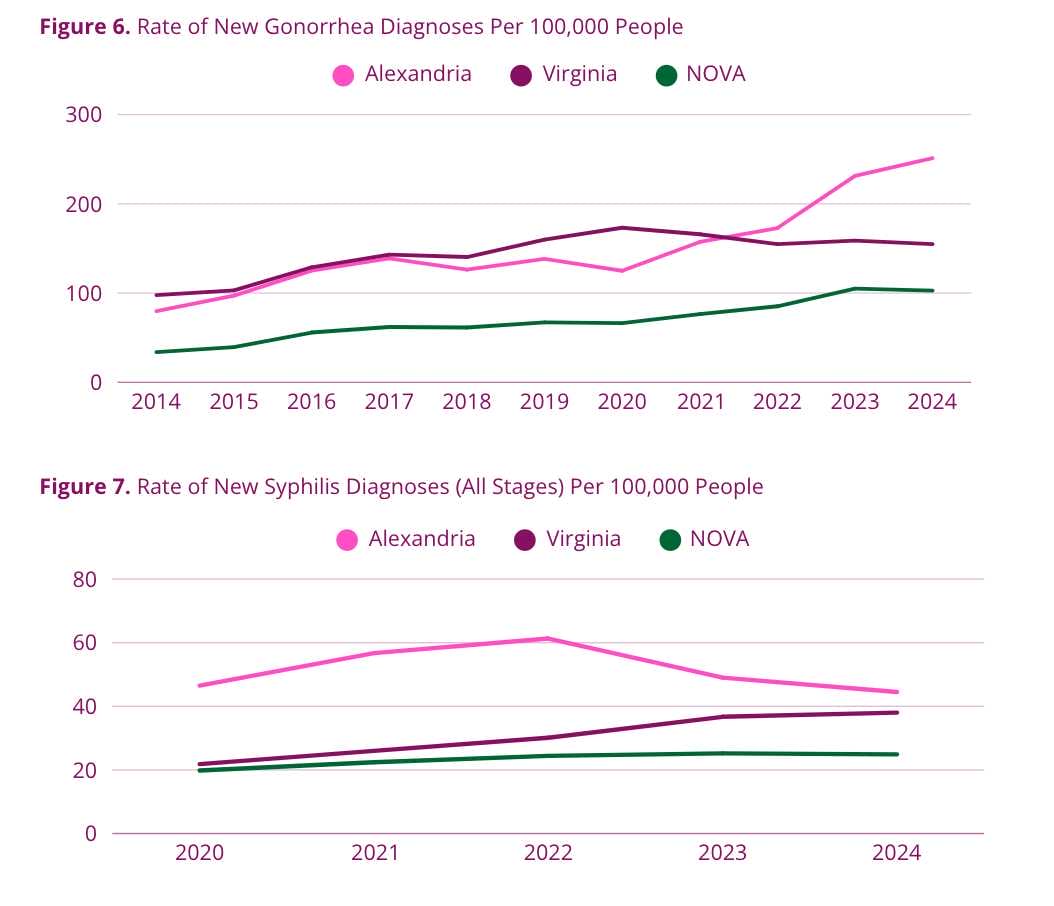
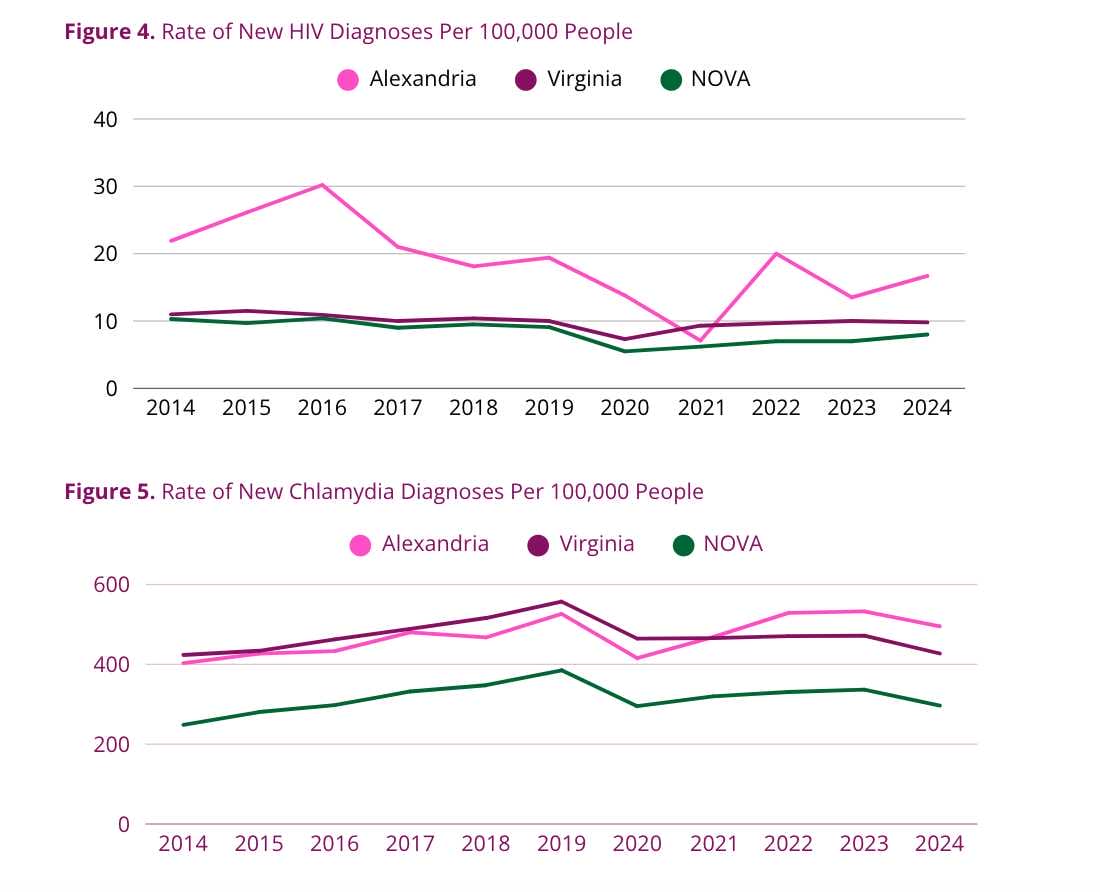
Alexandria continues to outpace the state average for sexually transmitted infections, according to a new report.
The Alexandria Health Department’s 2024 Disease Investigation Report recorded 1,900 separate disease investigations in 2024, a 5% decrease from 2023. The department found that vaccine-preventable diseases increased fivefold with 41 cases in 2024, compared to eight reported cases in 2023; and that sexually transmitted infections decreased 2%, although gonorrhea and HIV cases have increased by 9% and 24%, respectively.
“A lot of this disease investigation work happens quietly, behind the scenes,” said Anne Gaddy, deputy director of AHD, in a release. “But this work is vital. Continuous monitoring and investigation are how we prevent a single illness from becoming a community‑wide problem.”
According to the report:
AHD’s nursing division investigated 1,362 combined sexually transmitted infections (STI) and tuberculosis cases, a 5% decrease from 2023. The environmental health division confirmed 2 animal rabies cases, up from 1 case in 2023. Finally, the epidemiology team investigated 542 other reportable diseases such as food-borne and enteric (gastrointestinal) diseases, multi-drug-resistant organisms, vaccine-preventable diseases, and more.
Alexandria also experienced an increase in pertussis (whooping cough), with cases 15 times higher in 2024 than the five-year average. Chickenpox cases also doubled from 2023 to 2024, and the city investigated its first case of meningococcal disease since 2016, according to AHD.
Among the report’s other findings:
- There were 170 investigations of foodborne and enteric (gastrointestinal) disease, taking up 31% of AHD’s caseload
- There were 108 investigations of tuberculosis, increasing by 71% (seven to 12 cases)
- There were 99 investigations of multidrug-resistant organisms (MDROs), increasing by 14%
- There were 99 investigations of viral hepatitis; chronic hepatitis B cases resurged to 68 in 2024, making it the third most reported condition in Alexandria, while acute hepatitis cases rose from one to three
- Chickenpox cases doubled from seven to 14 cases
The news comes as AHD is working with the Partnership for a Healthier Alexandria to develop its third five-year Community Health Improvement Plan (CHIP). The previous CHIP uncovered some of the city’s health inequities, revealing among other things that the average life expectancy in the city’s heavily Hispanic Arlandria neighborhood is 78 years old, while more affluent areas like Old Town have a life expectancy of 87. In that report, AHD highlighted the city’s Arlandria community, the Landmark/Van Dorn area and a citywide focus on mental wellness as priority areas.
