

A springtime uptick is expected, but for now, Alexandria apartment rental costs are running below last year’s rates.
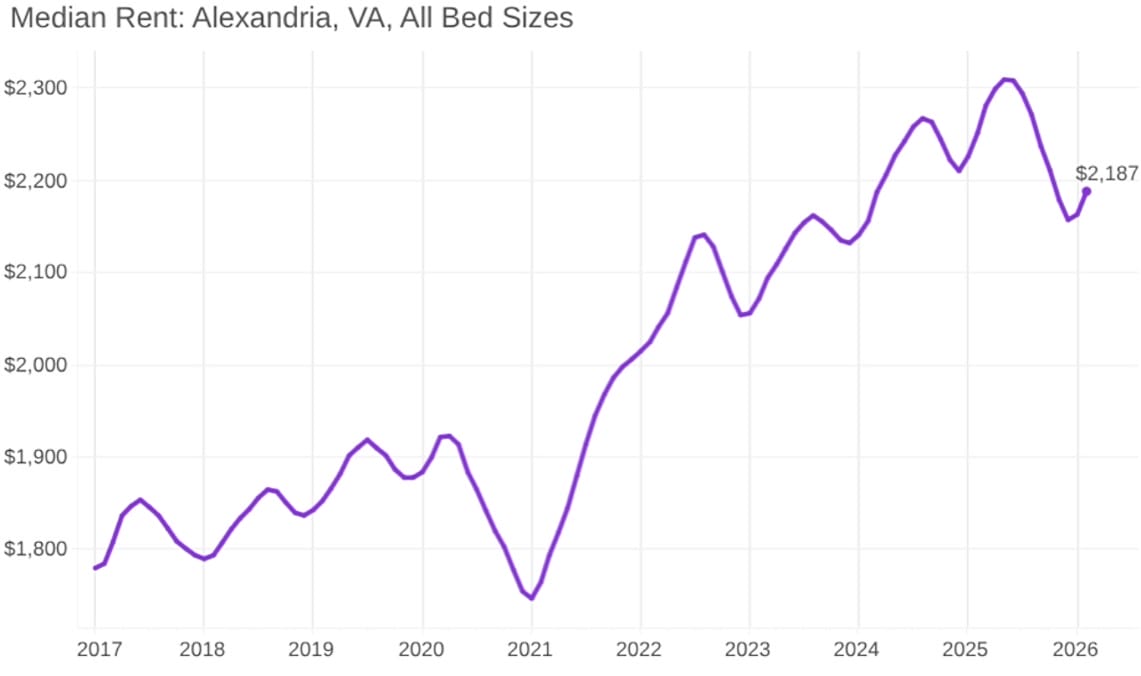
The median apartment rental cost of $2,187 in the city was down 2.8% year-over-year in February, according to data reported by Apartment List. Median city rental rates were $2,003 for one-bedroom units and $2,460 for two bedrooms.
The rate of year-over-year decline was nearly double the 1.5% national rate, while median rental rates across Virginia grew slightly from early 2025 to early 2026.
Locally, year-over-year rental rates were largely down in February. Beyond Alexandria:
- Annandale: Median rents were $1,938 for one-bedroom units, $2,211 for two bedrooms and $2,235 overall, down 0.2%
- Arlington: Median rents were $2,401/$2,902/$2,550, down 1.7%
- Fair Oaks: Median rents were $2,138/$2,390/$3,433, down 3%
- Fairfax: Median rents were $1,866/$2,135/$2,222, down 2.5%
- Herndon: Median rents were $1,774/$2,129/$2,155, down 1.5%
- Reston: Median rents were $2,124/$2,249/$2,291, down 0.7%
- Tysons: Median rents were $2,232/$2,782/$2,552, down 2.2%
The lone outlier in Northern Virginia’s inner suburbs was in Centreville, where the median rental price of $2,398 was up 1.5% from a year before.
Rent prices typically are cyclical, rising through spring and summer and falling in autumn and winter. Alexandria, Arlington and six of seven Fairfax communities in the survey posted year-over-year increases from January to February.

While the declines are giving some solace to some apartment hunters, rental rates remain well above pre-Covid levels, according to Apartment List:
“In dollar terms, the national median monthly rent now stands at $1,357, down $20 compared to February 2025. Prices peaked in mid-2022 after a year and a half of skyrocketing growth. Since then, the nationwide median rent has been gradually drifting down and has fallen from that peak by a total of 5.9%, or $85 per month. Despite the pullback in prices, today’s rent levels remain 18% higher than they were at the start of 2021.”
The national median rent increased by 0.2% from January to February, its first monthly increase since last July.
“Rents prices have consistently followed this seasonal pattern, but in recent years we’ve seen sharper winter dips and more modest summer bumps as the market has gone through a soft spell amid a wave of new multifamily construction,” Apartment List analysts said.
“In addition to steeper winter declines since 2022, we have also observed a slight shift in the timing of rental market seasonality,” they said. “Whereas May used to be the annual peak for rent growth, over the past three years March has been the hottest month, with rent growth slowing down during what were, prior to the pandemic, the months when prices would increase most quickly.”
Among 100 large urban areas surveyed monthly by Apartment List, Virginia Beach had the fastest year-over-year rent growth in February, up 5.3%. Austin had the largest decline, at 5.9%, following a major Covid-era growth spurt.
The national multifamily vacancy rate ticked up to 7.4% in February, a record high in the nearly nine years of data reported.
“We’re past the peak of a multifamily construction surge, but a healthy supply of new units are still hitting the market and colliding with sluggish demand, causing vacancies to continue trending up,” Apartment List analysts said.
Another firm that tracks monthly rental prices is Zumper. Its February data, while not aligning exactly with Apartment List’s, shows similar trends.
For February, median U.S. rents were $1,499 for one-bedroom units, down 1.7% year-over year, and $1,878 for two bedrooms, down 1.4%, in the Zumper survey.
“The unusual rent cuts seen last summer and fall appear to have largely run their course, with winter pricing returning to a more typical seasonal pattern,” Zumper said in its analysis of market trends.
Among the 100 urban areas, New York City had the highest one-bedroom rental rates in February, with the median rate of $4,250 down 1.8% from a year before.
For two-bedroom units, San Francisco topped the list at a whopping $5,120, up 21.3% from February 2025.
“San Francisco is a clear example of how quickly rent growth can reaccelerate in supply-constrained markets,” said Zumper CEO Anthemos Georgiades.
“Renewed job growth tied to AI and a gradual return to in-office work are pushing demand back into the market, particularly for larger units, at a time when new supply remains limited,” Georgiades said.
At the other end of the spectrum, Zumper’s lowest median price for one-bedroom units was recorded in Wichita, Kan., at $720, with the lowest rate for two-bedroom units recorded in Shreveport, La., at $890.
Of the 100 locales, one-bedroom units could be rented for a median of $1,000 or less in 19. For two-bedroom units, only three localities — Wichita, Shreveport and Akron, Ohio — had median rents of less than $1,000. But 45 of the 100 had median rents of $1,500 or less.
