

State legislators representing Alexandria called on constituents today (Sept. 8) to support a referendum to restore voting rights to former felons.
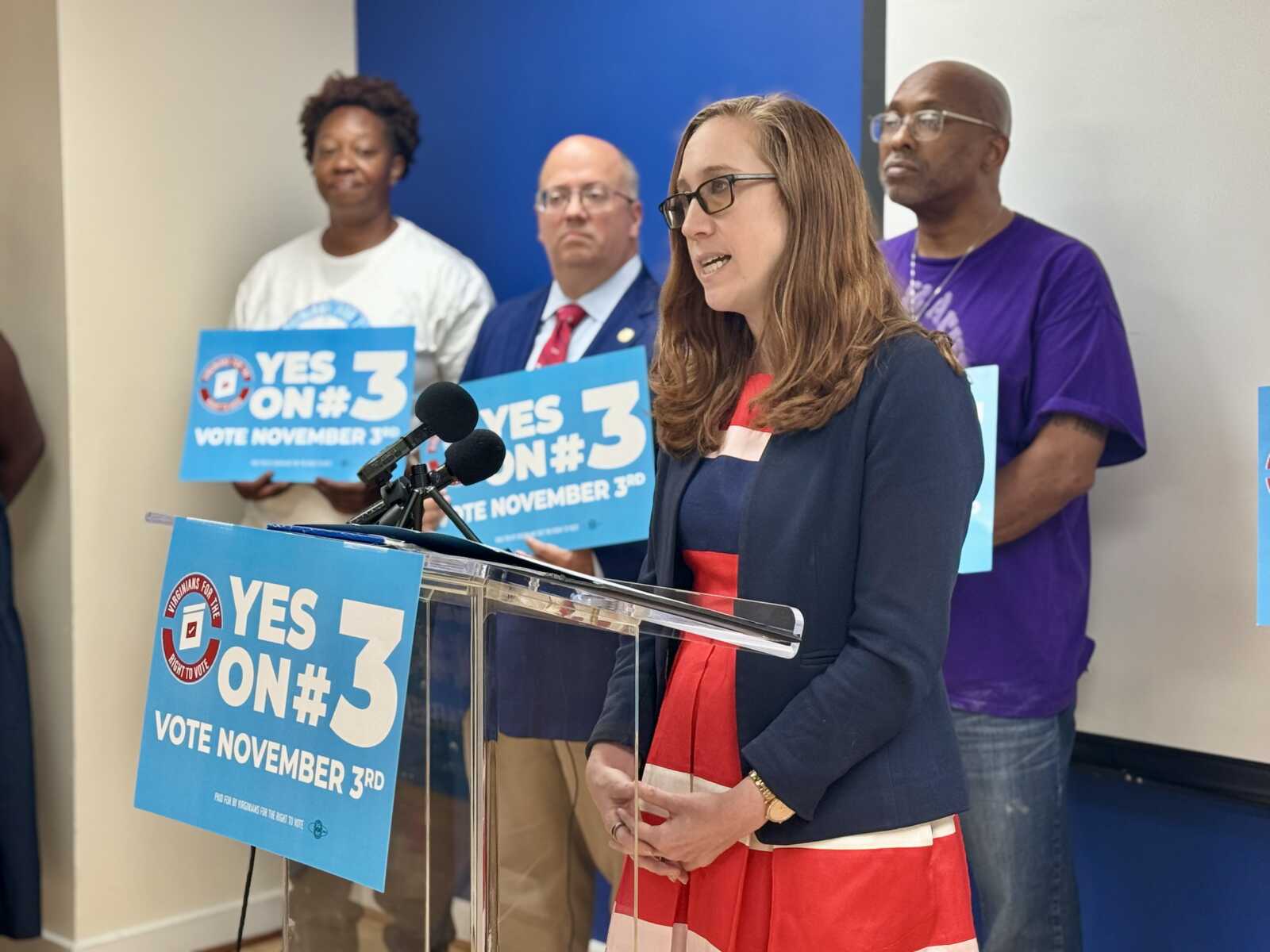
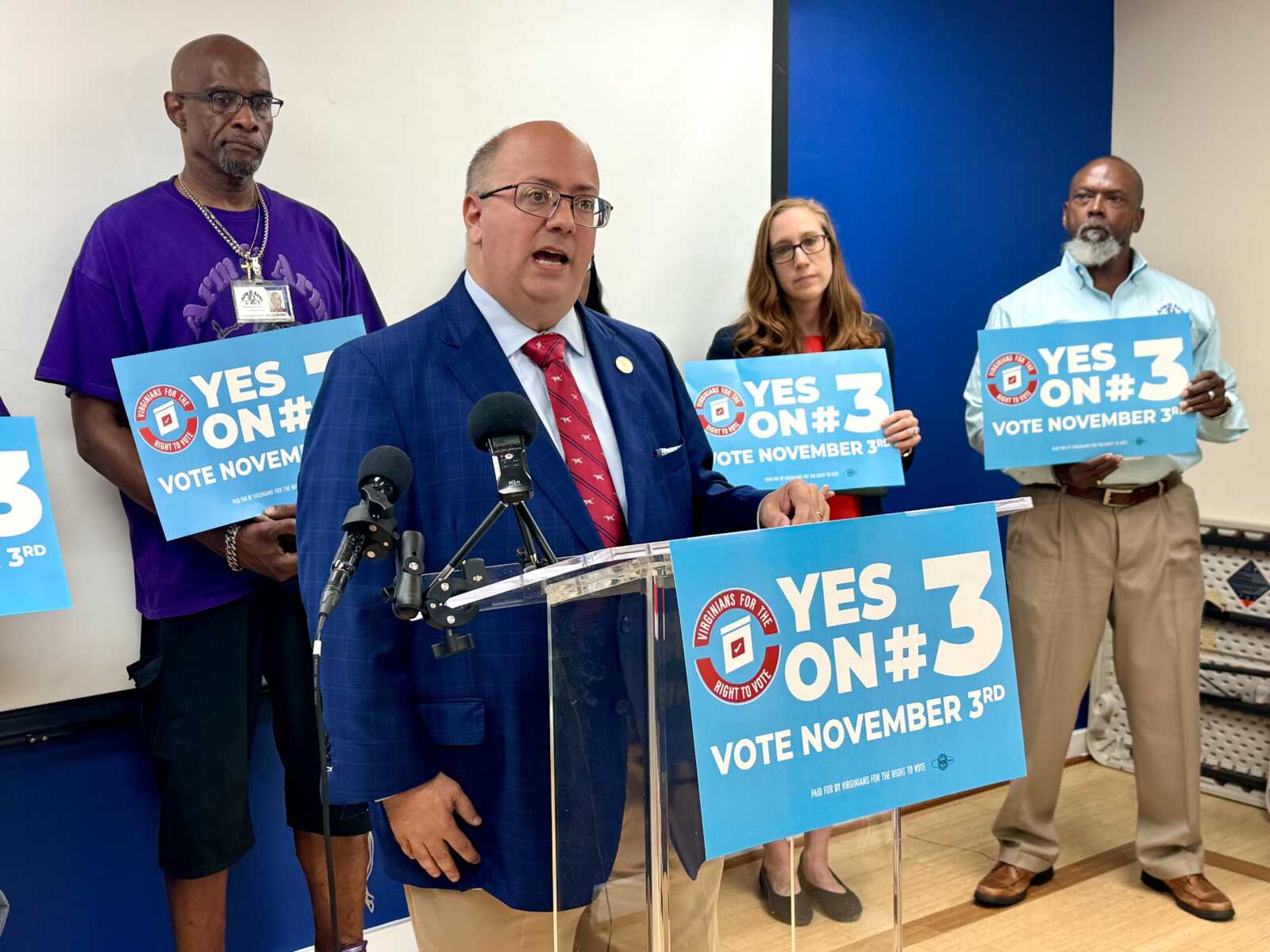
In the city’s Arlandria neighborhood, state Sen. Elizabeth Bennett-Parker (D-39) was flanked by Del. R. Kirk McPike (D-5) and nonprofit leaders joining Virginians for the Right to Vote in asking for support for her constitutional amendment to automatically restore voting rights for former felons without having to make a request to the governor.
“This process would no longer be left in the complete discretion of a single politician,” Bennett-Parker said. “Just as importantly, this amendment would enshrine the fundamental right to vote in our state constitution for every eligible voter, whether or not they’ve been involved in the justice system.”
Virginia, Iowa and Kentucky are the only states that permanently strip voting rights from citizens with felony convictions. The Virginia governor has the discretion to individually restore rights to people with past felony convictions.
Virginia voters, on Nov. 3, will decide on the measure, as well as a reproductive rights referendum and repeal of an unenforceable ban on same-sex marriage.
Sheba Williams, the founder and executive director of Richmond-based Nolef Turns, said that she was wrongfully convicted of a crime in 2004, and it took nine years to get her voting rights restored by then-Gov. Bob McDonnell (R).
“Losing my right to vote, especially as an innocent person, made me feel like less than a whole citizen,” Williams said. “I could not make decisions about who represented my children in school boards, I couldn’t elect people to city council or state house or the White House.”
Bennett-Parker is the former co-director of Together We Bake, a nonprofit job training and personal development program for underserved women.
“The women I worked with did not want to let their past mistakes define them, and they wanted nothing more than to rebuild their lives,” Bennett-Parker said. “The current system has no transparency and changes every four years, so no one knows what steps they need to take to get their rights restored.”
McPike said that the amendment will allow thousands of Virginians to get their rights restored.
“Thousands of Virginians who cannot vote today, despite having served their sentences, thousands of our neighbors, our friends, our family members are being denied the most basic form of participation in Virginia’s democracy and their own communities,” McPike said. “The ability to vote is the foundation of American democracy. It’s what ensures that we remain a nation governed by and for the people. Yet today in Virginia, that fundamental right is not protected in our Constitution.”
Last month, Gov. Abigail Spanberger (D) said that her administration restored voting rights to 100,000 Virginians since she took office in January.
“The right to vote is about more than a ballot — it is about whether we believe every person should have a voice in our democracy, and I do,” Spanberger said. “It is about whether we believe our fellow citizens deserve the dignity of being heard, and I do.”
Early voting for the Nov. 3 election will begin on Sept. 18. Along with the three constitutional amendments, the seats of Sen. Mark Warner (D-Va.) and Rep. Don Beyer (D-8) are up for election.
A summary of the constitutional amendment is below.
Constitutional amendment (second reference); qualifications of voters and the right to vote; persons not entitled to vote.
Provides that every person who meets the qualifications of voters set forth in the Constitution shall have the fundamental right to vote in the Commonwealth and that such right shall not be abridged by law, except for persons who have been convicted of a felony and persons who have been adjudicated to lack the capacity to understand the act of voting. A person who has been convicted of a felony shall not be entitled to vote during any period of incarceration for such felony conviction, but upon release from incarceration for that felony conviction and without further action required of him such person shall be invested with all political rights, including the right to vote. Currently, in order to be qualified to vote a person convicted of a felony must have his civil rights restored by the Governor or other appropriate authority. The amendment also provides that a person adjudicated by a court of competent jurisdiction as lacking the capacity to understand the act of voting shall not be entitled to vote during this period of incapacity until his capacity has been reestablished as prescribed by law. Currently, the Constitution provides that a person who has been adjudicated to be mentally incompetent is not qualified to vote until his competency is reestablished.
