

The Alexandria Health Department is raising concerns about the rise of tickborne illnesses as spring progresses.
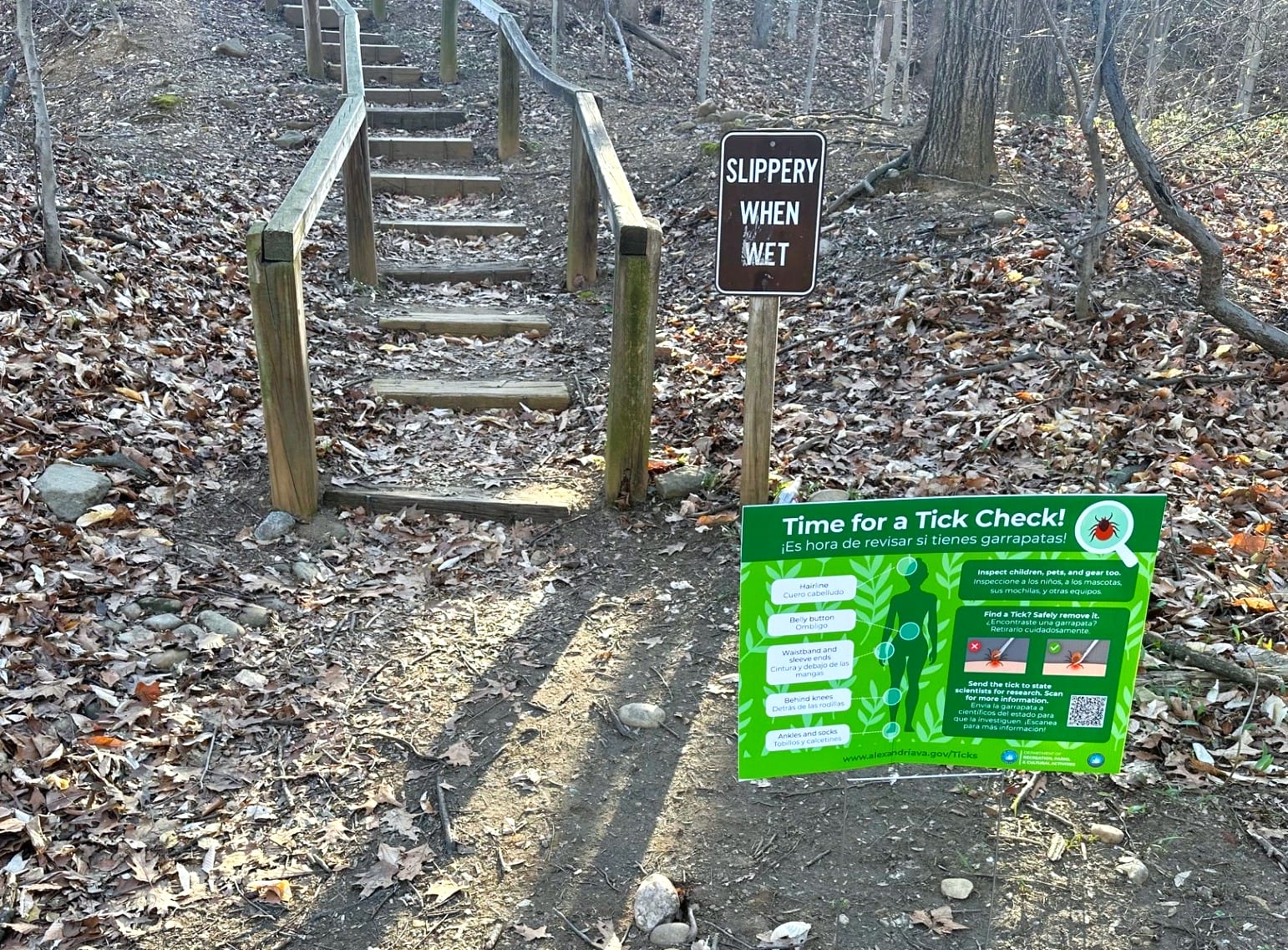
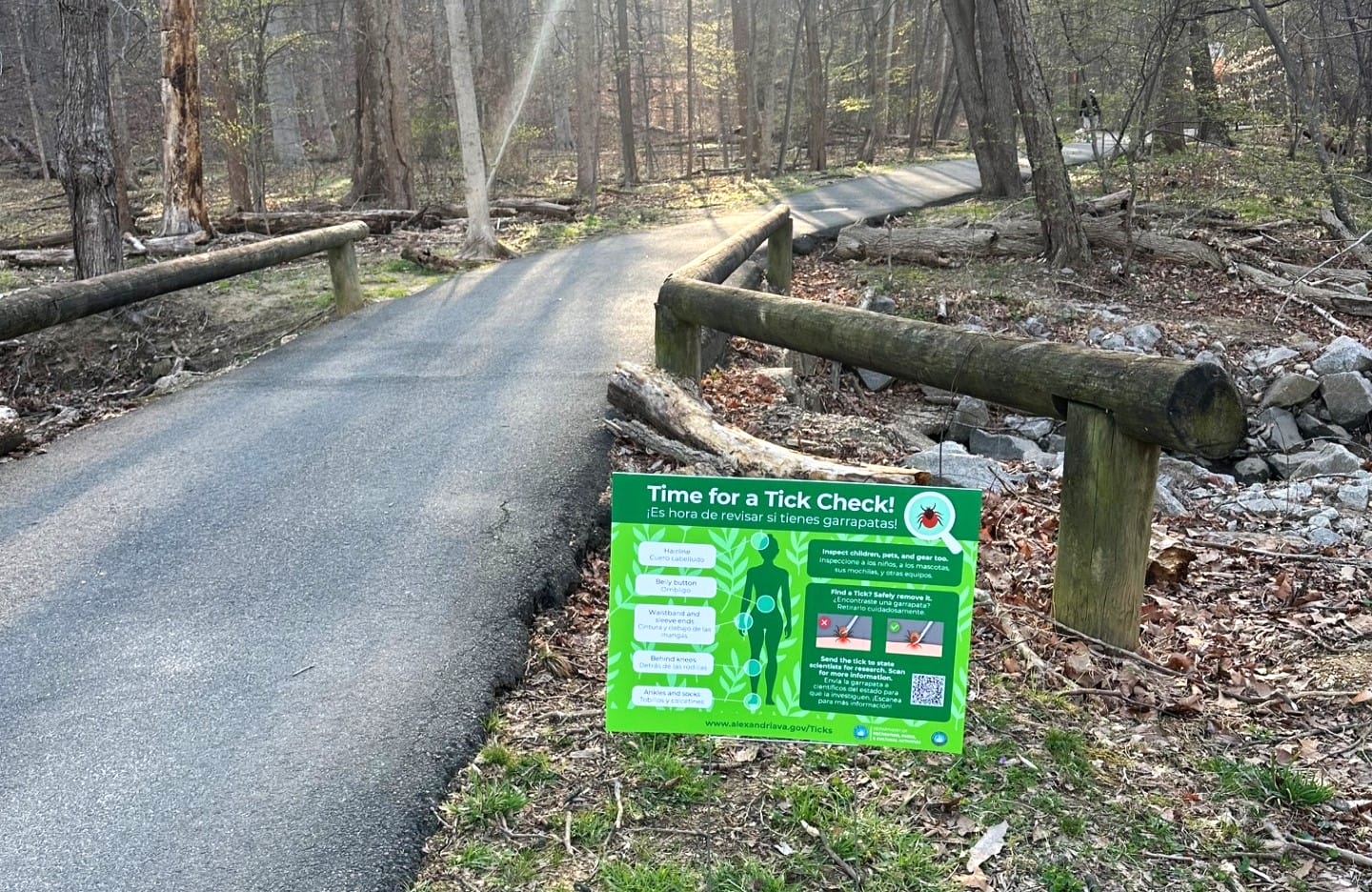
The health department and Department of Recreation, Parks and Cultural Activities are partnering for a tick bite prevention campaign this spring, when tick activity increases as temperatures warm. The city is placing 30 educational signs across parks and trails encouraging residents to do tick checks. There will also be educational sessions about tick prevention and giveaways of tick removal tools at the events and the Alexandria Health Department headquarters (4850 Mark Center Drive).
“Since 2020, Virginia has seen an increase in Lyme disease, and we’re learning more about the threat of Alpha-gal syndrome,” Dr. David Rose, Alexandria Health Department’s director, said in a release. “We don’t want people and pets in Alexandria to get sick, so we’re helping people protect themselves with easy actions like tick checks.”
Ticks are small parasites that can attach to and bite people and animals. The most common tickborne illnesses in Virginia are Lyme disease, caused by deer ticks, and Alpha-gal syndrome, a food allergy condition caused by the lone star tick.
Both can cause long-term health impacts. Lyme disease begins with a rash and symptoms such as fatigue, fever, headache, muscle and joint pain and swollen lymph nodes. Untreated Lyme disease can lead to Erythema multiforme rashes, intermittent arthritis, facial palsy, heart palpitations, severe headaches, neck stiffness and neurological problems such as shooting pains, numbness and tingling in the hands and feet, or memory issues.
A small portion of people bitten by lone star ticks can develop Alpha-gal syndrome, which can trigger an allergy to red meat and other products. Symptoms may include hives, angioedema (swelling of the skin and tissue), gastrointestinal issues, diarrhea, stuffy or runny nose, sneezing, headaches, decreased blood pressure — and in some people, anaphylaxis (a life-threatening allergic reaction).
Ticks are commonly found in grassy areas, woods and forests and piles of fallen leaves. Some ways to prevent tickborne illnesses are tucking pant legs into socks to prevent ticks from climbing up, using an EPA-recommended insect repellent and checking the body and pets for ticks after time outdoors.
“We want everyone to enjoy Alexandria’s parks with confidence,” said Hashim Taylor, director of Recreation, Parks and Cultural Activities. “Information about these ticks and diseases is empowering for people who want to explore the outdoors.”
Upcoming tick prevention sessions are:
- Saturday, April 18, 4:30-6 p.m. at William Ramsay Recreation Center
- Saturday, April 25, 9 a.m.-12 p.m. at the “Animals in the Park” event in Windmill Hill Park
- Saturday, May 30, 4:30-6 p.m. at Mount Vernon Recreation Center
- Saturday, June 27, 4:30-6 p.m. at Charles Houston Recreation Center
