

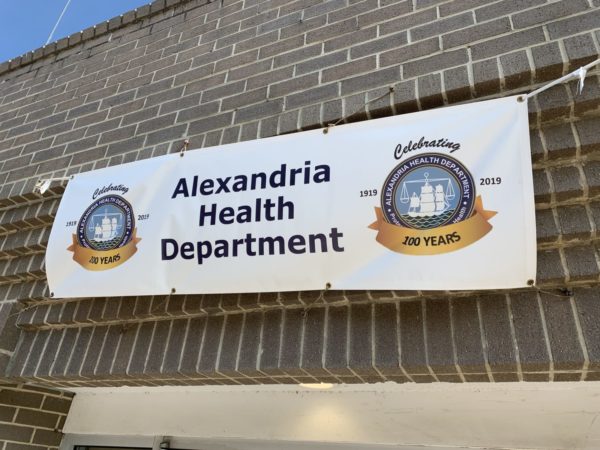
The Alexandria Health Department (AHD) has released its 2023 Communicable Disease Report, providing a comprehensive snapshot of reportable diseases investigated in the calendar year 2023. This marks the first such report since 2019, as the COVID-19 pandemic and subsequent mpox outbreak demanded the department’s full attention.
The report reveals that AHD investigated 542 cases of communicable disease in 2023, excluding COVID-19, tuberculosis, and sexually transmitted infections (STIs). This represents an 11% increase from 487 cases in 2022.
“We hope this report offers a clear and insightful snapshot of communicable diseases in pandemic and post-pandemic Alexandria,” writes Dr. David C. Rose, Health Director of the Alexandria Health Department, in the report’s foreword. “We encourage you to explore trends, review the in-depth disease spotlights, and consider how you and your organization can work to prevent, report, and respond to communicable diseases.”
Among the top reportable diseases in Alexandria for 2023 were elevated blood lead levels, salmonellosis, and infections related to carbapenemase-producing organisms, which are resistant to antibiotics. The report notes that lead investigations alone made up 19% of Alexandria’s 2023 case investigations, likely due to a change in the case definition that lowered the reportable threshold.
Foodborne and enteric diseases comprised the largest portion of AHD’s investigations at 35% of the 2023 caseload, with cases increasing 62% from 116 in 2022 to 188 in 2023. Major outbreaks related to salmonellosis, Shiga toxin-producing E. coli, and vibriosis contributed to higher case counts than previous years.
The report includes detailed “Disease Spotlights” on select conditions that significantly impacted Alexandria from 2020-2023, including mpox, multi-drug resistant organisms, COVID-19, and STIs.
During the mpox outbreak that began in May 2022, Alexandria recorded 65 cases, with the city experiencing one of the highest case rates per capita in Virginia at 41.1 cases per 100,000 people. This high rate was attributed to Alexandria’s proximity to Washington, D.C., which was an initial hotspot for mpox transmission.
In response, AHD organized free vaccination clinics, administering the JYNNEOS vaccine to thousands of residents. Between July 2022 and September 2023, Alexandria residents received 2,096 doses of the vaccine, with 87% of individuals completing both doses of the series.
The report also details AHD’s extensive COVID-19 response. From January 2020 through December 2023, Alexandria recorded 45,828 cases of COVID-19, 830 hospitalizations, and 268 deaths. During this period, AHD administered over 88,000 COVID-19 vaccines and boosters and investigated more than 400 outbreaks.
“From 2020 through 2023, AHD responded to a novel coronavirus, SARS-CoV-2, which greatly impacted local Emergency Department/Urgent Care capacity,” the report states. “AHD provided guidance, testing, and access to additional resources to thousands of Alexandrians affected by SARS-CoV-2 over the years.”
The report notes that reported COVID-19 cases dropped 85% from 22,726 cases in 2022 to 3,362 cases in 2023. This significant decrease is attributed to Alexandrians’ COVID-19 vaccine uptake, AHD-supported infection control measures, and an increase in non-reported home testing.
Sexually transmitted infections remain a concern in Alexandria, with rates of chlamydia and gonorrhea surpassing pre-pandemic levels. In response, AHD spearheaded the formation of the Northern Virginia STI/HIV Task Force to evaluate trends, assess available resources, identify service gaps, and develop strategies to reduce infections.
The report also highlights the growing threat of multidrug-resistant organisms (MDROs), noting that detected cases increased significantly in Alexandria, rising from 11 in 2018 to a peak of 160 in 2021, and remaining elevated at 87 cases in 2023.
“The increasing prevalence of MDRO colonization is concerning, but transmission can be reduced to prevent subsequent infections,” the report advises, emphasizing the importance of basic infection prevention practices.
Beyond data reporting, the document serves as a resource for healthcare providers, offering guidance on disease prevention, testing protocols, and treatment recommendations. It includes specific “Provider Takeaways” sections with actionable advice for clinicians who may encounter these diseases.
“We are grateful for your contributions, collaboration, and support, and we welcome feedback and suggestions on ways to improve the health of our residents,” Dr. Rose notes in his foreword.
The full report and an accompanying infographic summarizing the data are available on the Alexandria Health Department’s website at www.alexandriava.gov/DiseaseReporting.
