

A proposal to extend Express Lanes on the south side of the Capital Beltway has cleared a hurdle, but it remains to be seen if it will win support from enough regional leaders to advance.
On Wednesday (Nov. 18), the National Capital Region Transportation Planning Board advanced an air quality analysis for the I-495 Southside Express Lanes project. While the vote is not a full endorsement of the project, it clears a path to be considered again in the D.C. region’s long-range transportation plan.
Last year, the TPB voted to not include the project in the region’s Visualize 2050 transportation plan, which is required for transportation projects to receive federal funding and approvals. However, officials approved language giving the Virginia Department of Transportation the opportunity to work with impacted groups across the region and, if the agency desired, come back with a revamped plan.
Since then, VDOT has presented a revised project and requested the project get an air quality conformity analysis. The technical analysis determines if Visualize 2050 transportation projects meet Clean Air Act Amendments of 1990 standards.
“If all of these projects together along with the projected increase in population in employment and households in this region between now and 2050 if the emissions from our vehicles will be below the levels approved by the EPA, that is what we call the conformity test,” said Kanti Srikanth, the deputy director for metropolitan planning at the Metropolitan Washington Council of Governments.
The TPB’s vote does not add I-495 Southside Express Lanes to Visualize 2050. After reviewing the air quality analysis results, TPB will again be asked to consider adding the project into the Visualize 2050 plan in March 2027.
The motion included an amendment from Prince George’s County Executive Aisha Braveboy to advance a path to rail service across the Woodrow Wilson Bridge and mitigate the project’s traffic and safety impacts.
Braveboy said train service across the bridge has been discussed for decades and that a dedicated funding source needs to be identified.
“I think that as we look to find ways to modernize our network, we have to, have to, have to have a full commitment to transit and ultimately Prince George’s County’s support for any project moving forward is going to be conditioned on having a real concrete pathway to rail across the Wilson Bridge,” Braveboy said.
Other Maryland officials continue to share concerns while reiterating that the revised project is an improvement.
Eric Olson, a member of the Prince George’s County Council, said he would currently vote “no” on the project as it stands.
“We’ve come quite a distance from where we were 18 months ago, and I do recognize the importance of preserving the rail corridor,” Olson said. “This is a big deal for our residents. There is a lot of concern around this project and we need to study local traffic impacts … where the bottleneck is going to be and how we address the bottleneck. We need to understand who’s going to be paying these and largely it’s going to be Prince Georgians paying these so that is a concern as well.”
Rockville, Md. Mayor Monique Ashton supported changes that provide revenue sharing with Maryland and dedicated Metrorail space.
“The one thing I would ask to also be considered in that structure is how to avoid price gouging,” Ashton said. “We’ve heard from some of the residents on concerns on $20, $30 tolls … is there a rationale as to how we’ll be considering how high these tolls can go?”
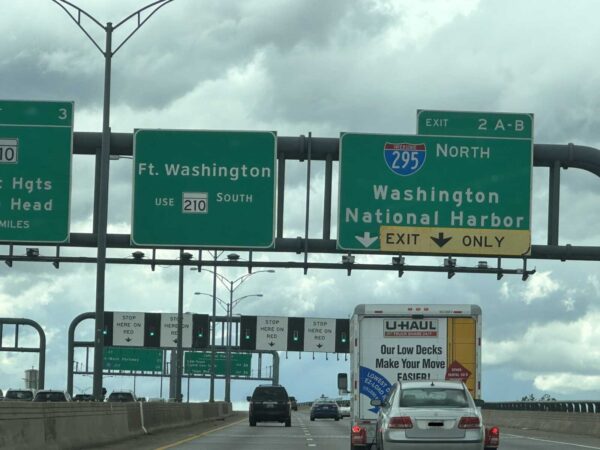
The vote came after VDOT briefed the TPB in October on the updated project to extend the Express Lanes system by about 11 miles from the Springfield interchange across the Woodrow Wilson Memorial Bridge to the MD 210 interchange in Prince George’s County, Md. The revised project provides space for both Express Lanes and a potential future Metrorail line that Metro has studied. An express bus route between Tysons and the Branch Avenue Metro station in Prince George’s County is also planned.
Tolls would be waived for vehicles with three or more people that display an EZ Pass Flex set to HOV mode, similar to the policy on other Express Lanes in Northern Virginia.
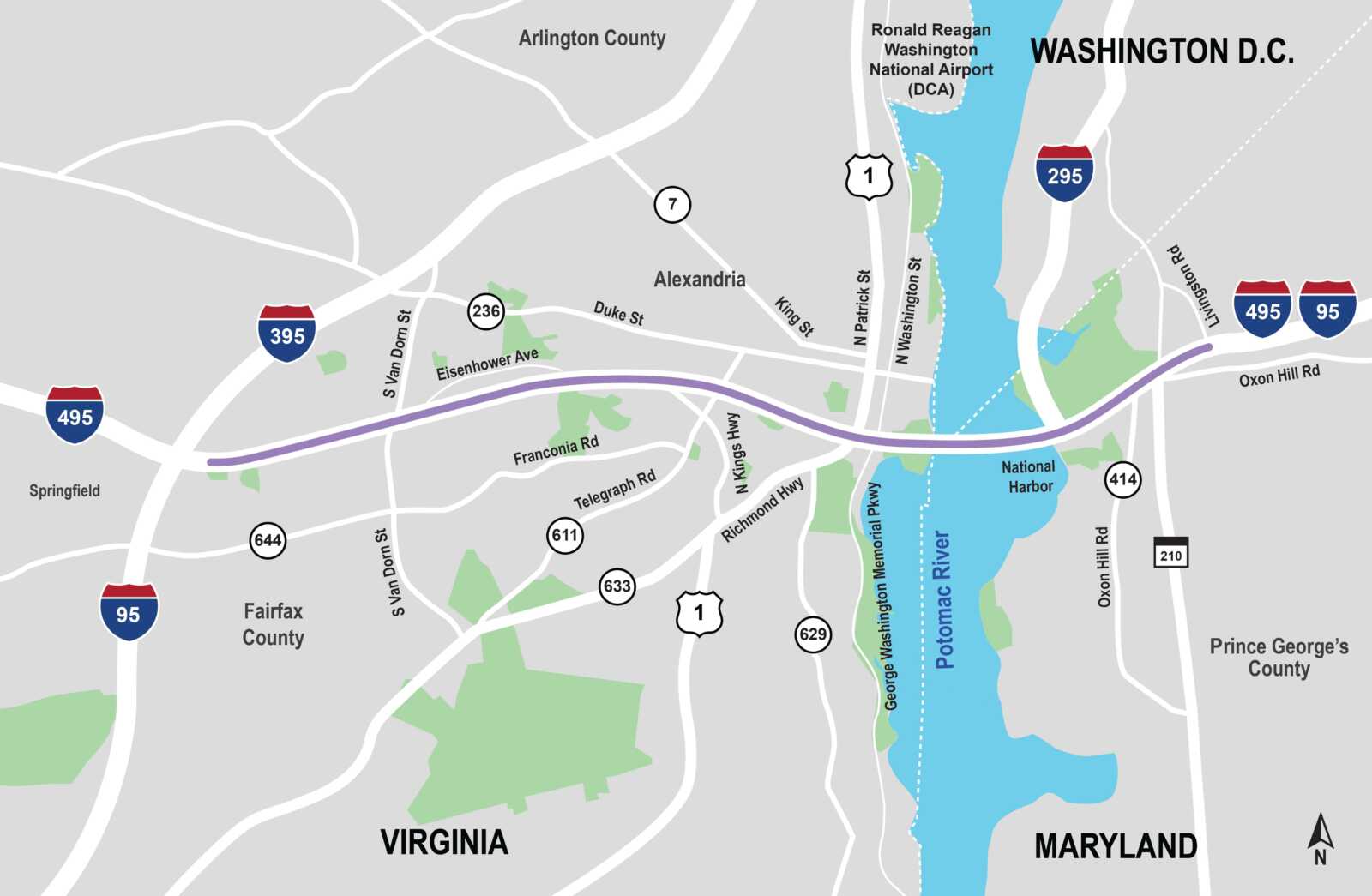
The inability to guarantee room for rail across the bridge was one reason the TPB did not endorse the I-495 Southside project last year.
The new concept proposes significantly reducing shoulder space in both directions to allow for four regular lanes and two toll lanes in each direction, along with an 18-foot-wide right-of-way in the middle for future Metro service.
Beyond losing shoulder space, the plan also eliminates two through lanes in each direction that currently aren’t tolled. VDOT officials contend that replacing them with Express Lanes will have little negative impact on travelers using the four remaining regular lanes in each direction.
