

City Manager Jim Parajon and his staff laid out a stark budget reality at Alexandria City Council’s annual budget retreat.
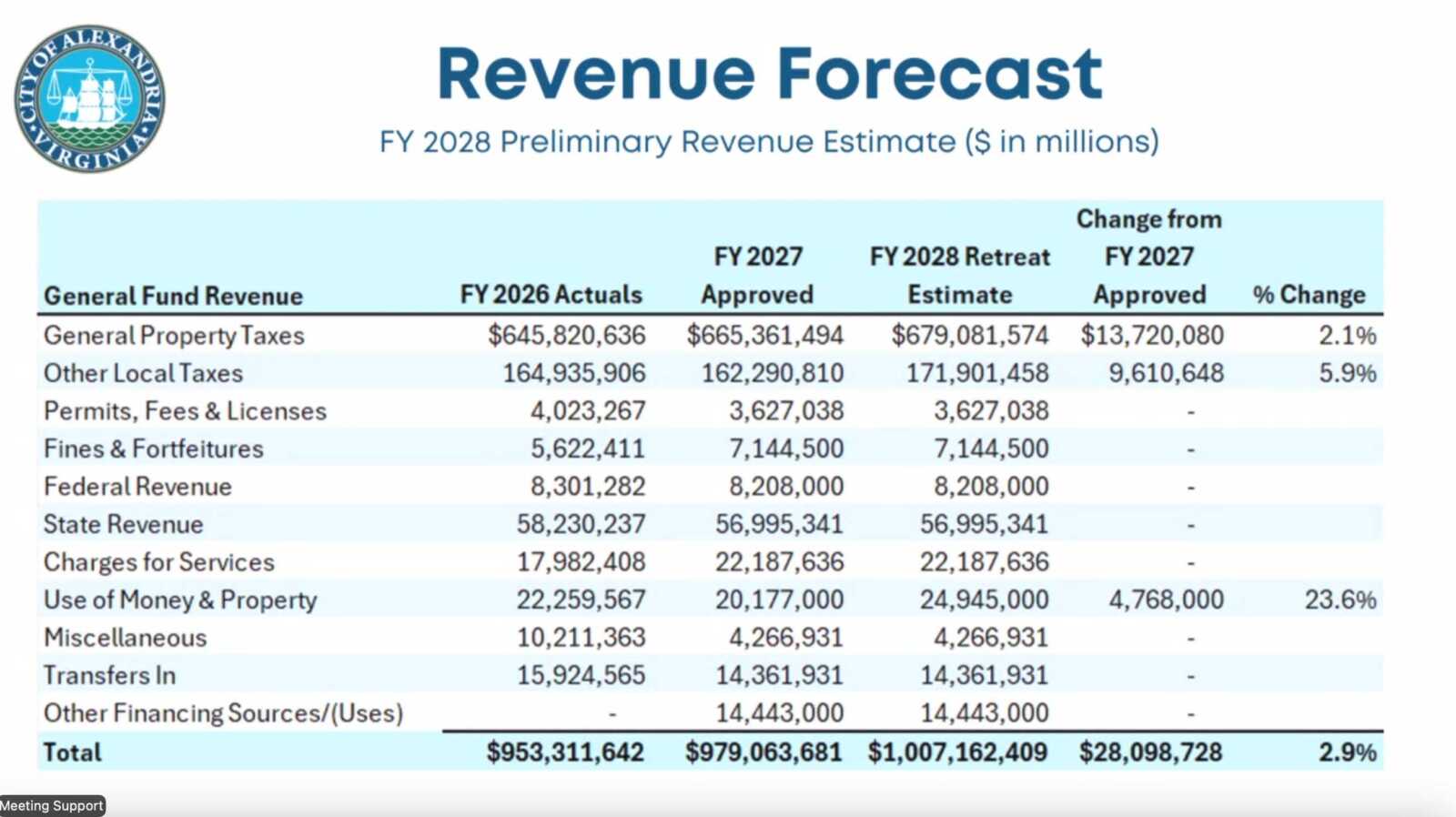
As he contends with an estimated $10 million to $15 million budget shortfall in the 2028 fiscal year budget, Parajon is asking all city departments to submit their budget proposals to him with 3% cuts. He’s also asking that Alexandria City Public Schools limit its operating budget transfer request to 2.25% over what was approved in the current budget, amounting to a cap of $7.1 million.
Parajon told City Council that harsh budget conditions shouldn’t come as a surprise, as he’s given the council regular economic updates over the past year.
“These discussions have consistently shown a very uncertain economy due to rising costs for our households,” Parajon said. “Higher inflation pressures, increased pricing, including with gas and oil and lower consumer confidence. We expect to continue to experience these challenges in the next year’s budget.”
Mayor Alyia Gaskins said that it will be a challenge to maintain existing services while continuing to invest in the city’s future.
“I think all of us know that probably one of the most difficult responsibilities we have as the city’s governing agency is building the budget,” Gaskins said.
Parajon’s budget strategy is to try to avoid a tax rate increase and service reductions, while funding existing city salaries and benefits, multiple collective bargaining agreements, the city’s Capital Improvement Program and city maintenance.
Sales tax increase could go to referendum
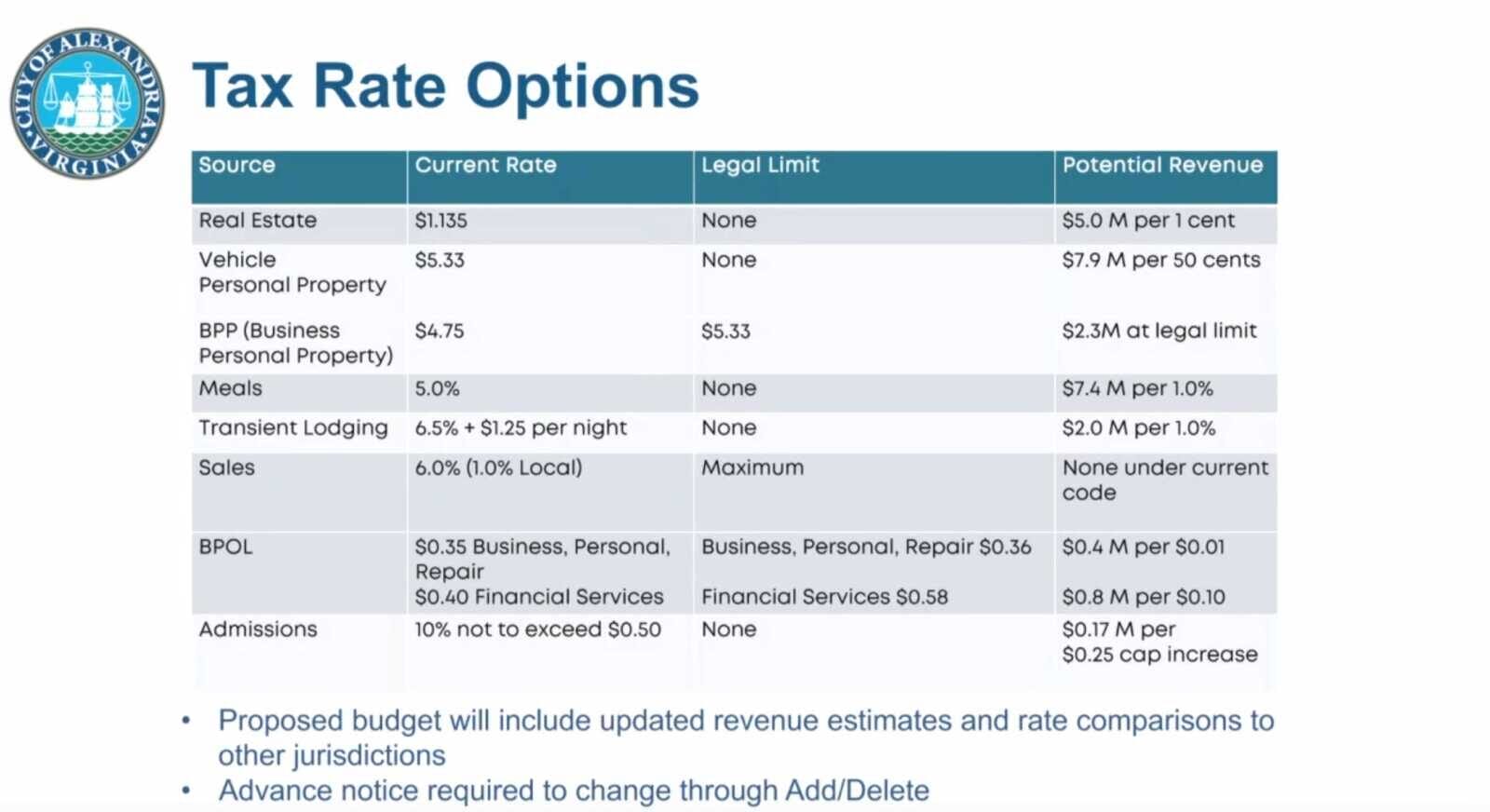
The city is also pursuing bringing a 1% addition to the sales tax to a vote.
“If the council were to choose to move forward with implementing this tax, the process would involve first the city council passing a resolution to put the sales tax question on the ballot,” a city staffer told City Council. “That resolution would have to state whether it would be used for construction and renovation of schools, or for public transportation, or a combination of both.”
The measure would increase the city’s sales tax from 6% to 7%, and then go to a voter referendum. The 1% change would bring in nearly $40 million.
“If that voter referendum is successful, the city council would adopt an ordinance to implement the tax increase if the referendum moves forward, and the tax would go into effect on the first day of the month, at least 120 days after the adoption of the ordinance,” the staffer said.
In the meantime, ACPS takes up nearly 30% of the city’s budget and faces a $17 million budget gap. The school system also recently unveiled a $370.6 million proposed 10-year Capital Improvement Program plan, vastly exceeding the city’s recommended guidance by $186.2 million.
Gaskins told School Board Chair Christopher Harris that the 2.25% operating budget guidance to ACPS needs to be followed.
“I want to be clear that that in no way means that each you know that you shouldn’t be advocating for what you’re advocating for, or department shouldn’t be advocating for what they’re advocating for,” Gaskins said. “But it does mean that I think in order for us to have an honest and productive conversation, we have to ground that in the fiscal realities that we’re facing.”
Harris said he understands the city’s financial challenges and competing priorities.
“At the same time, we have a shared responsibility to ensure our students remain competitive in attracting and retaining professionals our students depend on,” Harris said.
In the current $979.1 million FY2027 budget, City Council avoided a tax increase with $9 million in citywide cuts, eliminating 43 positions and increasing metered parking rates, parking fines and the stormwater utility fee. City Council also added a 5-cent increase to the city’s Business, Professional and Occupational License (BPOL) tax.
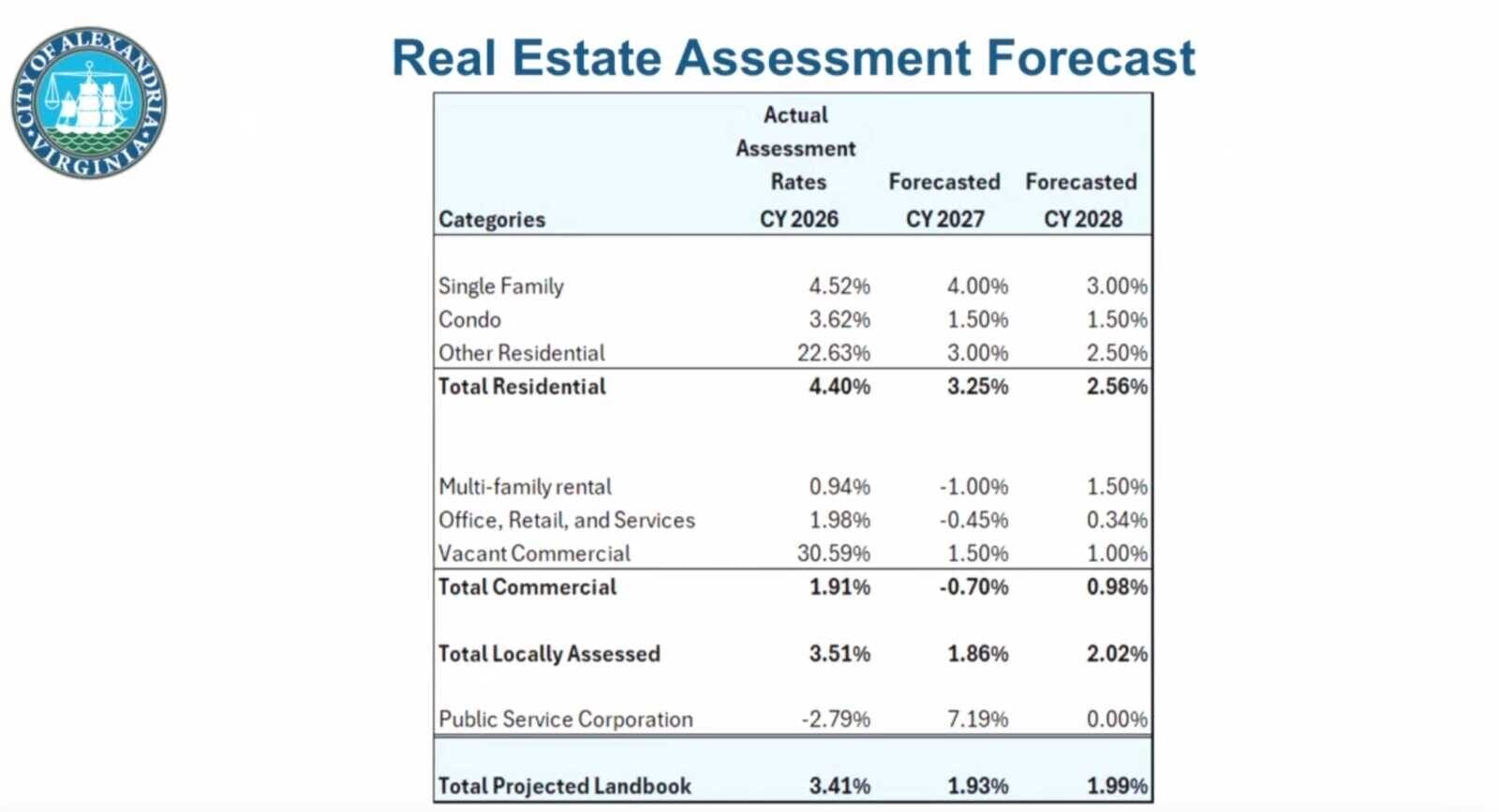
As of Jan. 1, Alexandria’s overall tax base increased by 3.4% in value, or nearly $1.7 billion, to reach $51.4 billion in 2026. The city’s residential tax base increased by 4.4% in value, or $1.4 billion, while the commercial tax base gained $334.8 million in value, up 1.9%, and the non-locally assessed tax base declined by $20.5 million, dropping 2.8%.
The city’s real estate assessment forecast also showed modest growth, while commercial real estate is projected to fall. That means that Alexandria’s property owners can expect to see tax bills increase, as the city government’s reliance on residential property taxes vastly outweighs its commercial properties.
City Council will adopt the budget on Wednesday, April 28, 2027.
