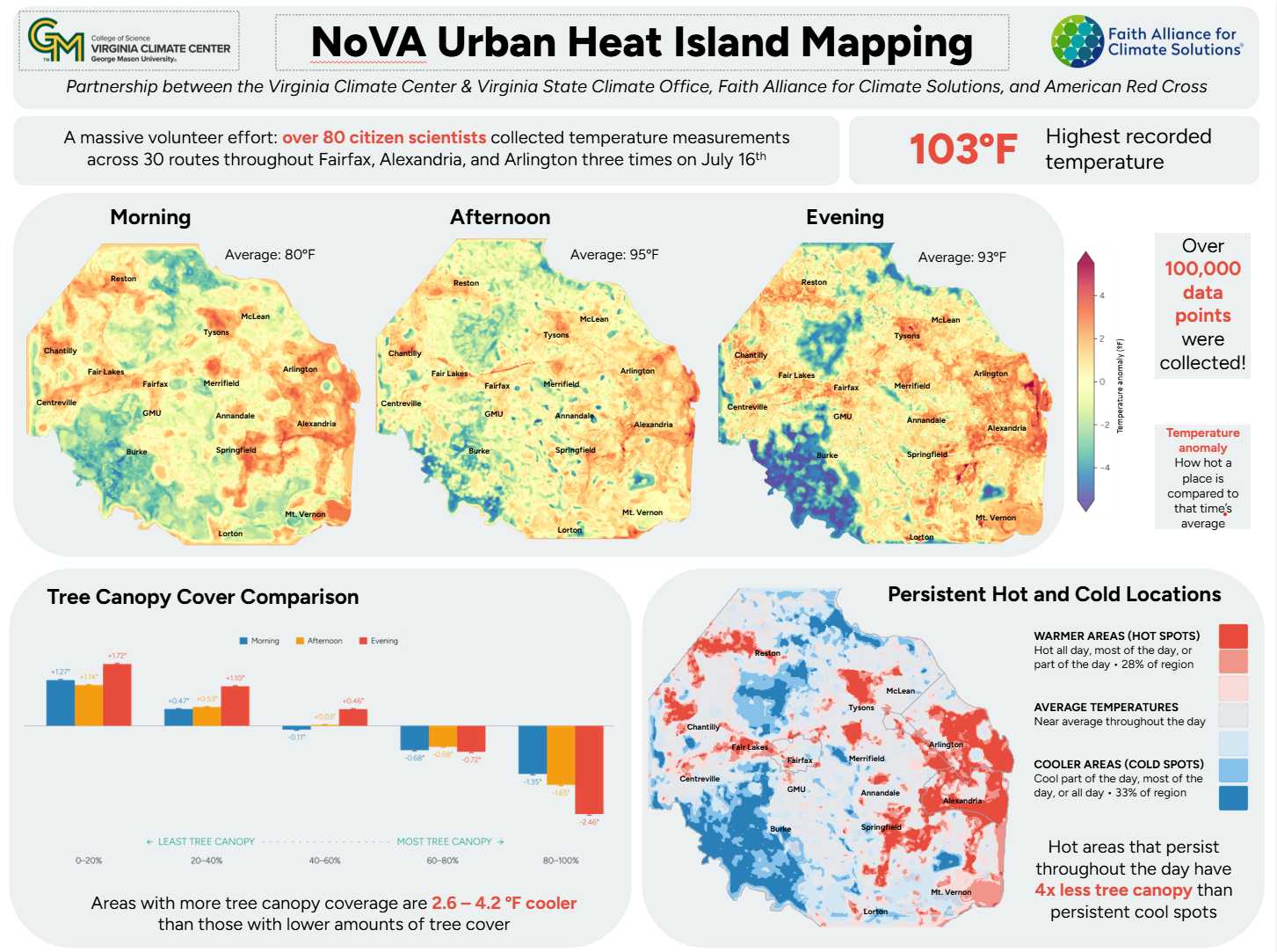

Alexandrians who experience the summer climate may not be surprised to learn the city is one of Northern Virginia’s heat islands, according to preliminary results from the Urban Heat Island Mapping Project.
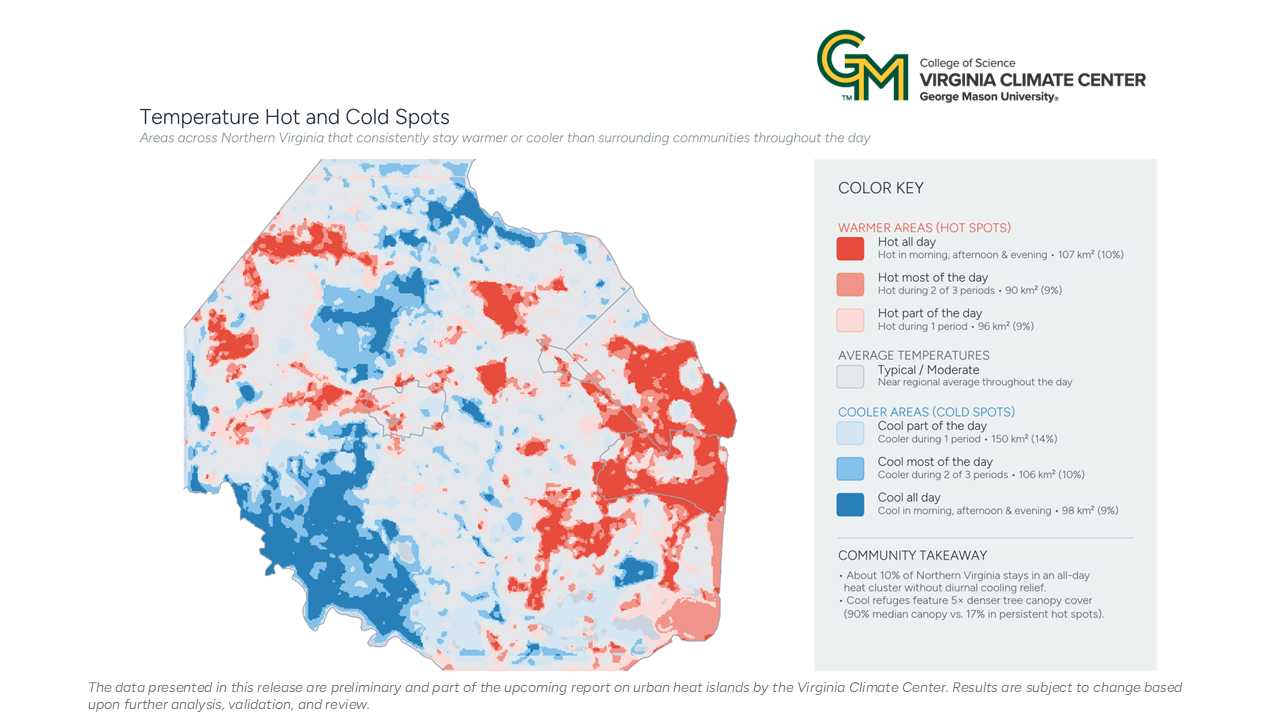
The project, organized by Faith Alliance for Climate Solutions with George Mason University’s Virginia Climate Center and the American Red Cross-National Capital Chapter, mapped significant parts of Alexandria and Arlington plus pockets of Fairfax County that were hot all day.
About 80 volunteers had collected temperature data on July 21 from 30 routes in the City of Alexandria, as well as Arlington and Fairfax counties. Using vehicle rooftop sensors, the volunteers covered the routes three times throughout the day — at 6-8 a.m., 2-4 p.m. and 6-8 p.m.
“Extreme heat is gaining speed in our region and worldwide,” said Chris Topoleski, executive director of the Faith Alliance for Climate Solutions. “Once the mapping project data is fully analyzed, we’ll know where to concentrate efforts that will have the greatest impact.”
Other hot spots identified in Northern Virginia were Tysons, Reston, Fair Lakes, Chantilly and Springfield. The hottest temperature recorded during the heat island mapping was 103 degrees in Franconia, which is just south of Alexandria.
According to American Red Cross-National Capital Region CEO Dale Kunce, young people, seniors and people on certain medications especially face heat-related risks.
“When the body does not get the option to cool down at night, bad things happen,” Kunce said. “You can be hot during the day. But when you’re trying to sleep at night, and can’t cool down, bad things happen.”
The heat mapping project aims to collect more granular data at the neighborhood and street level, providing more detailed, updated information that could guide local government policies and decision-making about issues from tree plantings to land use and development projects.
“We were able to find information at the sub-neighborhood scale from street to street,” said Luis Ortiz, co-director of the GMU Virginia Climate Center and acting state climatologist for Virginia. “A lot of very useful information is coming out from the observations, and it can help inform how we can intervene to protect people’s health.”
Full data will be part of a report on urban heat islands that GMU’s Virginia Climate Center will release later this year.